Ras Mohammed National Park
"The wall drops four hundred meters and the fish don't care that you're watching."
Where the Gulfs Meet
The name means Cape of Moses in Arabic and the geography earns the drama. At the very toe of the Sinai Peninsula, the Gulf of Suez and the Gulf of Aqaba converge in a permanent agitation of current that has, over millions of years, fed one of the most diverse coral ecosystems on earth. Stand on the headland at the right angle and you can watch two different colors of water pressing against each other — not a metaphor, an actual visible line where temperatures and salinity differ.
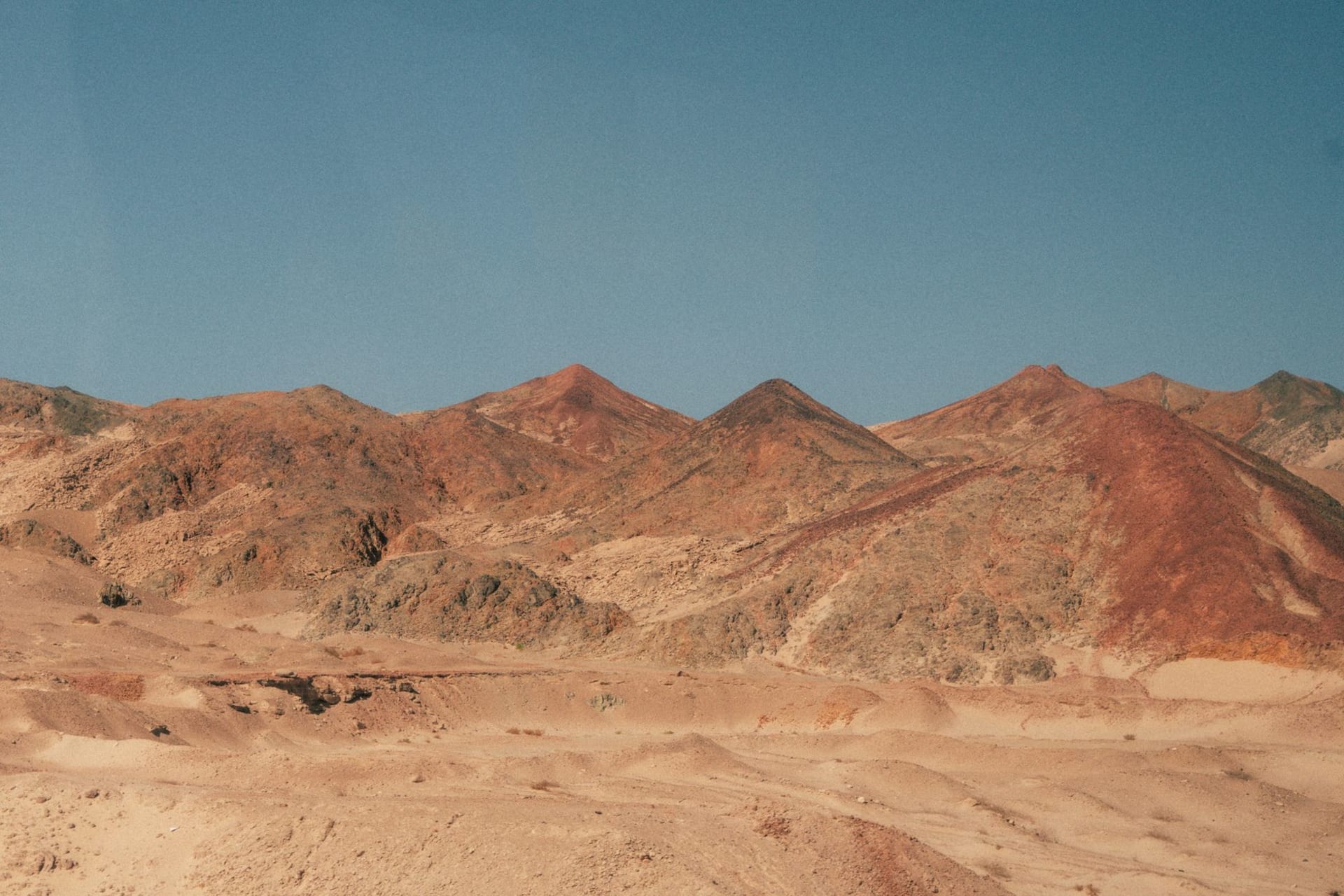
I came out on a day boat from Sharm, an hour’s run around the coast, and the shift from resort marina to protected wilderness happened fast. The last Sharm hotel disappeared behind a headland and then there was nothing but desert cliffs, mangrove flats, and the particular blue of deep water.
Shark Reef and Jolanda
The site everyone comes for is the double reef — Shark Reef and Jolanda Reef connected by a narrow saddle at about 20 meters. The dive starts over the plateau, where the coral is as dense and healthy as I’ve seen anywhere, and then you follow the wall. It goes down. And down. The official depth at the base is over 400 meters, and at 30 meters you still can’t see the bottom. What you can see: schools of barracuda dense enough to block the sun when they bank, grey reef sharks cruising the thermocline with mechanical indifference, and the occasional hammerhead in winter months appearing out of the blue haze.
Jolanda reef is named for a cargo ship that went down here in 1980. The wreck has broken up and scattered down the wall over the decades, but you can still find the ship’s bathroom fixtures — toilets, bathtubs — lodged in the coral at 28 meters. It’s one of the more surreal juxtapositions I’ve encountered diving anywhere.
The Park on Land
Ras Mohammed is also a terrestrial park, and the overland portion rewards a few hours of walking. Mangrove Channel cuts into the coastal flat — a channel of calm water lined with red mangroves, their prop roots tangling into the brackish mix of fresh seep and sea. The birdlife here is serious: herons, egrets, osprey hanging in the thermals above the cliff edge.
The fossilized coral terraces on the headland itself are visible evidence of ancient sea levels — ledges of dead coral stranded ten meters above the current waterline, left behind as the land rose or the sea retreated over geological time. I spent twenty minutes just looking at the textures, the ghost structures of animals that calcified before there were humans to watch them.
Logistics
Entry to the park requires an additional fee on top of any Sharm diving package, and the park administration is serious about enforcement. No private vehicles without permits. No camping on the beach. No fishing. The restrictions have worked: the marine environment here is visibly healthier than unprotected sites nearby. I count that as evidence that rules occasionally matter.
The best access is by boat from Sharm for dive days; the land entrance is a 25-kilometer drive from town and worth doing for the mangroves and headland even without diving.
When to go: October through April for diving — winter hammerheads are a real possibility from December through February. The park is accessible year-round but summer heat (40°C+) makes overland exploration unpleasant. Calm seas and peak visibility come in November and March.