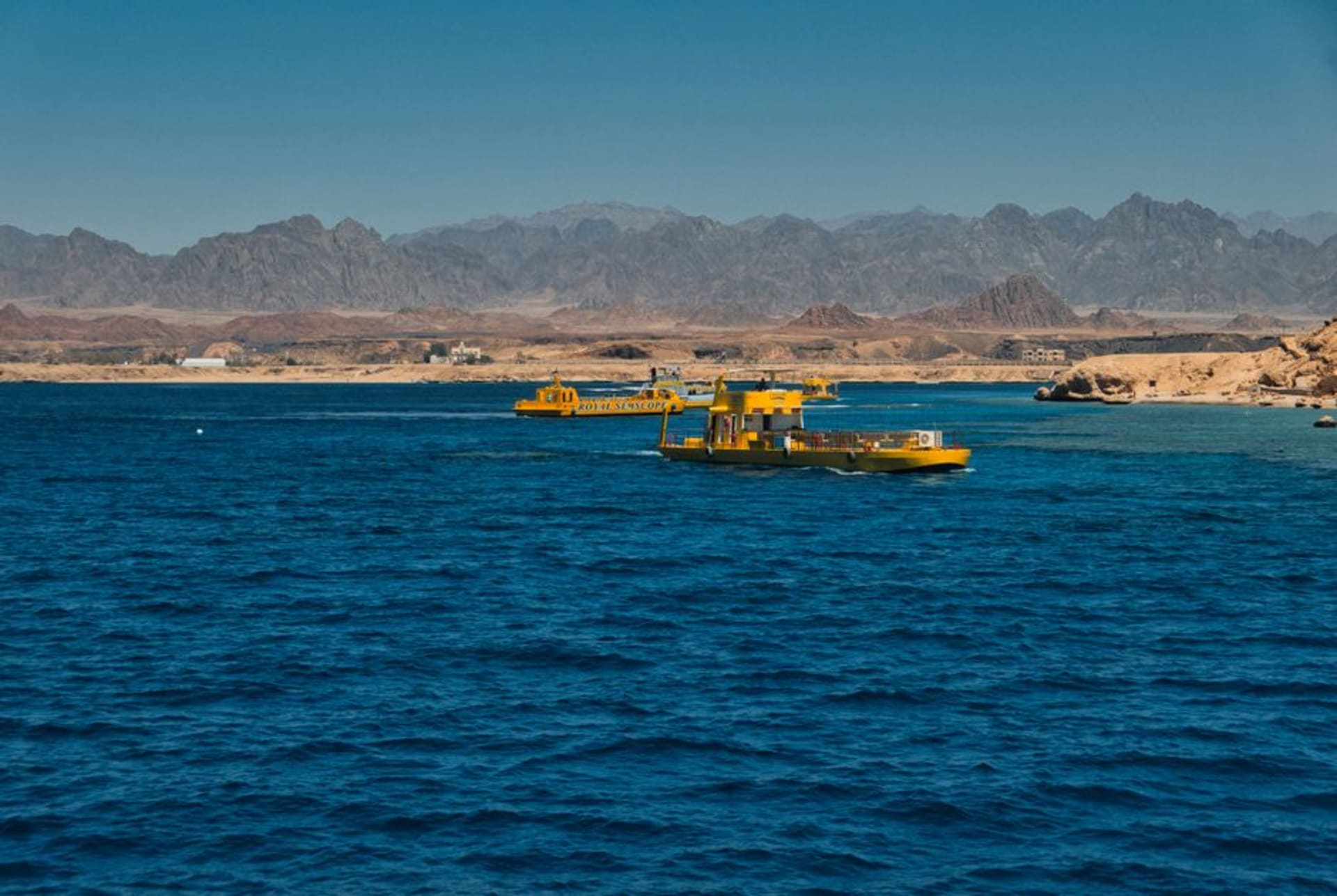
Ras Abu Galum Protected Area
"No road, no signal, no rush — just the reef, the mountains, and a Bedouin fire waiting at the end of the trail."
A roadless reserve of coral, mangroves, and Bedouin camps between Dahab and Nuweiba, reachable only on foot, camel, or by sea.
Lia and I almost turned back before we’d even started. We were standing at the edge of Dahab’s Blue Hole, staring at a coastal trail that just… disappeared into rock, with a Bedouin guide named Salem shrugging like the whole thing was obvious. “Three hours, maybe four,” he said, pointing north toward nothing in particular. That’s the thing about Ras Abu Galum: there’s no paved road into the reserve, so you either walk it, ride a camel, or come by boat. We chose to walk, mostly because Salem promised the trail hugged the coast the entire way and I didn’t trust myself on a camel with a backpack full of snorkel gear.
The walk itself was punishing in the best way — loose scree, blinding light bouncing off pale limestone, the Gulf of Aqaba a color of blue I kept stopping to photograph even though I knew it would look the same in every shot. Ras Abu Galum was declared protected back in 1992, and you can feel why the moment the trail drops toward the shoreline: mangrove stands crowd the shallow inlets, and the reef starts almost at your feet instead of somewhere out past a boat ramp.
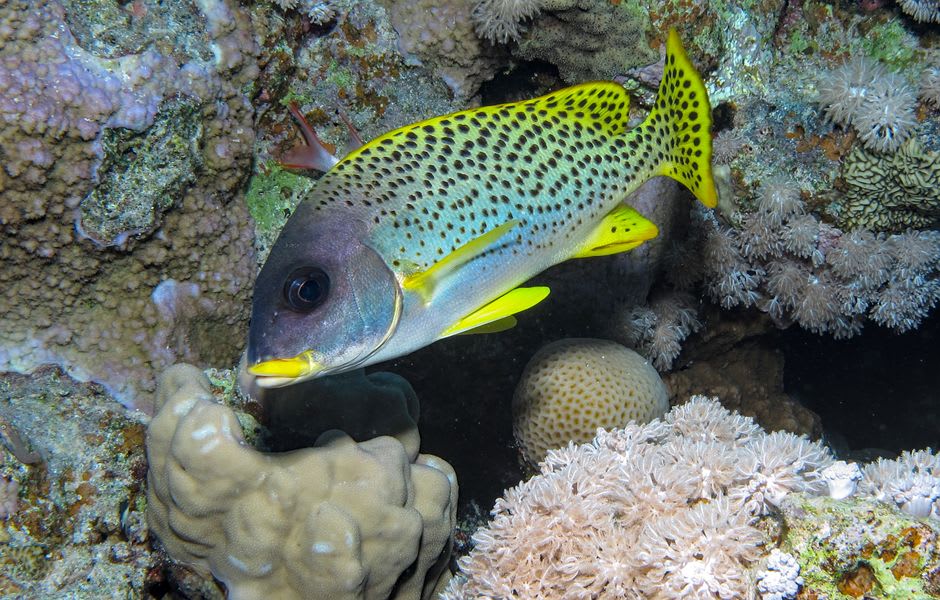
We stayed two nights in one of the Muzeina Bedouin camps that dot the coastline — a palm-frond hut, a woven mat, and a fisherman named Ibrahim who grilled us a parrotfish he’d caught that same afternoon while his kids ran barefoot along the tideline. There’s no electricity to speak of, no restaurant menu, just whatever came out of the sea and a lot of sweet tea poured from a battered kettle. I’d read that the reef here drops steeply into deep water close to shore, and the first time I put my mask on I understood what that meant — one moment I was standing in ankle-deep shallows, the next the coral wall just fell away beneath me into blue nothing, with barely any other divers in sight.
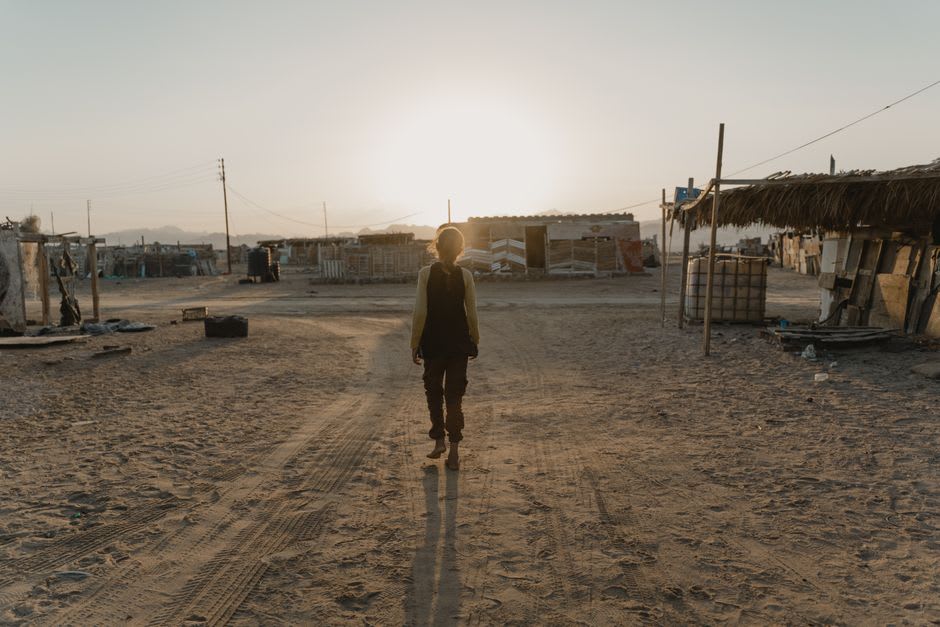
What stayed with me wasn’t just the reef, though — it was how little of that Muzeina way of life seemed to have changed. Ibrahim’s family has been running camps like this for generations, and there’s a rhythm to the place that has nothing to do with tourism seasons: fishing at dawn, mending nets midday, tea at sunset. On our last morning, Salem walked us back toward Dahab along the same brutal, beautiful trail, and I remember thinking that the effort to get there was the whole point — it’s exactly what keeps Ras Abu Galum from turning into Sharm el-Sheikh.
When to go: Aim for October through April — we went in early November and were grateful for it, since the coastal trek offers zero shade and summer heat on that exposed limestone would be brutal.