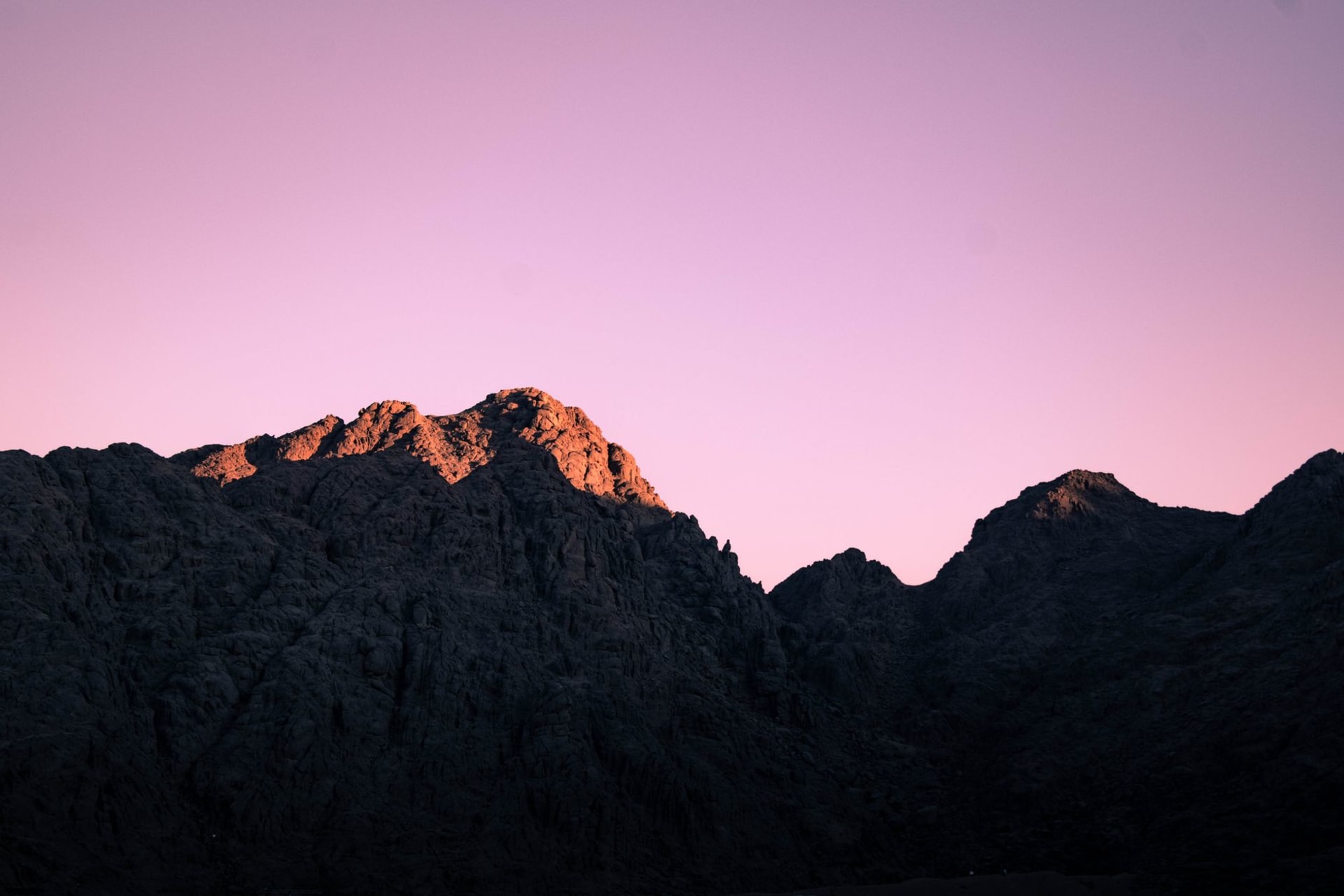
Mount Sinai
"At the summit in the dark, surrounded by strangers speaking twelve languages, I stopped thinking about the cold."
The Night Climb
The standard approach is to leave St. Catherine’s around midnight, hike through the dark for two and a half hours, and arrive at the summit just before the sky begins to change. It sounds like a logistics problem. It becomes something else by the time you’re actually doing it.
The trail goes up the Valley of the Elders past the plain where Moses is said to have pastured his father-in-law’s flocks, then begins the long climbing traverse through granite that in torchlight looks like the surface of another planet. It’s cold — in winter, well below freezing at the top — and the combination of altitude gain and cold air and the continuous line of other headlamps moving upward through the dark creates a ritual atmosphere that isn’t entirely explained by the mountain’s religious associations. Something about ascending in the dark toward an unknown horizon is its own kind of language.
The Summit
The top is not wild. There’s a small chapel (usually locked), a mosque, and a row of blanket-rental vendors who set up every night and who are doing a brisk business by 4 a.m. I paid for a camel-wool blanket and huddled with a group of Italian pilgrims and a family from South Korea and we all stood facing east.
The light comes in stages. First, a pale line that separates the sky from the mountain range, barely visible. Then pink. Then a quality of orange I associate with embers. Then the moment when the first edge of the sun clears the ridge of Jebel Abbas Pasha to the east and the entire Sinai opens up below you — range after range of granite mountains stretching to the Gulf of Aqaba on one side and the Gulf of Suez on the other, and you are, undeniably, very high up in the middle of all of it.
I had not expected to feel moved. I felt moved.
The Steps of Repentance
There are two descent routes. The tourist trail is the gentler gradient you came up. The Steps of Repentance are 3,750 steps cut directly into the granite by a monk named Silas in the sixth century, dropping down the mountain’s south face to St. Catherine’s Monastery. I took the steps.
They’re narrow, uneven, and relentless. The granite is pink and grey and in the morning light already warming. On either side, small camels carrying tired tourists picked their way down with far more dignity than the situation required. About halfway down, a Bedouin boy no older than twelve was selling sweet tea from a thermos next to a blanket spread with turquoise and malachite rocks. The tea was hot and very sweet and cost almost nothing and was perfect.
What It Is
Mount Sinai is the kind of place where skepticism is poorly equipped. Whether or not you engage with the religious history, the scale of the mountain and the quality of the sunrise work on you through channels that don’t require belief. I’m not religious. I still stood at the summit and felt the weight of all the people who had climbed this specific peak, across all those centuries, with something specific they needed to ask the dark.
When to go: November through March for the classic cold-but-clear night climb with dramatic sunrises. April and October are milder alternatives. Summer climbs are possible but the summit is crowded and the heat by midday is fierce. Avoid August completely — the trails are packed and the experience suffers.