Blue Hole
"The hole is 160 meters deep and you feel it before you see it — a darkness that has weight."
The Famous Gravity
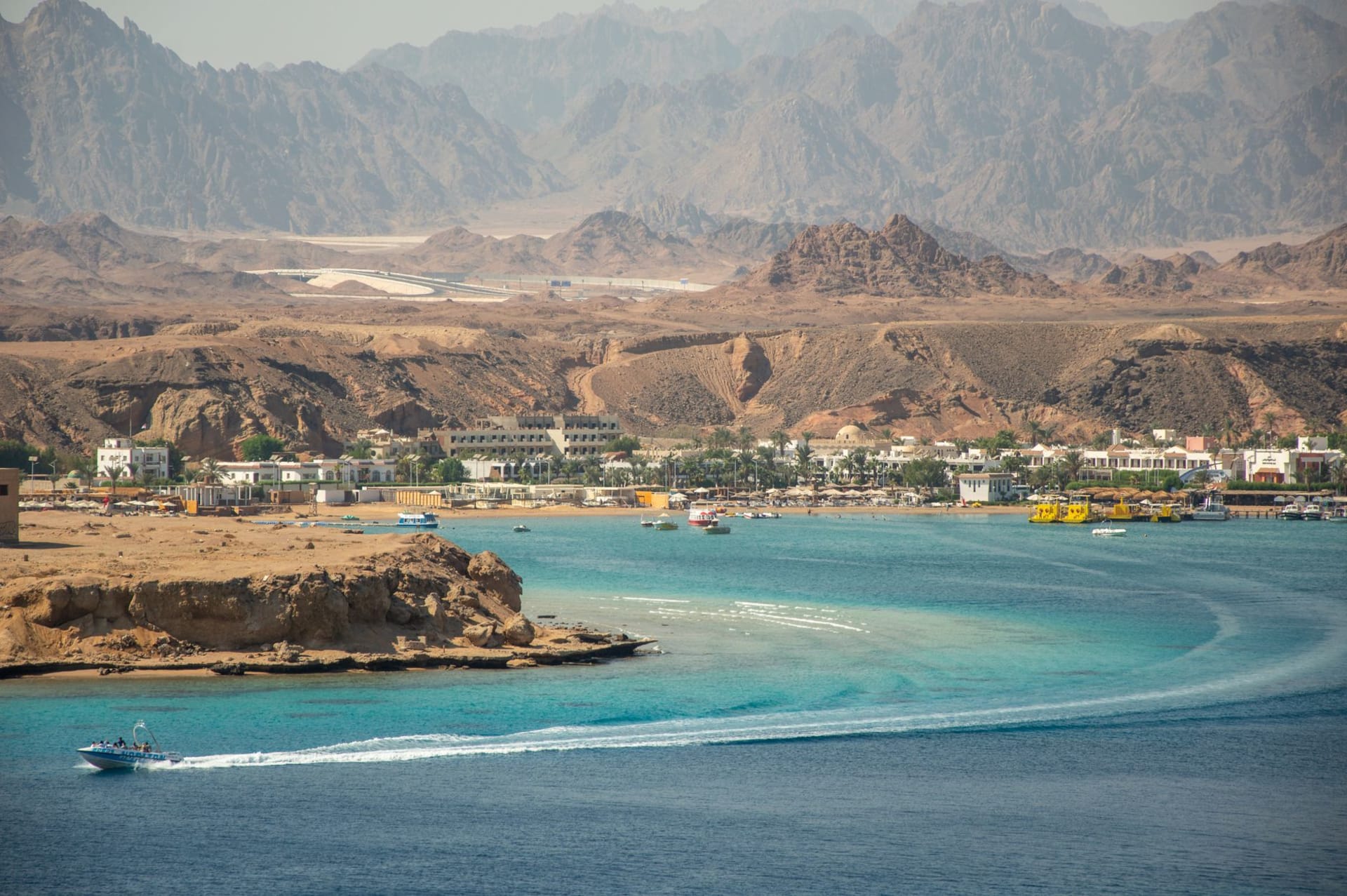
The Blue Hole is a circular sinkhole in the reef, roughly 300 meters in diameter and 160 meters deep, connected to the open ocean by a natural tunnel at 52 to 56 meters depth called the Arch. From the surface, the difference between the surrounding turquoise reef and the sinkhole itself is immediate and visual: the shallows are light and busy with fish and coral, and then there is a line where the color changes to deep indigo, almost violet, and the bottom disappears. The transition happens in about three steps.
I’m a recreational diver. I went to 28 meters over the rim of the hole and looked down into the blue, which shaded into dark blue, which became black. The Arch — the tunnel that connects the sinkhole to the open ocean — was invisible from where I was, which was by design. The Arch is a technical dive requiring gas mixtures and training I don’t have, and the site has a fatality record that is, to say the least, sobering. The plaques and memorials at the dive center shore entry are not decorative.
What Recreational Divers Actually See
None of that is what makes the Blue Hole worth visiting for the rest of us. The reef around the sinkhole rim is some of the most spectacular shallow-water diving in the Sinai: dense coral formations starting at one meter depth, visibility routinely exceeding twenty meters, and a marine density that benefits from the deep-water upwelling that the sinkhole generates.
I spent an hour finning along the outer reef wall at fifteen meters and encountered: a school of trevally moving in a synchronized spiral that I stopped and watched for ten minutes; a large green turtle resting on a coral ledge who regarded me with the mild contempt turtles have clearly cultivated for this purpose; a cluster of three lionfish hanging motionless in a crevice, poisonous spines fanned; and more parrotfish, wrasse, and anthias than I bothered to count.
Snorkeling is also excellent here — the sinkhole opening is dramatic from the surface, and the reef immediately outside it teems with fish at depths reachable without a tank.
The Shore Setup
The Blue Hole has its own small settlement: a handful of Bedouin café-restaurants built directly on the cliff above the dive entry, serving tea and food to the continuous rotation of divers, freedivers, and snorkelers who use the site. The seating is cushions on platforms over the water in the standard Dahab fashion, and the view from the café at any time of day is the turquoise reef giving way to the dark circle of the hole giving way to the mountains of Saudi Arabia across the Gulf.
Lia stayed up at the café while I dived. She said she watched a family of four snorkelers swim directly over the sinkhole opening without seeming to notice the depth change beneath them. Then a single freediver dropped vertically into the blue and disappeared for ninety seconds. Then came back up. She had finished two teas and a piece of cake by the time I came out.
Freediving Culture
The Blue Hole has become one of the world centers of freediving — breath-hold diving — largely because the sinkhole provides a reliable column of still deep water. On any given morning there are trained freedivers here working depth records or simply training, and watching them perform static apnea on the surface or vertical drops toward the Arch is a different category of athletic activity than anything I had in my frame of reference before seeing it live. They are doing something the human body was not obviously designed to do, with the focused calm of people who’ve made peace with that fact.
When to go: Year-round for snorkeling and recreational diving, but October through April for the most comfortable conditions and best visibility. Freediving training courses run continuously out of Dahab (10 minutes south by taxi). Never attempt the Arch without proper technical diving certification and relevant gas training regardless of what other divers tell you at the site.