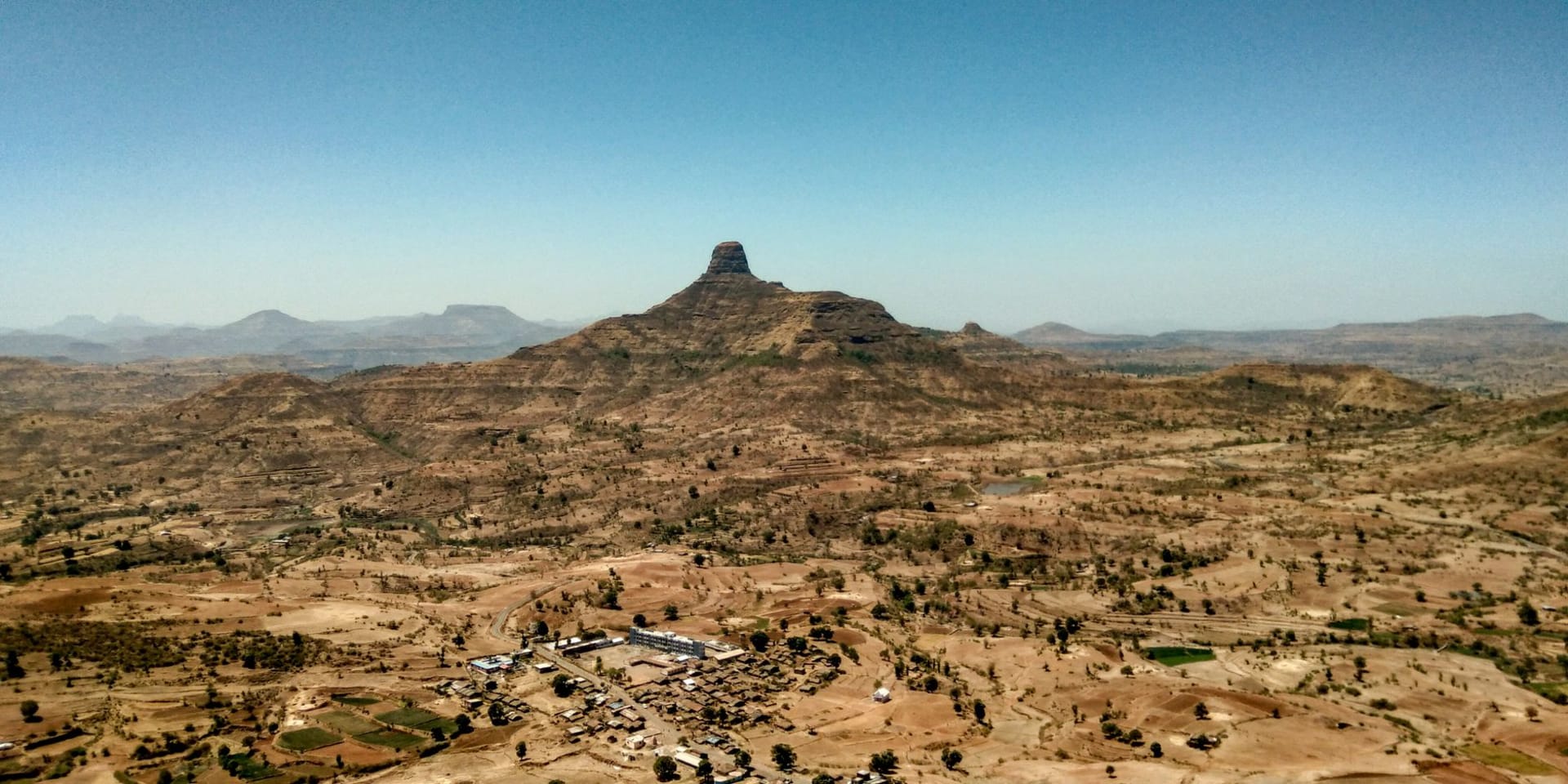
Silki Yared
"The wolf was there before I was. It watched me arrive and didn't leave."
The Third Peak, Almost Nobody’s First Choice
Silki Yared sits at 4,420 meters, Ethiopia’s third highest point, and it doesn’t appear in most standard Simien trekking itineraries. The classic route runs along the northern escarpment — Sankaber, Geech, Chenek, Ras Dashen — and Silki, sitting slightly south of that line, is either a deviation or a separate objective. This is precisely why I wanted to go there.
The approach from the Chenek area takes a half-day to reach the lower slopes, then another three or four hours to the summit ridge. The path is less defined than the main trail, and my guide, a quiet man from Debark named Tesfaye who clearly preferred this route to the crowded escarpment path, was navigating partly by landmarks and partly by something that looked like memory. I followed and tried not to ask too many questions.
The Plateau Between Chenek and Silki
The high plateau south of the main escarpment route has a different quality than what you encounter on the classic trek. It’s broader, less dramatic in the cliff-edge sense, and almost entirely without other trekkers. The Afroalpine moorland here is immaculate — sedge and lichen and everlasting flowers, the giant lobelias standing at intervals like sentinels, the whole landscape moving slightly in the wind off the peaks.
This is core Ethiopian wolf territory. The plateau supports one of the denser wolf populations in the Simiens, and Tesfaye had a good feel for where to look — not at the obvious ridgelines, but in the lower ground where the giant mole rat colonies are concentrated. The wolves hunt these rodents exclusively, working the burrow openings with the kind of patient intensity that makes you realize why they’re still here at all, adapted so narrowly to this specific ecosystem.
The Summit Ridge
Silki’s summit is a long, narrow ridge rather than a point — a spine of exposed rock at 4,420 meters with the southern plateau dropping away on one side and the Ras Dashen massif visible to the northeast. The wind on the ridge was the strongest I encountered in the entire Simiens, a sustained, cold push that came from the northwest and made standing upright a conscious decision.
The views from Silki differ from Ras Dashen’s in orientation: more south-facing, looking out over the lower highland zone that connects the Simiens to the Tigray plateau, with the escarpment running diagonally across the field of view. On a very clear day, Tesfaye told me, you can see the beginning of the Danakil Depression’s shimmer on the far northeastern horizon. I saw something that could have been that, or could have been cloud.
What Solitude Costs
The price of going to Silki is logistics. It requires a separate permit arrangement from Debark, a guide willing to do the southern route (not all are), and at least one additional day added to a standard itinerary. The camp near the summit is basic — ground tent only, no shelters — and the altitude means the same cold-weather preparation as Chenek applies.
What you get in return is a Simien that most visitors never see: the same landscape, the same endemic species, the same escarpment grandeur, but entirely yours. On both days I spent in the Silki area I saw no other trekkers. The wolves, the ibex on the lower terraces, the lammergeiers working the thermals off the southern face — I shared all of it with Tesfaye and the scout and nobody else.
When to go: November through February, during the dry season, when the southern plateau is accessible and the summit ridge is free of the wet-season cloud that makes navigation on this less-marked route genuinely dangerous. Arrange Silki specifically through Debark headquarters — the permit and guide are separate from the standard trek setup. Allow at least two days for the area.