Africa
Simien Mountains
"The edge of the world, and something is already sitting on it."
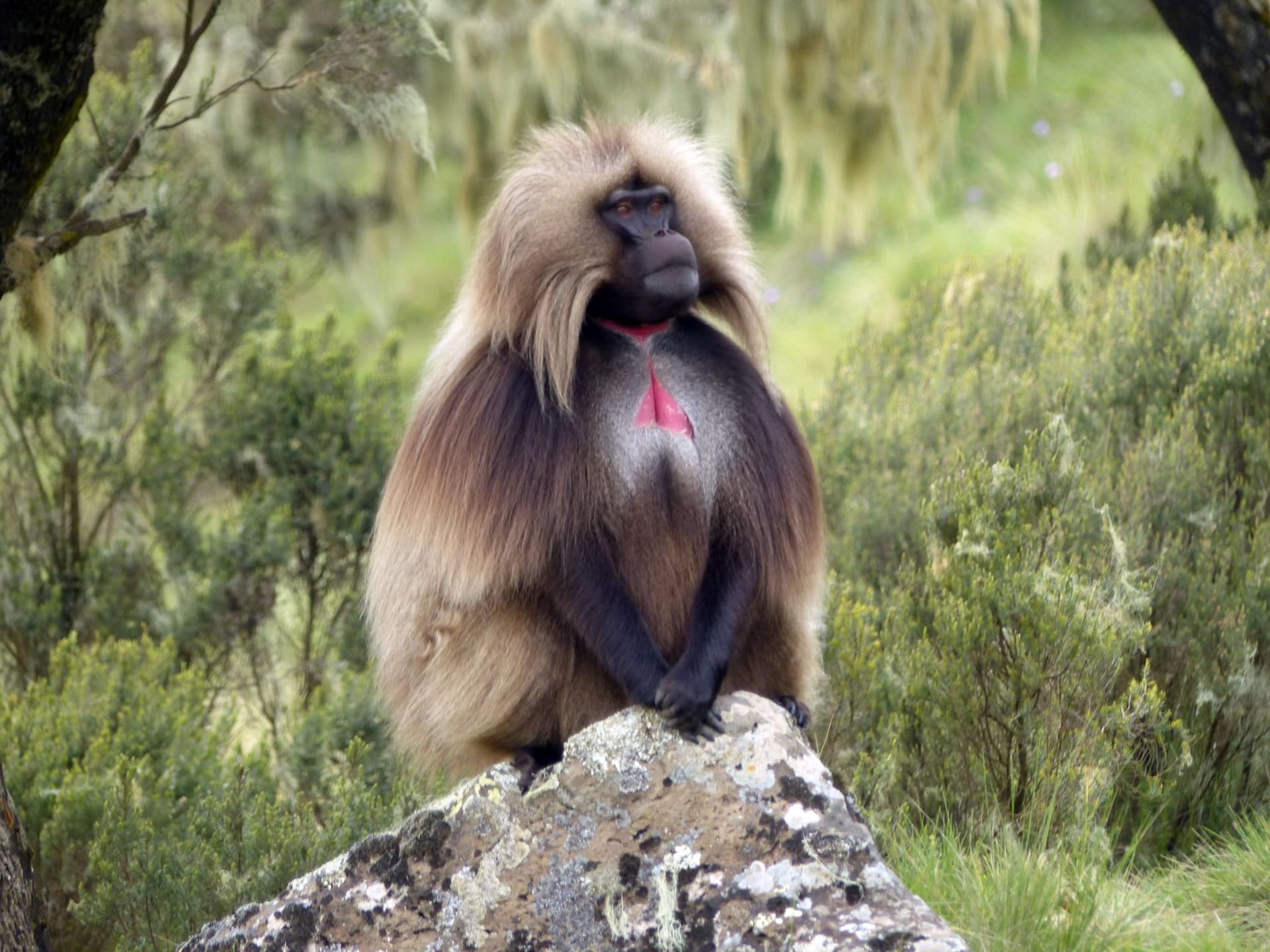
The first morning at Sankaber, I walked to the escarpment edge before breakfast and nearly stepped on a gelada. Not a single one — a whole troop, maybe eighty of them, pulling grass from the cliff-top meadow with quick, deliberate hands, indifferent to the 1,500-meter void behind them. The Simien Mountains are sold as a trekking destination, but what they really are is a place where the landscape itself is rearranged at a scale that makes your usual sense of distance useless. Valleys the size of European countries drop away from your feet. The horizon is not flat — it is layered, ridge after ridge disappearing into haze that turns from blue to violet as the afternoon light shifts.
The villages that dot the plateau — Chenek, Geech, Ambikwa — are working communities, not scenic props. Farmers plow with oxen along trails that double as the trekking route. The injera that shows up at guesthouses is made that morning. In Debark, the market town where most treks begin, the only items on the menu are what the week’s market produced. I ate ful and tibs and drank tej, the honey wine that tastes like mead cut with something ferrant and wild, and watched the town move at a pace that had nothing to do with tourism because, outside of the park itself, tourism barely exists here. Lalibela and Gondar get the crowds. The Simiens get the serious.
The Ethiopian wolf is why you drag yourself out at 4 a.m. on the second morning. They hunt afro-alpine rodents at dawn, picking their way across the moorland on improbably thin legs, rust-orange against the frost-burned grass. The park has lost most of its population to disease and habitat pressure, and the wolves you see are descendants of a near-extinction. Watching one pause on a ridge above Chenek, silhouetted against a sky that is still deciding whether to be night or morning, feels less like wildlife viewing and more like witnessing something that nearly didn’t make it.
When to go: October to March, after the main rains have cleared and the highland grass is still green. November and December are ideal — clear skies, cool days, and the landscape at its most vivid. Avoid June to August when the heavy rains turn the trails to mud and visibility disappears entirely.
What most guides get wrong: They frame the Simiens as a challenging trek requiring serious logistics. The walking is not hard. The altitude — most trails sit between 3,200 and 4,500 meters — demands acclimatization, but the paths themselves are wide, well-marked, and gentle. What the guides do not tell you is that you can do a meaningful two-day loop from Sankaber and see everything: the geladas, the escarpment, the wolves at Chenek. You do not need eight days and a full porter team to have the experience that earned this place its UNESCO listing.