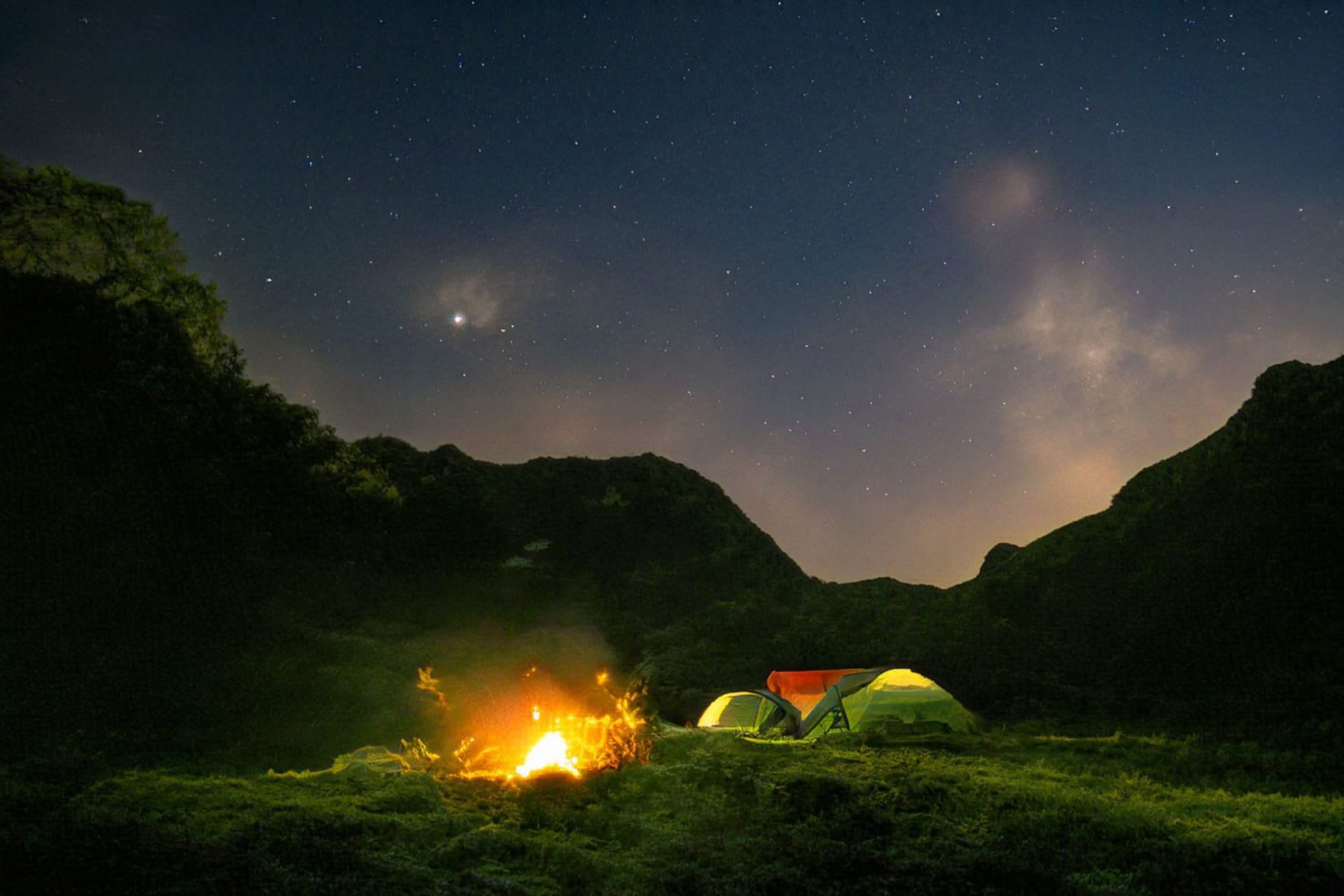
Chenek Camp
"The ibex came around a boulder four meters away and looked at me like I was the one in the wrong place."
The High Camp
Chenek is the last main camp before the high peaks, and it announces itself as such. The air at 3,620 meters is genuinely thin in a way that Sankaber and Geech only gestured at — you feel your lungs doing more work, you think twice about moving too quickly, you sleep lighter and wake earlier. The camp has a proper cooking shelter and water from a nearby stream, and the stone huts here are slightly better insulated than lower on the trail, which matters when the temperature goes to minus eight.
The approach from the west is across a high plateau that narrows as you go east, the escarpment drawing closer on the left until the camp appears on a shelf of land just above the cliff. The view east from Chenek toward Bwahit and the higher peaks is the clearest look you get at the Simien’s architecture — a series of massive buttresses, one behind the other, each one slightly higher, climbing toward Ras Dashen.
Walia Ibex in the Morning
The walia ibex are endemic to the Simien Mountains. There are perhaps five hundred of them left, all within the park. I had been told they could be seen from Chenek, but I was not prepared for how close. On my first morning I walked to the cliff edge at seven and found a small group — two females and a male — grazing on a terrace about twenty meters below the rim. The male had horns that curved back and then up in a shape that seemed structurally improbable, and he watched me with a calm assessment that suggested he had decided I wasn’t worth worrying about.
Over two days at Chenek I saw ibex every morning. They favor the cliff terraces below the rim, where the vegetation is protected from the wind and where predators have limited approaches. They move along ledges that look impossible — four-footed and unhurried, placing each hoof with the precision of animals that have been navigating this rock for as long as the rock has been here.
Ethiopian Wolf Country
Chenek and the plateau east of it is the area most associated with Ethiopian wolf sightings on the standard trek. Ethiopia’s wolf — actually more closely related to a coyote than a wolf, slender and rust-red, with a white throat that catches the early light — is critically endangered. There are fewer than five hundred left in the world, and the Simien plateau holds a portion of that population.
I saw one on my second morning, hunting at dawn on the moorland south of camp. It was working the ground the way a cat works a mousehole — stiff, focused, completely still and then suddenly very fast. It caught something I didn’t see, swallowed it, and continued. The whole encounter lasted about four minutes. I wrote it up afterward in a way that didn’t capture it, and then I stopped writing about it.
Before the Summit Push
Chenek is where the summit attempt begins. Most groups leave at four or five in the morning, crossing the high plateau in the dark before dawn, aiming to reach Ras Dashen and return before afternoon cloud closes in. The camp feels different the night before — quieter, earlier to bed, with everyone rationing their energy and wondering what the altitude above four thousand will feel like.
When to go: October through March, with December through February being optimal for clear summit days. Walia ibex are present year-round but most visible in the early morning. Ethiopian wolf sightings are never guaranteed — dawn and dusk are your best windows. Nights at Chenek are severe in winter; a proper sleeping bag rated to -10°C is not an exaggeration.