Arkwasiye
"There were more geladas than I could count, and none of them cared at all."
The In-Between Place
Arkwasiye doesn’t feature heavily in the trekking brochures. It sits between Geech and Chenek on the long escarpment traverse, and most itineraries treat it as either a lunch spot or an optional extra night. I stopped here for a full afternoon and into the next morning, and I think it might be the best decision I made on the entire Simien trek.
The camp area is simpler than Sankaber or Geech — a ranger post, a flat area for tents, a water source from a stream that needs treating. What it has, in abundance, is geladas. The troops in this section of the park are among the largest in the Simiens, some running to several hundred individuals, and they have relatively little human contact compared to the camps on either side. They are present in a different way — not habituated to indifference, exactly, but engaged in their own social world with an intensity that made me feel I was observing something real, not performed.
The Gelada World
I spent three hours one afternoon sitting on a rock about fifteen meters from the edge of a large troop. The social dynamics were relentless. Males tested each other constantly — bluff charges, teeth displays, long stares — while the females groomed each other in clusters of four or five. The juveniles were chaotic, wrestling and chasing and occasionally hurling themselves off small boulders for no apparent reason. Infants clung to their mothers’ bellies and watched everything with enormous dark eyes.
What I kept noticing was the sound. Geladas are the most vocal primates I’ve encountered — not the loudest, but the most continuous. They produce a rolling sequence of calls that sounds almost like speech, a mix of grunts, clucks, and something that linguists apparently call a “wobble.” The whole troop maintains this low-level vocal contact while grazing, like everyone is talking quietly at once and nobody needs to listen.
Altitude and Openness
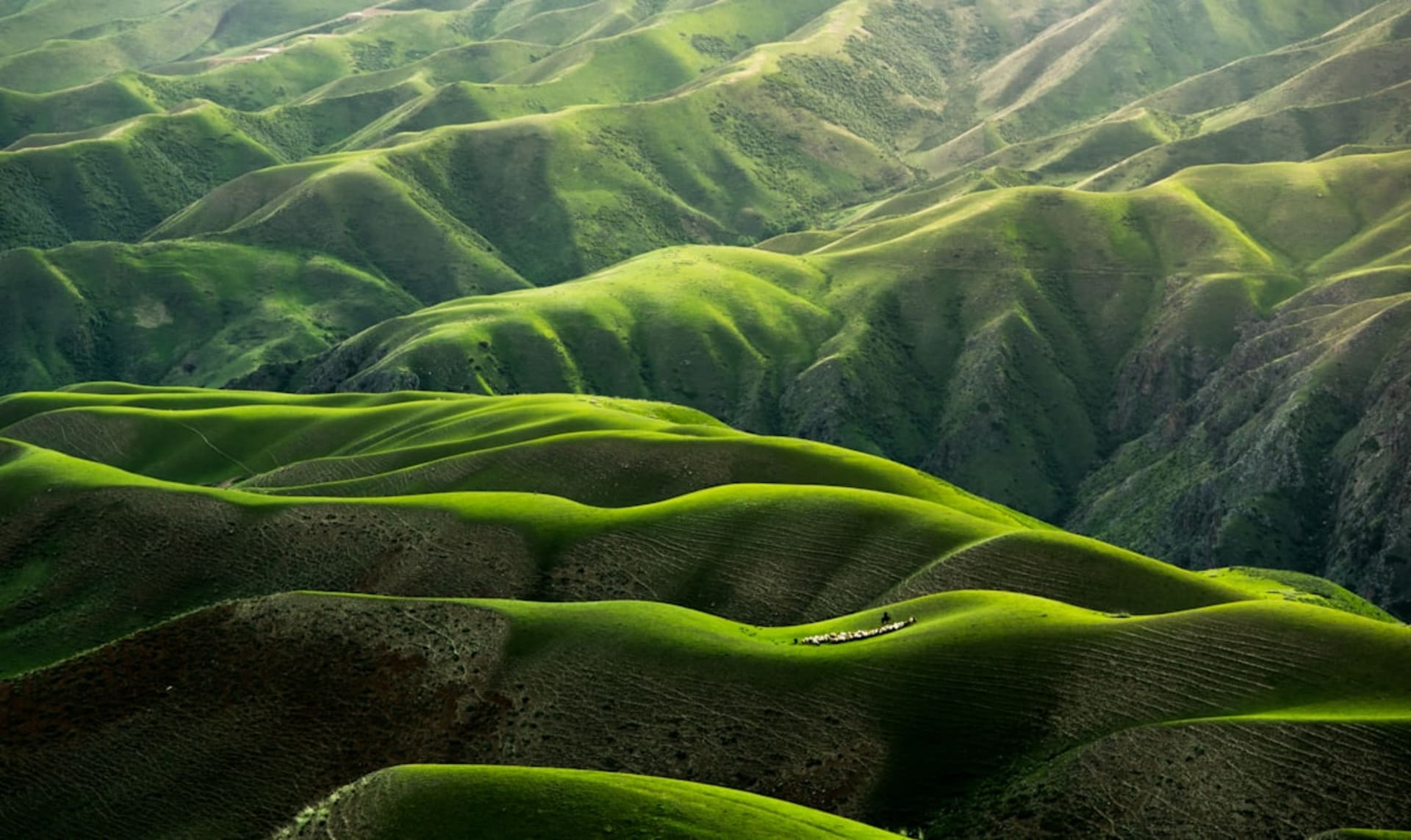
Arkwasiye sits around 3,500 meters, slightly lower than Geech, and the moorland here has a particular quality — wide and open in a way that feels less dramatic than the cliff-edge camps but more spacious. The giant lobelias continue, interspersed with everlasting flowers that grow in yellow and white clusters along the path. The wind picks up by afternoon and then drops completely after dark, leaving a silence that at altitude has a texture to it.
My tent that night was about forty meters from the ranger post, and at some point past midnight I woke to a sound I couldn’t place — a low, rhythmic bark from somewhere on the slope below. I lay still and listened for ten minutes. It didn’t repeat. The scout the next morning said, with casual certainty, Ethiopian wolf. I had no way to verify this. I prefer not to investigate too carefully.
Why This Camp Matters
The Simien trek has a logic that pulls you toward the high points — Imet Gogo, Chenek, Ras Dashen. Arkwasiye resists that logic. It’s not a summit or a viewpoint or a dramatic escarpment moment. It’s a place where the plateau goes on being itself, large and indifferent, and the animals that live here do the same. That’s rarer than you’d think.
When to go: November through February for the clearest weather and most predictable gelada sightings. The troops are present year-round, but the dry season keeps the meadows accessible and the light clean. Arkwasiye works best as an overnight stop rather than a day visit — the gelada activity peaks at dawn and dusk, and rushing through means missing both.