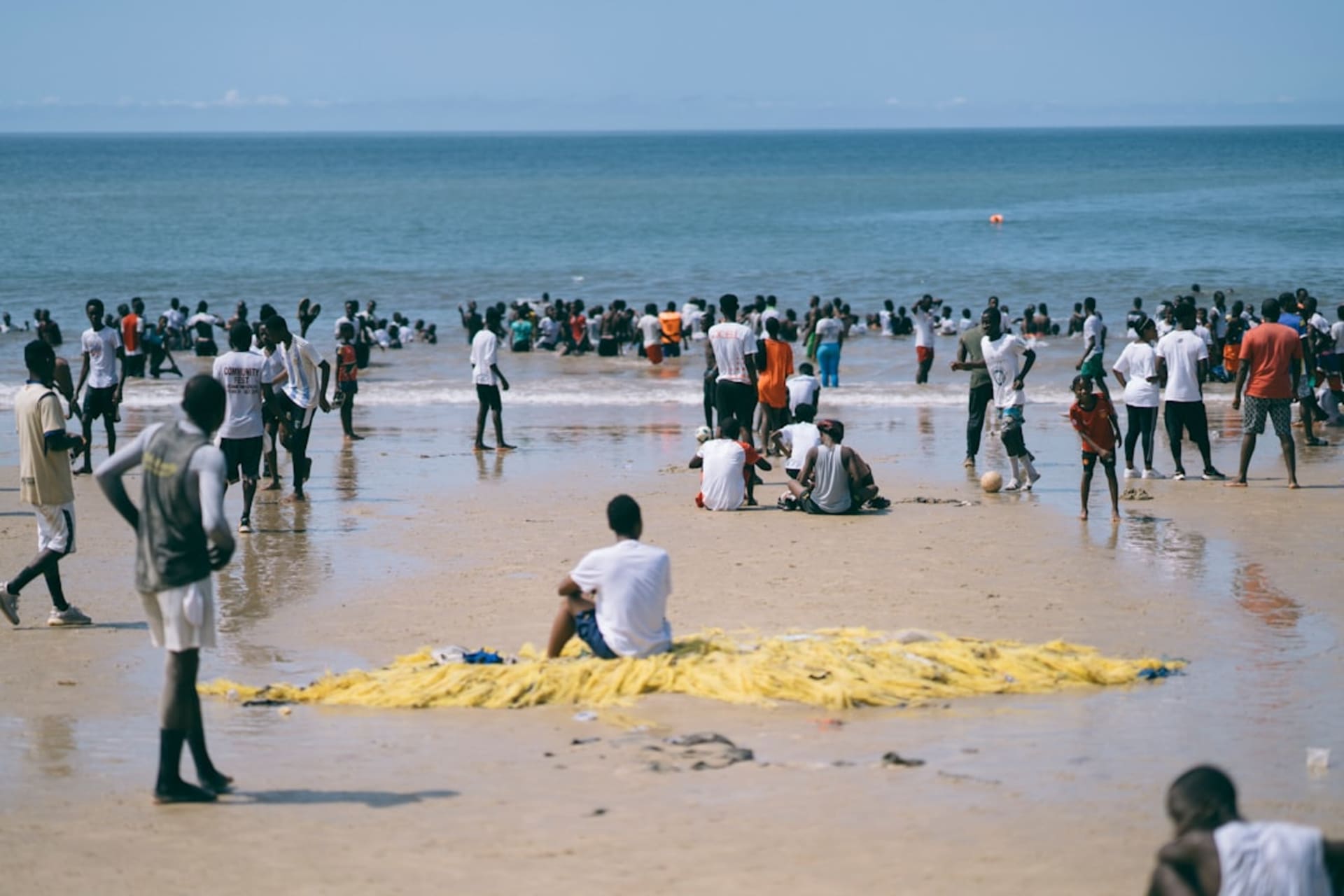
River No. 2 Beach
"I stood at the junction where the river met the sea and felt the two currents against my ankles simultaneously — cold from inland, warm from the ocean."
The name River No. 2 is bureaucratic and slightly absurd for a beach this beautiful, which perhaps accounts for why it remains one of those places that hasn’t yet been smoothed into a resort. The drive down from Freetown along the Peninsula Road takes about ninety minutes and passes through forest so close to the tarmac that branches occasionally brush the car. Then the road drops toward the coast and the beach appears below you, and whatever expectations you had quietly upgrade themselves.
The Junction
What makes River No. 2 physically distinct from the other excellent beaches on the Freetown Peninsula is the river itself — a clear-running freshwater stream that crosses the beach and empties into the ocean at the sand’s southern end. You can wade the river in ankle-deep water, sit in it where it runs cold over flat stones, or cross it to reach the more isolated northern section of the beach where almost no one goes.
I spent an hour in that junction zone, where the river’s freshwater current and the Atlantic’s small shore-break meet and compete. The temperature differential was real and strange — cold rushing over my feet from one side, warm from the other. It sounds like a minor thing. It wasn’t. It was one of those sensory moments that gets stored somewhere durable.
The Beach Itself
The sand at River No. 2 is white and fine and the kind of clean that suggests limited foot traffic. The surf is modest by Atlantic standards — enough to swim through without drama, enough to make the water interesting. The hills behind the beach are forested and steep, and in the late afternoon the light comes over them at an angle that turns the sand amber for about twenty minutes before the sun drops.
There’s a modest bar-restaurant at the south end run by a local family — fresh fish grilled over charcoal, cold Guinness (the West African version, which is different from what you think you know), palm wine for those who find it. I ate barracuda at a table with my feet in the sand and watched pelicans work the surf line. This is approximately what I mean when I use the word contentment.
Beyond the Postcard
Lia swam out further than I wanted her to and reported the water visibility as excellent. I swam to a middle distance and can confirm it’s warm and blue and has the particular quality of ocean water in places where not enough people have yet discovered it. We were, the afternoon we were there, sharing the beach with perhaps fifteen other people across its full crescent length. I found this ratio deeply civilized.
The walk north along the beach, past the river crossing, takes you to a stretch that’s functionally empty. The jungle comes right to the edge of the sand in places, the palms lean at their characteristic angles, and the only sound is surf and wind and whatever birds are doing in the canopy behind you.
Getting There
The Peninsula Road south from Freetown is paved and in reasonable condition. Shared taxis run from the Congo Cross junction, or you can hire a private car for the day — worth doing if you want to combine River No. 2 with Tokeh Beach further south. The beach itself has no entry fee, though the restaurant family at the south end will expect you to eat or drink something, which is the kind of expectation I find entirely reasonable.
When to go: November through April, when the dry harmattan winds keep the air clear and the roads reliable. The surf picks up slightly in the dry season but remains swimmable. Avoid the height of rainy season — June to September — when the Peninsula Road can flood at low points and the beach itself loses its appeal in driving rain. Weekdays in December are a sweet spot: weather perfect, crowds thin.