Africa
Sierra Leone
"Africa before it learned to perform itself for tourists."
I landed in Freetown at dusk and the city came at me from every angle — ferries slicing across an estuary the color of hammered copper, motorcycles weaving between fruit sellers and phone-repair stalls, the whole peninsula rising steeply behind the waterfront in ridges of green so dense they look almost unreal. I had flown through Dakar and Abidjan on the way, both cities I know well, but nothing quite prepared me for the particular quality of light here, or the way the Atlantic smells slightly different when it hits a coast this undisturbed.
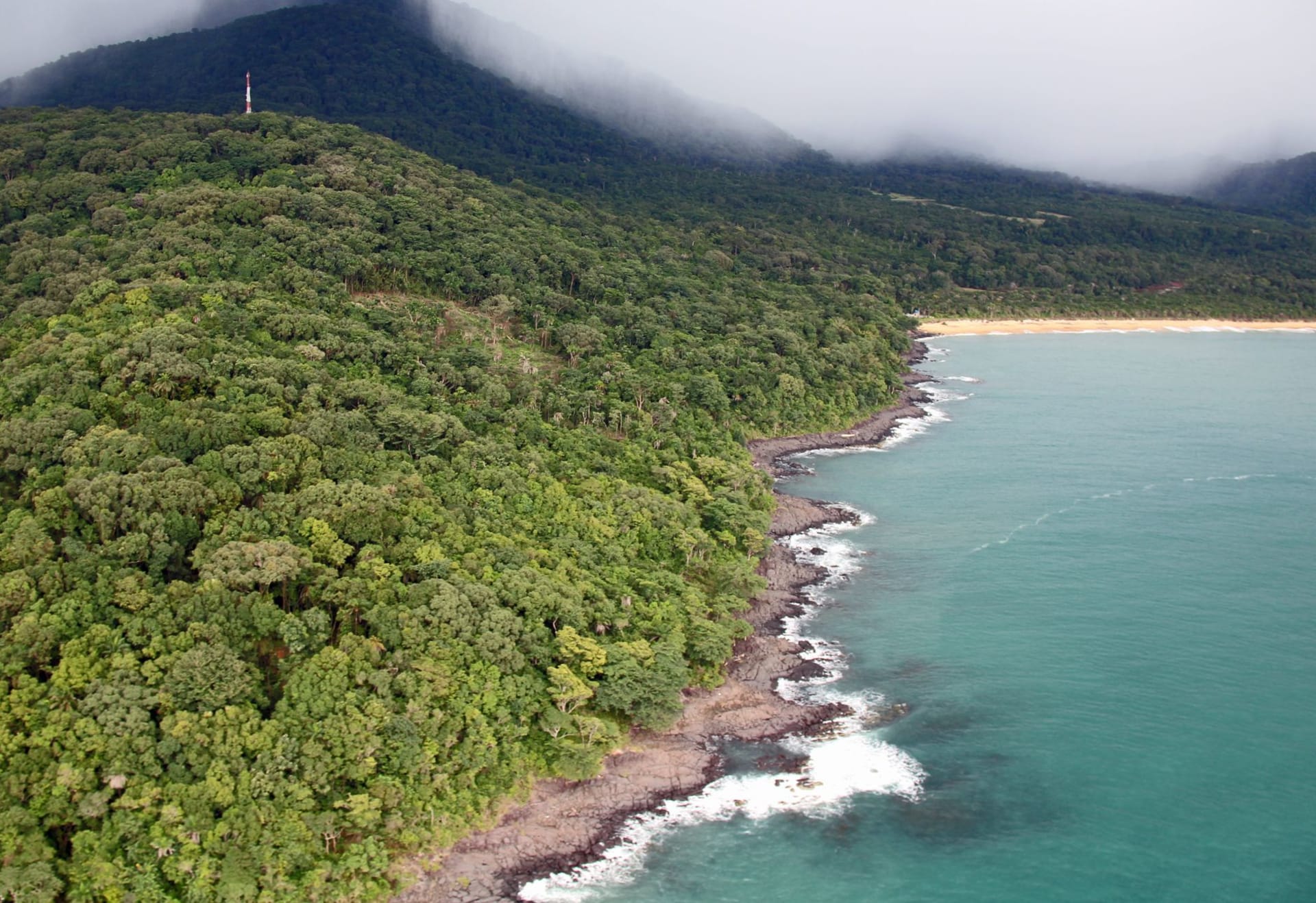
Freetown itself is chaotic in the way that cities are chaotic when they have not yet been smoothed out for visitors — in other words, genuinely interesting. The Cotton Tree at the center of town, a thousand-year-old kapok rising from the junction like something from another era, was more moving than any monument I expected to be moved by. I ate grilled fish wrapped in newspaper on Aberdeen Beach at midnight, the kind of meal that has no business tasting as good as it does. Further down the Peninsula Road, Tokeh and River No. 2 Beach are the sort of places that stopped me mid-sentence more than once — long arcs of white sand backed by rainforest hills, with almost no one on them. Not boutique-hotel-quiet. Actually empty.
What I did not expect was the rivers. The interior of the country — the Tiwai Island Wildlife Sanctuary in the south, the Outamba-Kilimi National Park in the north — is West African rainforest at its most intact. We took a dugout canoe up a river near Kenema where the tree canopy closed over the water and chimpanzees called from the opposite bank. Pygmy hippos exist here, mostly unseen. Rare bird species that birders from Europe and North America come specifically to find. The infrastructure is thin and the roads can be difficult, but the country rewards anyone willing to move slowly and ask around.
When to go: November to April is the dry season — easier roads, lower humidity, and the best conditions for beach time and forest trekking. The rainy season runs May to October and turns the interior lush but the roads challenging. If you go in the rains, the waterfalls are spectacular and you will have everything almost entirely to yourself.
What most guides get wrong: Sierra Leone still carries the weight of its difficult recent history in how it is written about — the civil war, the Ebola outbreak — as if those events are the defining lens for understanding the country. They are not, or at least they are not the only lens. What I found was a place that has rebuilt with a particular kind of resilience that expresses itself not in official tourism slogans but in the warmth of daily interactions, the creativity of the music scene in Freetown, and the almost total absence of the performative hospitality that exhausts me in more-traveled destinations. People here are not particularly interested in catering to your Africa fantasy. That, oddly, is one of the best things about it.