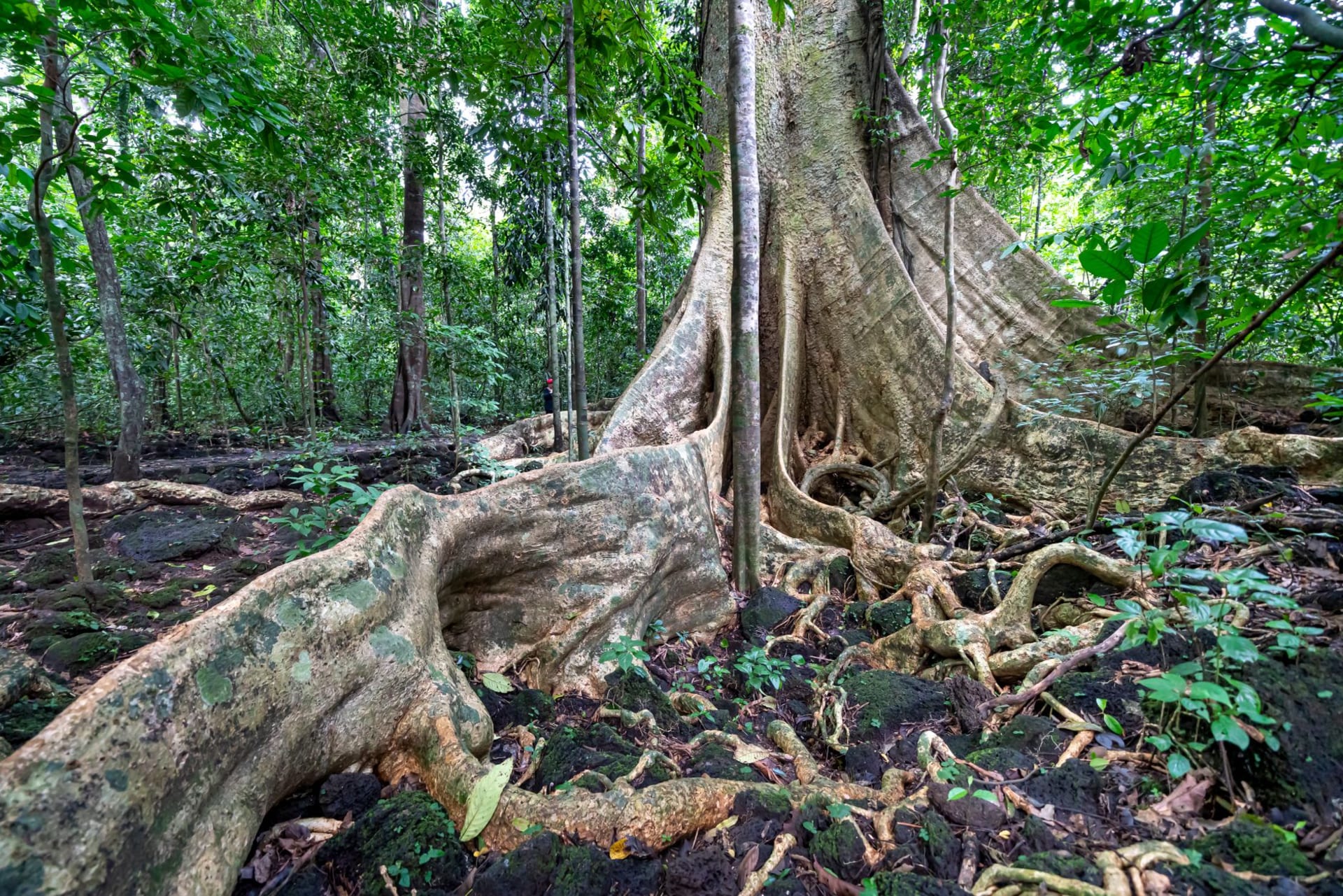
Outamba-Kilimi National Park
"The ranger found elephant tracks at the riverbank that were maybe two hours old. We kept very quiet after that."
Outamba-Kilimi sits near the Guinea border in Sierra Leone’s Northern Province, and reaching it from Freetown involves a serious inland journey — eight to ten hours by road, depending on the season and the roads’ relationship with recent rain. The distance is the first filter. The park sees a fraction of the visitors that comparable West African wildlife areas receive, which is part of its appeal and part of its vulnerability. When I arrived at the Kamakwe area camp, I was the only person there besides the rangers.
Two Ecosystems, One Park
The park is divided into two units connected by a corridor: Outamba in the south, characterized by forest and grassland; Kilimi in the north, drier Guinea savanna with scattered trees and seasonal wetlands. The difference between the two is perceptible within a few kilometers — the light changes, the smell changes, the sounds change. In Outamba’s forest sections, the canopy closes overhead and the air is thick and cool. In Kilimi, the grass is tall and yellowed in the dry season and the sky opens up in a way it doesn’t do further south.
The Little Scarcies River runs through Outamba, and the gallery forest along its banks is where much of the wildlife concentrates. My first walk with a ranger — a quiet, methodical man named Alhaji — went along the river course at dawn. We found hippopotamus tracks in the mud before we found hippos. Then we found hippos: two adults in a deep bend, mostly submerged, watching us with the practiced unconcern of large mammals that have assessed their advantages and found them adequate.
The Elephants
West African forest elephants are smaller and more elusive than the bush elephants of East and Southern Africa, and seeing them requires either significant luck or significant patience, usually both. The park has a population — census estimates vary, but rangers consistently report signs. I spent three mornings looking.
On the second morning, Alhaji and I found a path through tall grass that showed fresh trampling, the grass bent and broken in a clear corridor. The tracks at a muddy water crossing were enormous and recently made — the mud still hadn’t settled back. We followed for perhaps twenty minutes and then Alhaji stopped and listened and shook his head. They’d moved into denser vegetation and we weren’t going to catch them. I found this result more satisfying than a guaranteed zoo-like encounter would have been.
Chimpanzees and Others
Outamba’s forested hills hold chimpanzees, and this population has been the subject of monitoring efforts that make sightings more reliably achieved than for the elephants. On my third day, a longer trek into the forest interior produced results: a small group in the upper canopy, moving through a fruiting tree with characteristic efficiency. The dominant male watched us from a branch for a long moment before deciding on indifference and going back to his figs.
The birdlife throughout the park is exceptional and largely unremarked in most accounts, which is bewildering. The forest sections hold species I’d only seen in field guides — African finfoot along the river, Pel’s fishing owl at dusk, a Nkulengu rail that appeared on a path and disappeared before I could get my binoculars to it.
The Camp and Logistics
The camp at Kamakwe is basic and functional: tents with cots, a common eating area, latrine facilities. The National Protected Area Authority rangers are knowledgeable and genuinely enthusiastic about the wildlife, which matters more than the infrastructure. Food was rice and sauce, reliably prepared. Water came from the river, filtered. The generator ran for a few hours in the evening and then everything went dark and the night sounds started up.
When to go: November to April, the dry season. The roads to the park become extremely difficult or impassable during the rainy season. January and February are optimal — the vegetation dries and opens, making wildlife spotting easier, and elephant activity near the rivers increases as water sources concentrate.