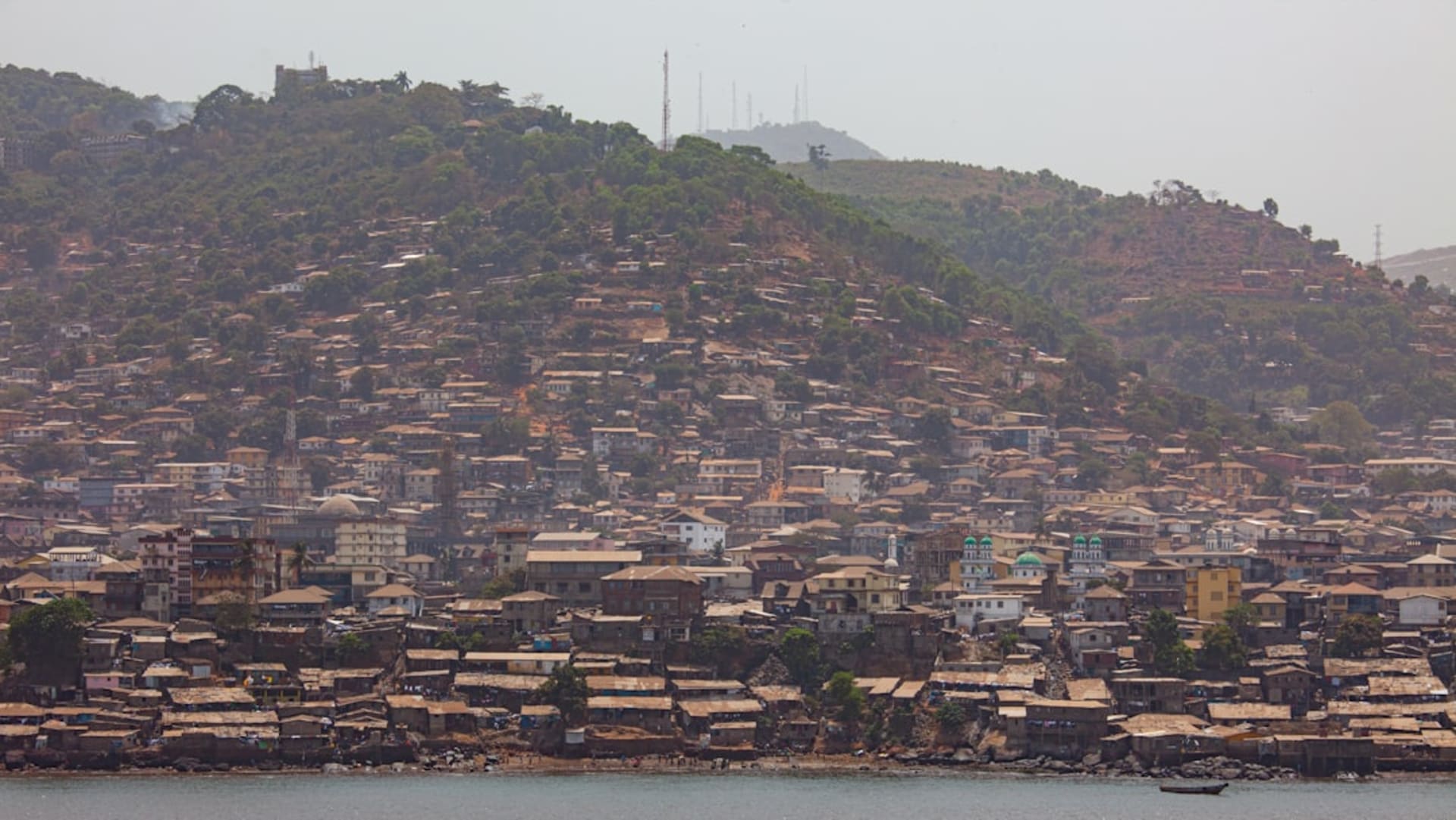
Kenema
"The diamond dealer spread a cloth on the table and tipped a small paper fold onto it. What I thought were bits of glass caught the light differently."
Kenema is not on the tourist circuit, which is precisely why I went. The capital of the Eastern Province sits about five hours from Freetown by road, deep enough inland that the humidity becomes a different creature — heavier, less interrupted by coastal breezes. The city has an energy that comes from being genuinely productive. People here are doing things, moving things, negotiating things. The diamonds that come out of the surrounding creeks and pits have made this a trading city of the first order, with all the rough commercial vitality that implies.
The Diamond Quarter
The diamond trading area near the market is not hidden, but it’s not signposted either. Small licensed dealers work from shopfronts that would tell you nothing from the street. I was brought here by a local journalist I’d met at my guesthouse who covered mining issues for a regional paper and had exactly the kind of access that takes years to build and cannot be borrowed.
We sat with a dealer named Ibrahim who handled rough stones with the practiced economy of someone who has made thousands of assessments. He let me hold one — a small alluvial diamond, perhaps half a carat, dull-looking in its rough state until he tilted it and something changed. He explained the grading: color, clarity, weight, the origin certificates that now accompany every legal export. Sierra Leone’s diamond sector has been reforming seriously since the conflict era, he said. The reforms are real. So are the ongoing challenges.
Artisanal Mining on the Sewa River
Outside Kenema, along tributaries of the Sewa River, artisanal and small-scale miners work with shovels, gravel pumps, and sluice boxes. The landscape these operations create is distinctive — pits and mounds, water-filled craters, red mud everywhere, the particular smell of disturbed earth and river water. My journalist contact arranged for me to visit a licensed mining operation about fifteen kilometers outside the city.
The miners — perhaps twenty men working one alluvial deposit — operated in rotating shifts, one crew moving gravel while another sorted at the sluice. The work was entirely manual and very hard. The foreman explained the economics with the directness of someone who has done the math many times: the cost per week, the probability distribution of a find, the percentage splits. Most weeks, nothing. Occasionally, enough to matter. Rarely, life-changing. The ratio of mostly-nothing to occasionally-something is what makes the industry persist and what makes it brutal.
Gola Rainforest Connection
The Gola Rainforest National Park begins about sixty kilometers southeast of Kenema, on the Liberian border, and represents one of the last significant lowland rainforest blocks in Upper Guinea. I made a day trip out to the buffer zone village of Lalehun, where community rangers run forest walks. The forest at Gola is extraordinary — tall, dense, dimly lit through the canopy, rich with the particular silence of old-growth forest that is mostly not silence at all but layered sound with the human frequency removed.
I saw forest buffalo signs but no buffalo. I saw a spectacular green-tailed bristlebill that my bird guide told me was unremarkable and my eyes told me the opposite. I drank palm wine with the ranger team at a wooden table in the village at the end of the afternoon and felt a specific category of tired that comes from having used your eyes properly all day.
Eating in Kenema
The market food stalls around the lorry park produce the best food I ate in Kenema: rice and plasas (leafy greens in palm oil), jollof rice that had been cooking long enough to develop a bottom crust worth negotiating for, roasted groundnuts in newspaper cones. I ate at the same stall three times not because it was convenient but because the woman running it had figured out a groundnut soup that I couldn’t identify a flaw in.
When to go: November to April during the dry season. The roads east of Kenema toward Gola can become difficult in heavy rains. The city itself operates year-round, but the mining sites are most accessible in dry conditions. February is a good month — stable weather, clear skies, and the forest walks at Gola are excellent before the vegetation thickens with the early rains.