Bo
"Bo felt like a city comfortable enough with itself that my presence didn't register as an event."
Bo sits roughly 250 kilometers southeast of Freetown in the heart of Sierra Leone’s Southern Province, and it functions as the real inland capital of the country regardless of what Freetown’s administrative status says. Nearly half a million people, a university, a central market that operates at a volume and density that takes getting used to, and an evening atmosphere organized around football, conversation, and local drink. I arrived expecting a transit stop on the way to Tiwai Island and stayed two extra days.
The Market
Bo Market is the kind of market that requires a guide for a first visit, not because it’s difficult to navigate but because without local knowledge you will buy the wrong things at the wrong prices and miss entirely what makes it interesting. I had a contact — a teacher at the university named Fatmata who’d offered to show me around — and she moved through the market with the efficient warmth of someone doing a weekly errand while also being extraordinarily useful to me.
The produce section was enormous: cassava and sweet potato in quantities that suggested the surrounding countryside was actively cooperating. Dried fish in stacks, their smell sharp and particular. Groundnuts in sacks and peanut butter ground fresh on-site. Kola nuts in precise arrangements, red and white, their social significance Fatmata explained with brisk patience. The fabric stalls were deep with gara tie-dye in colors that didn’t behave the way colors from synthetic dyes behave — they had density and variation, each piece fractionally unique.
Mende Culture and the Poro Society
The area around Bo is Mende country, and the Mende have maintained cultural institutions — particularly the Poro secret society for men and the Bondo (or Sande) society for women — that structure social life in ways that aren’t immediately visible to visitors. Fatmata explained what she could and was precise about what she couldn’t. The Sande society’s wooden helmet masks — called sowei — are among the most recognized forms of West African art globally, and are still active cultural objects rather than museum pieces. I didn’t see one used in ceremony. That would have required timing and trust I hadn’t built.
What I did see: the evening gathering of older men around a radio outside a compound, the sound of talking drums from a neighborhood I didn’t enter, the way certain crossroads had objects attached to trees that Fatmata pointed at without comment.
Palm Wine and Football
The social life of Bo’s evenings is organized around two institutions: football on screens in small bars (Premier League, with periodic eruptions of collective feeling that could be felt through the wall) and palm wine at makeshift bars called poyo shops, where the wine arrives in plastic cups and tastes nothing like wine. It’s fresh-fermented, sweet and slightly fizzy when new, stronger and more sour as the day advances. I drank the early version, which is the sensible one.
I watched a Champions League match in a bar no larger than a living room with about thirty people, most of whom had a great deal of technical football commentary to offer. I understood perhaps half of what was said and agreed with most of it.
Getting Around the Chiefdoms
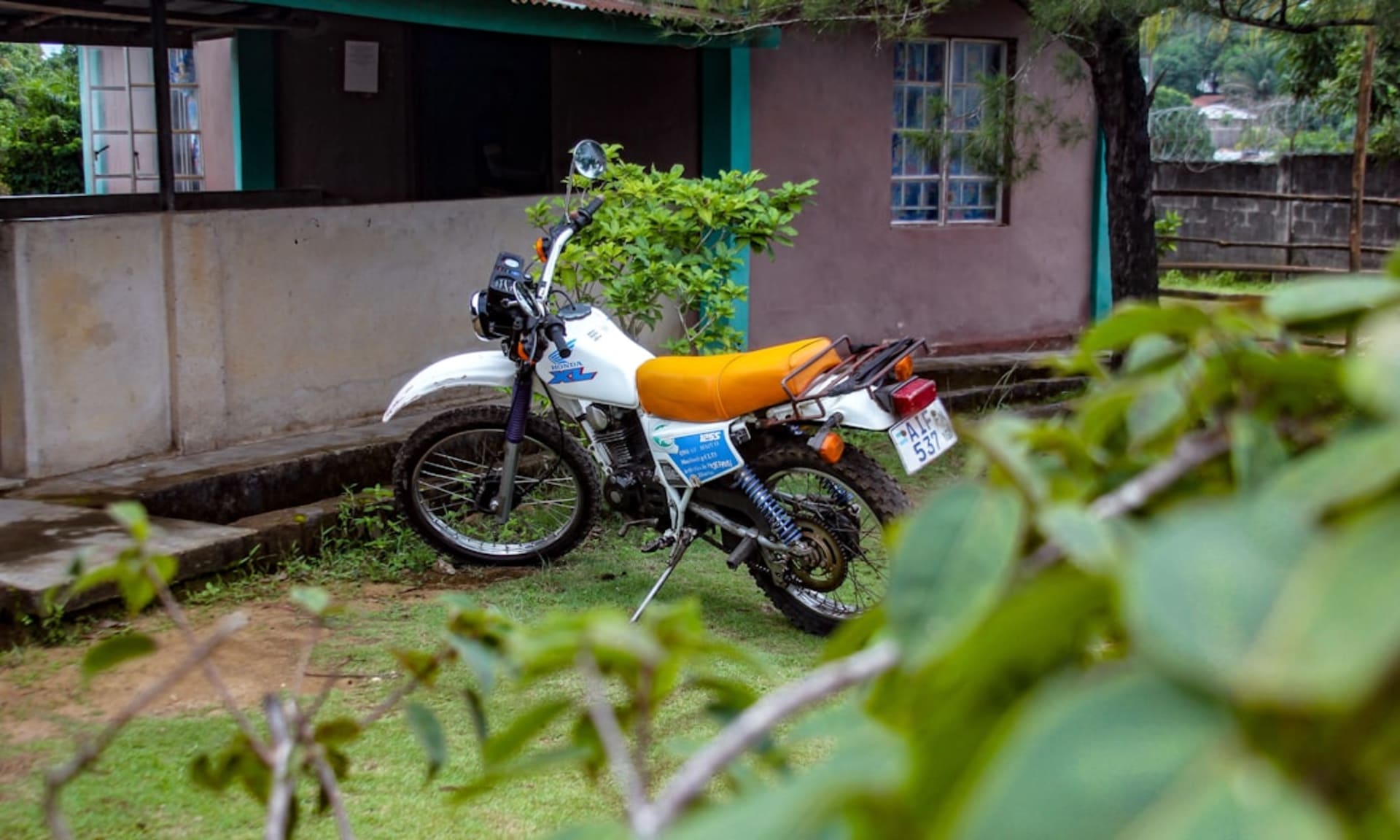
The villages in the chiefdoms around Bo are accessible by motorbike taxi and offer a different speed of life from the city. I spent one morning in a village about twenty kilometers out, where I was brought into a compound, given a chair, and offered food before any questions were asked. This sequencing — hospitality first, then conversation — was consistent across every rural encounter I had in Sierra Leone, and I found it quietly disorienting in the best way.
When to go: November to April in the dry season; the laterite roads around the chiefdoms become difficult in the rains. Bo itself is a year-round city and the market never closes, but visiting the surrounding villages is most comfortable in the dry months. March has good light and manageable heat before the hot season peaks.