Siracusa
"Standing in a Greek amphitheater in the dark, I understood why people still come back to this island."
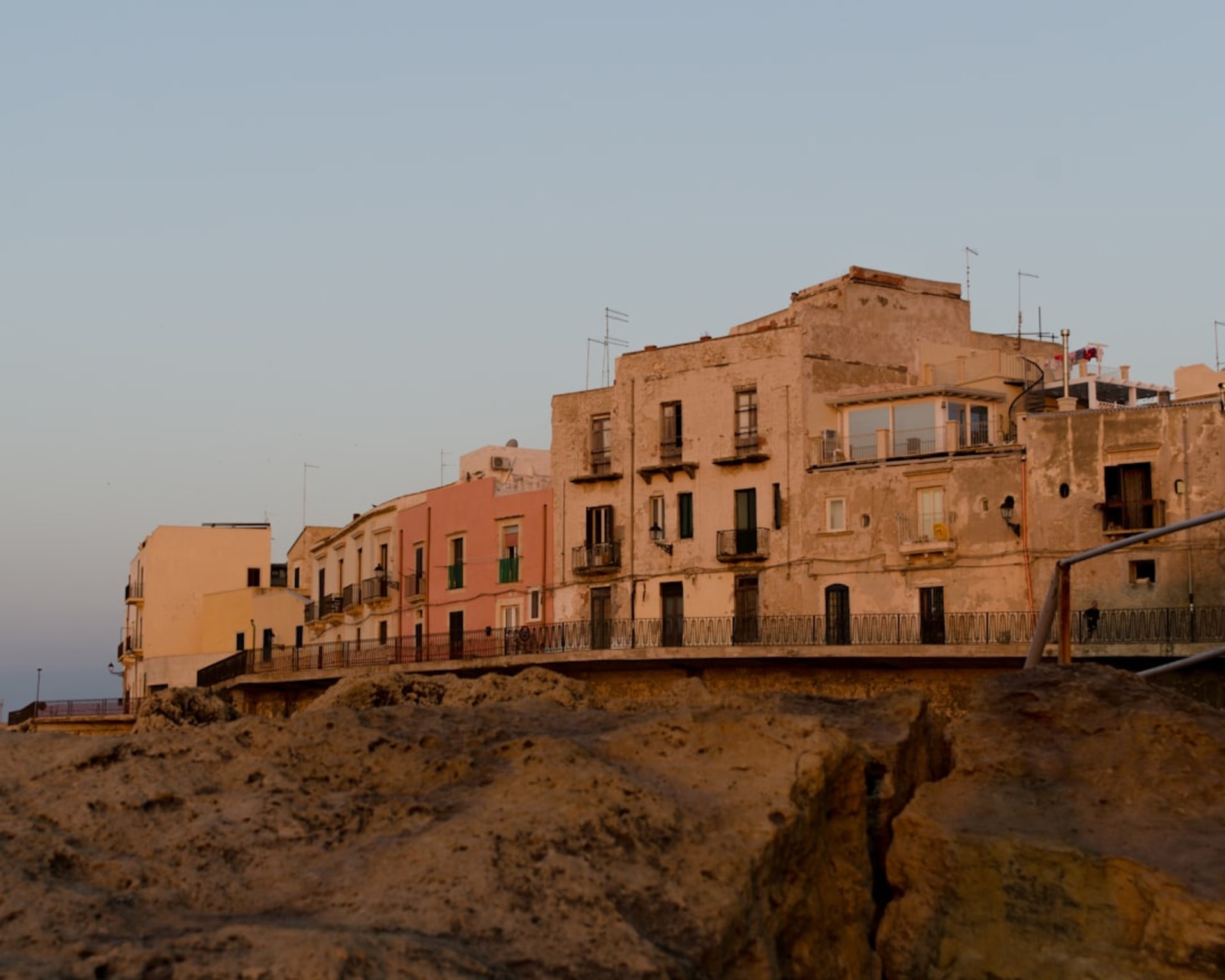
The island of Ortigia is connected to the mainland of Siracusa by a pair of short bridges, but the psychological distance feels larger than that. Cross into Ortigia and the scale of everything changes — narrower streets, older stone, the sea pressing in from three sides and giving everything a quality of light that bounces off water and washes the walls in something close to silver by late afternoon.
Ortigia on Foot
I arrived by train from Catania and walked the bridges on foot with my bag, which is the right way to do it. The mainland side of Siracusa is ordinary in the best sense — a real Sicilian city with a fish market and a bus station and people doing errands. Then you cross the bridge and the centuries pile up.
The Cathedral of Siracusa was a Greek temple to Athena before it was a Byzantine church before it was a Norman church before it became the baroque thing it is now. The columns of the original 5th-century BC structure are embedded directly in the cathedral walls — you can see them from inside, thick Doric columns of golden limestone incorporated into the Catholic nave as structural supports. The effect is not awkward. It’s one of the more honest pieces of architecture I’ve stood in.
Lia found Ortigia almost too beautiful, in the way that places can become self-conscious about being beautiful. She’s not wrong — the restaurant terraces in the piazza are calibrated for the Instagram moment, and you feel it. But walk two streets back and it dissolves.
The Archaeological Park
On the mainland, the Parco Archeologico della Neapolis is the main draw — a proper Greek theater carved into limestone hillside in the 5th century BC, used for performances until the Romans converted it for gladiatorial combat. The morning I visited, a school group was there, shouting down from the upper tiers to test the acoustics. The acoustics delivered.
Nearby, the Latomie del Paradiso are quarries where the Athenians were imprisoned after the failed 415 BC expedition — tens of thousands of men worked to death in the stone pits. There is a cave there called the Ear of Dionysus, tall and curved in a way that creates a whisper gallery effect. I whispered something at one end and heard it return to me from the walls.
The Market and the Afternoon
The Ortigia market happens in the mornings along a street between the water and the cathedral. Swordfish, red shrimp, sea urchins in styrofoam trays, ricotta in plastic containers still warm. I bought blood orange juice from a woman who pressed it in front of me. The color was an impossible deep red, like something the island was embarrassed about producing.
The afternoons in Siracusa are slow in the right way. The light off the harbor comes through west-facing windows around 4 p.m. and turns everything amber-gold. I sat at a bar and drank granita di caffè with a brioche and read for an hour without feeling like I was wasting time.
Practical Movement
Siracusa is best used as a base for the southeastern corner of Sicily — Noto is 30 kilometers south, Ragusa less than an hour’s drive. The town itself needs two days minimum, three if you want to do the archaeology slowly.
When to go: May and June are excellent — warm, not yet crowded, the market full and the sea beginning to be swimmable. October is also good, with calmer light and fewer tour groups in the archaeological park. Avoid the peak of August unless you like sharing the Greek theater with several hundred people.