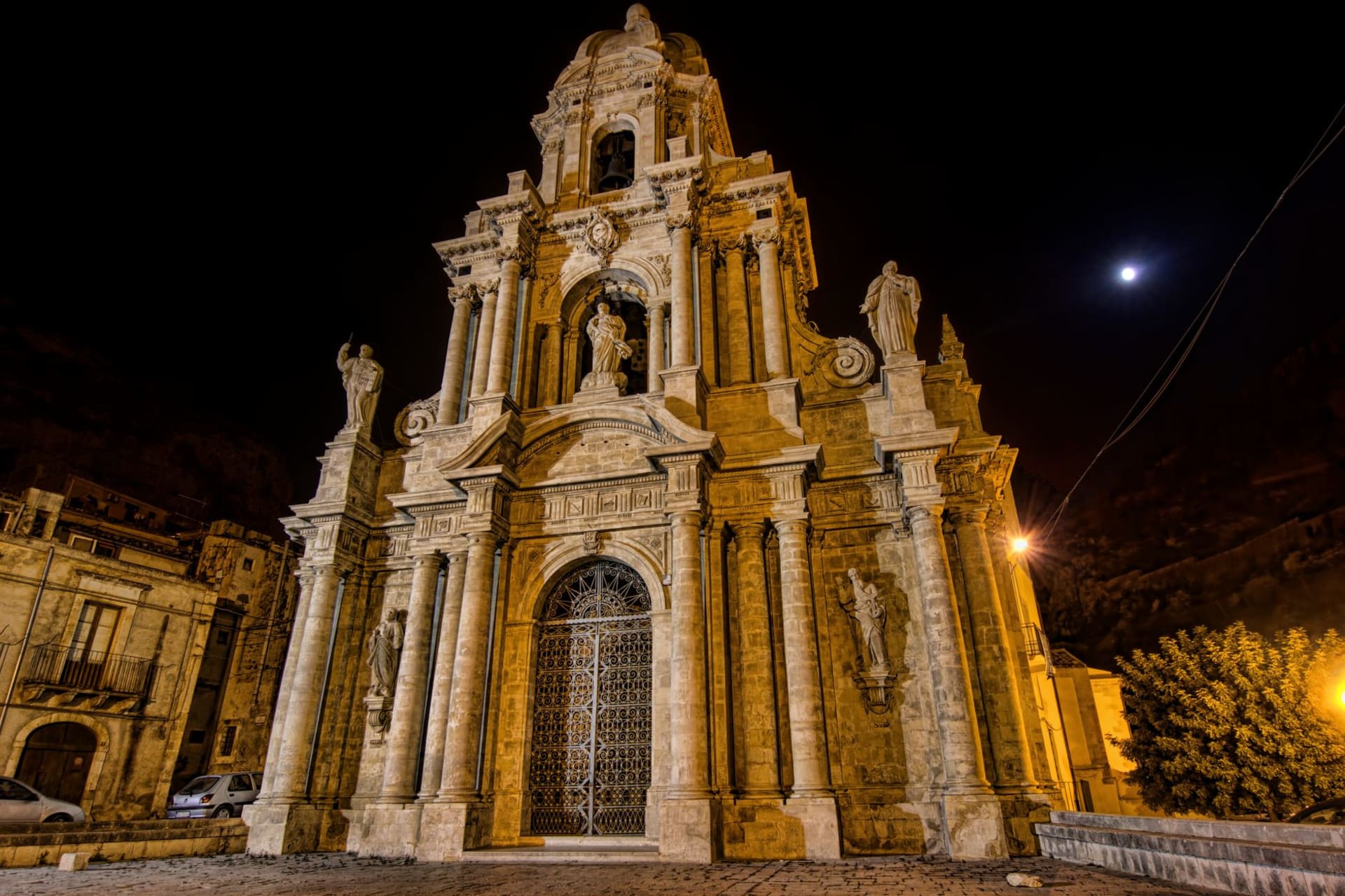
Ragusa
"The town had rebuilt itself into something better than what the earthquake destroyed. The earthquake helped, architecturally."
A 7.4 earthquake destroyed the towns of southeastern Sicily in January 1693. The death toll across the region was somewhere between 60,000 and 100,000 people. What happened next is one of the stranger episodes in European architectural history: the survivors rebuilt, but they rebuilt baroque — confident, theatrical, heavily ornamented, apparently deciding that if the earth was going to do that to them, they would respond with curves.
Ragusa is two towns. Ragusa Superiore is the upper, modern-ish town. Ragusa Ibla is the old city on the lower ridge, and Ragusa Ibla is why you come.
Ibla on Foot
The approach to Ibla from the upper town involves a steep staircase or a long curved road that descends into the valley between the two ridges and climbs again. I took the stairs down and the road up, which gave me two entirely different views of the same stone town. The stairs put you into the texture of it immediately — terraced gardens, parked scooters, a man hanging laundry, a door open to a kitchen where someone was doing something fragrant with onions.
At the bottom, Ibla spreads along its ridge with a coherence that comes from having been designed all at once. The earthquake was, architecturally, clarifying. The Via del Mercato and the streets around the Duomo di San Giorgio have a rhythm and a consistency of material — honey-colored limestone, iron balconies with carved corbels in the forms of horses and saints — that you don’t find in cities that evolved slowly.
San Giorgio
The cathedral of San Giorgio is the centerpiece of Ibla and the finest thing in it. The facade rises in three tiers, with Corinthian columns and curved pediments stacking upward, the whole thing ending in a dome that was added in the 19th century and that manages to not ruin what’s below. The square in front of it slopes gently downhill and has the quality of a stage set — the sort of place where you sit at a cafe table and wonder if anyone is filming.
Inside, the light from the stained-glass windows in the afternoon is very blue. I sat in a pew for a while doing nothing. This felt appropriate.
The Gardens and the Edge of Town
The Giardino Ibleo at the eastern tip of the ridge is a small public garden above a ravine — jacaranda trees, cacti, benches where old men read newspapers, and at the far edge a view down into the valley below the town that shows you the limestone gorge that Ibla sits on top of. The geological logic of the place becomes clear from here: the Iblean plateau, carved by rivers, leaving these ridge towns in the gaps between.
Practical Base
Ragusa is a good base for the Val di Noto — Modica is 15 kilometers south (chocolate town, worth a half day), Noto is 45 kilometers further, and Siracusa an hour by car. The whole southeastern baroque circuit is manageable from here.
The town has good places to eat — the cucina iblea is its own regional thing: cavatelli pasta, rabbit cooked with local herbs, the Ragusa Ibla DOC olive oil, which is serious. Lia found a small restaurant near the Duomo that served it poured over warm bread as an opener, which is either rustic simplicity or the whole point of Sicilian cooking, depending on your frame.
When to go: Spring (April-May) and autumn (October) are the best months — mild temperature, good light, the town neither empty nor overwhelmed. Avoid the peak August heat, when the limestone town becomes a solar collector. December brings a small Christmas market in the Ibla garden that is gentle and local.