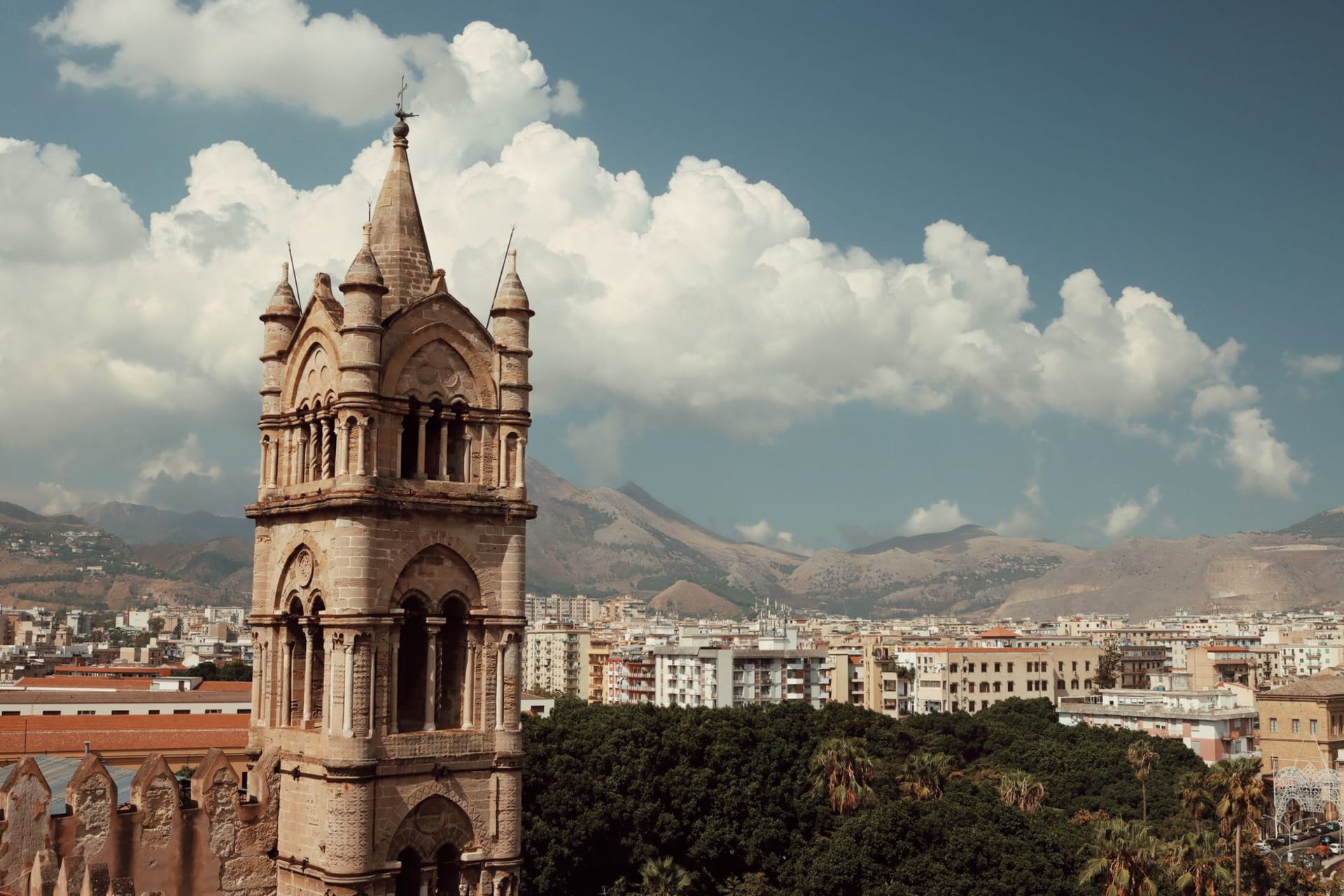
There is a particular quality to Palermo in the early morning — a smell of frying oil drifting up through shuttered streets before any shop has officially opened, a sound of crates being stacked in the Ballarò market before the vendors have had their coffee. The city doesn’t ease you in. It starts at full volume and simply stays there.
Ballarò and the Markets
I arrived during a weekday and walked straight into the market without a plan, which is the only way to do it. Ballarò runs through a neighborhood that feels genuinely lived-in rather than curated for foot traffic — the vendors are there to sell to each other’s neighbors, not to us. Swordfish heads sit propped on ice. Octopus tentacles drape over wooden boards. Someone’s frying panelle — chickpea fritters — in a cast-iron pan the size of a small satellite dish, and the smoke curls past a Norman-era church that no one seems especially moved by.
The Vucciria market is quieter now, more bars than food stalls, but the bones of it are still visible in the architecture of the streets: narrow, dark in the middle of the day, designed for shouting across balconies.
Baroque Interiors and Arab-Norman Layers
Palermo’s architecture is its strangest asset. The Cappella Palatina inside the Norman Palace has no good reason to exist — Byzantine mosaics, Arab muqarnas ceilings, Norman stone floors, all commissioned by a 12th-century king who apparently wanted to please everyone at once. The effect is not chaotic. It’s genuinely moving.
Lia kept stopping in front of gold-tessera walls trying to figure out where one culture’s influence ended and another’s began. We gave up around the Martorana church and decided the question was beside the point.
The city’s baroque set pieces — Quattro Canti, Piazza Pretoria with its ridiculous fountain of naked civic virtues — feel almost secondary to this older, stranger layer underneath.
Street Food as Practice
I want to be careful not to overstate the street food because it’s become a cliché, but: the pani câ meusa is a braised spleen sandwich that sounds like a dare and tastes like a revelation. The arancina (the Palermo version is oval, not round — locals will tell you this unprompted) comes with a crust that shatters correctly. You eat standing at a counter. There are no printed menus. This is not a design choice; it’s just how it works.
The Neighborhoods
Kalsa, the old Arab quarter, has the best slow-walk streets — decayed palazzi with weeds growing from the cornices, the occasional intervention of a courtyard gallery or wine bar that doesn’t announce itself loudly. Towards the port, things get rougher and more interesting. I found a ceramics workshop operating out of what had clearly once been a stable. The man inside was painting plates at a table covered in dust. He sold me one for twelve euros.
When to go: April to June is ideal — warm enough to walk long days, cool enough to not wilt in the market crowds. September also works well. July and August push temperatures into the high 30s and the city fills with Italian summer tourists; it’s still good, just louder than usual.