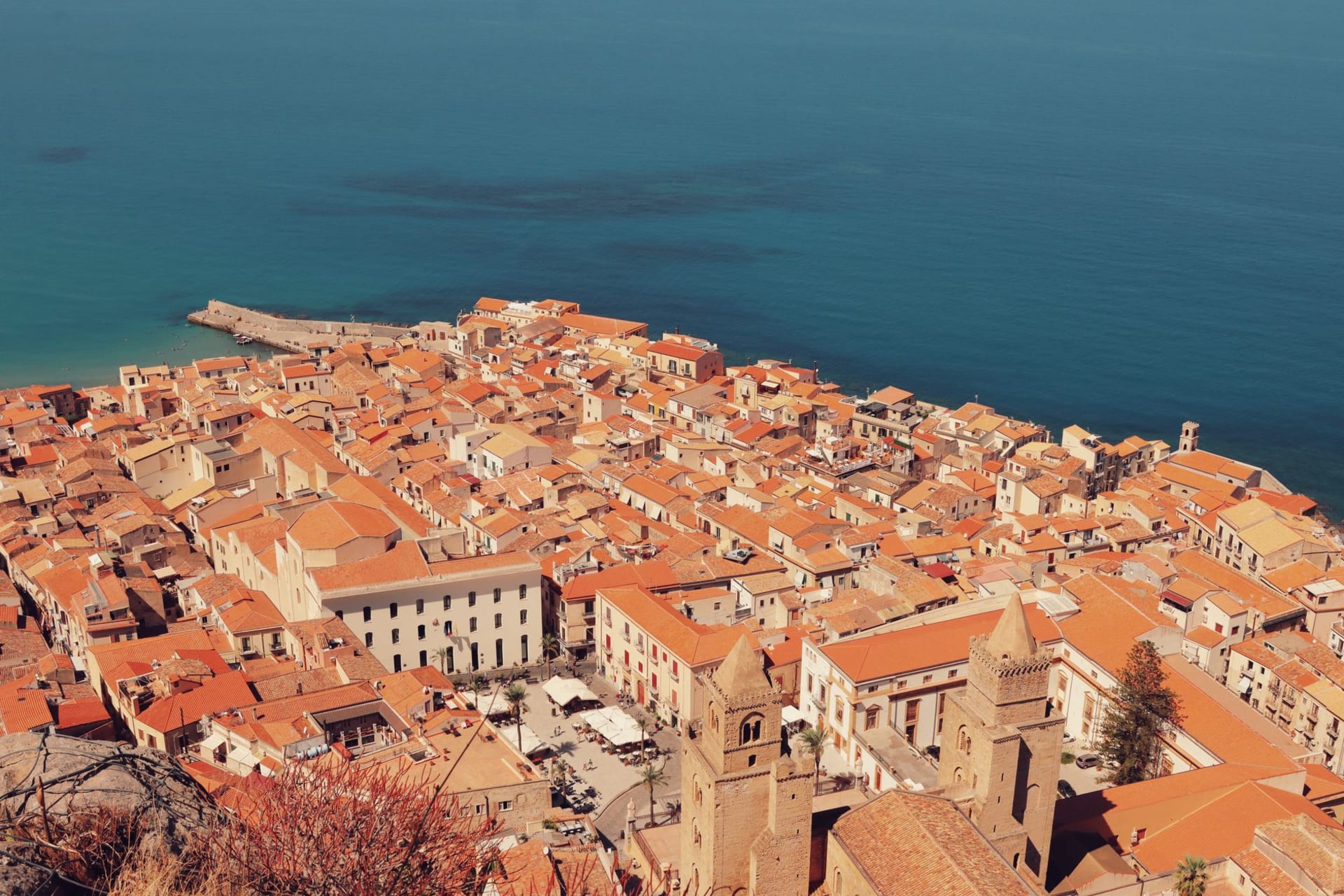
The thing about Cefalù is that you arrive expecting a beach town and walk immediately into a medieval street plan that was clearly not designed for beach traffic. The medieval core is wedged between a volcanic rock (La Rocca, 270 meters, occupied since the Bronze Age) and the Tyrrhenian Sea, and the streets within this wedge are narrow enough that two people with luggage create a small crisis. None of this is a complaint. It means the town has geometry.
The Cathedral
The Cathedral of Cefalù was commissioned by Roger II in 1131 as a thanks offering after his ship survived a storm — or so the legend goes. Either way, it’s one of the finest examples of Norman architecture in Sicily, and what’s inside is something else: a Christ Pantocrator mosaic in the apse dating to the 12th century, probably made by Byzantine craftsmen brought from Constantinople for the purpose.
I stood in the cathedral for a long time looking at this mosaic. The Christ is enormous, stern, specific — individualized in a way that Byzantine icons often aren’t. The gold tessera of the background catches even the thin morning light that comes through the windows at the sides, and the effect is of something lit from within. There are very few images in the world that communicate the idea they were meant to communicate this cleanly across nine centuries. This one does.
The piazza in front of the cathedral is handsome in an Italian-town-square way, with a fountain and cafe terraces. Worth sitting at for coffee in the morning before the day-trippers arrive from Palermo.
La Rocca
The path up La Rocca starts near the cathedral and takes about forty minutes at a steady pace. It’s steep and exposed to sun, so early morning or late afternoon is the right call. At the top: the ruins of a Greek temple to Diana (the Greeks were here first, as always in Sicily), Norman walls, and a view that covers the whole of the gulf, the town grid below, and Etna visible on a clear day to the southeast.
I went up in the late afternoon and stayed for the light change. The shadow of the rock moves across the town as the sun drops and you can watch it happen.
The Beach
The beach west of town is a long arc of sand against the old town walls — one of the more pleasingly situated beaches in Sicily because the architecture directly behind it is genuinely medieval rather than a resort hotel. The water is clean and clear and the sand is coarse enough to not stick everywhere. In May the beach is empty by 9 a.m. in a way that becomes impossible to imagine by August.
Lia found a restaurant right at the edge of the old town that served pasta al forno in a terracotta dish. We ate outside watching the beach fill in the early evening. It was not a complicated moment. It was what Cefalù is actually good at.
The Medieval Streets
The streets behind the cathedral, along the base of the rock, are the best slow-walking part of Cefalù. The laundry comes out of windows. There are cats. A bakery produces cannoli in the morning and sells them warm. The old Arab street plan — narrow, designed for shade — still holds its logic in summer.
When to go: May and early June for the beach without the crowds. September is arguably better — the sea has had all summer to warm up, the light is lower and more golden, and the day-tripper buses thin out after the Italian school holidays end. Christmas week in Cefalù is quietly lovely; the cathedral lit up at night is worth the colder air.