The Arithmetic of Awe
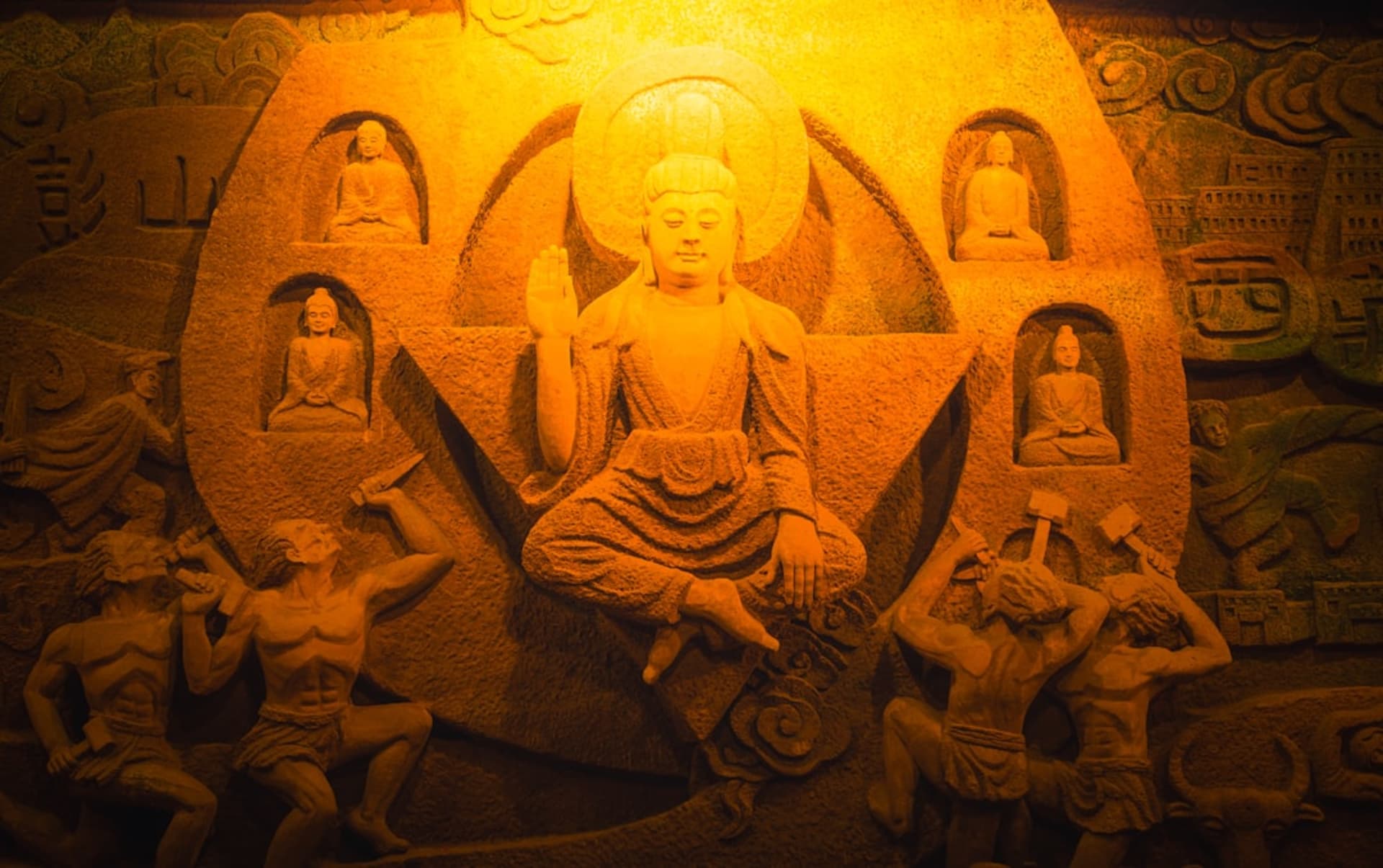
I have a reliable system for measuring things I can’t immediately comprehend: I wait for the absurd comparison to arrive on its own. Standing at river level in a narrow boat, looking up at the Leshan Giant Buddha, it took about four seconds. The toenails. Each one is wider than a park bench. The sandaled feet alone could seat several families for a picnic. The Buddha is 71 meters tall, carved directly into the red cliff face during the Tang Dynasty — construction began in 713 AD and took ninety years to complete.
The monk who commissioned it, Hai Tong, believed a sufficiently enormous Buddha would pacify the waters where the Min, Dadu, and Qingyi rivers converge. Boats were sinking regularly. The logic, if you squint at it sideways, isn’t entirely without result — the excavated stone dumped into the confluence apparently altered the currents enough to reduce the worst turbulence. Engineering disguised as devotion, or the other way around.
Watching from the Water
The boat approach is not optional. I know some people do the staircase descent and the viewing platforms on the cliff, which are worthwhile, but the river view is the thing. You’re out on opaque brown water, diesel smell mixing with the particular damp-stone scent that clings to cliffs near rivers, and the Buddha materializes slowly as you round the bend. Other passengers go quiet. A man in a tour group behind me lowered his phone and just looked. That doesn’t happen much anymore.
The expression on the face is serene to the point of indifference — which, at this scale and age, seems appropriate. He has watched dynasties dissolve. The rivers are still there.
The Staircase and the Detail
After the boat, I climbed down. The staircase cut into the rock is narrow and steep, funneling visitors into a single-file shuffle that feels medieval. The Buddha’s right knee is at eye level midway down, the texture of the sandstone visible up close — weathered, patched in places, some sections noticeably darker where restoration work has been done. Drainage channels carved behind the ears and through the collar redirect rainwater; even the hydraulic engineering was embedded in the sculpture.
At the feet, you understand that the original plan was audacious to the point of delusion. The sheer labor — by hand, at height, over nine decades — is its own kind of sacred.
The Town Below
Leshan city itself is a relaxed, mid-sized place with good hotpot and a riverside promenade that fills up in the evenings with locals walking dogs and elderly couples doing ballroom dancing to tinny speakers. The smells shift as you walk: sizzling cumin from a skewer cart, jasmine tea from a tea house propped open to the breeze, the occasional gust of river mud. I ate a bowl of Leshan bō bō jī — cold chicken with numbing Sichuan pepper — at a plastic table on the street and watched a child try to feed chips to a goldfish in a bowl outside a shop. The ordinary hours around a wonder are often the best part of visiting one.
When to go: March through May for comfortable temperatures and green water levels that allow the boat approach. Avoid the weeks around Chinese national holidays in October when queues for the descent staircase stretch for hours. December is cold but uncrowded, and the low winter light on the cliff face is worth the jacket.