Asia
Sichuan
"No food has ever made my mouth go numb and beg for more at the same time."
I arrived in Chengdu on an overnight train from Xi’an with no plan beyond finding a bowl of dan dan noodles before noon. What I did not expect was to still be in Sichuan three weeks later, having barely scratched the surface of a province the size of France. That first bowl arrived fast, rust-red with chili oil, topped with ground pork and preserved vegetables, and the Sichuan peppercorns hit me about thirty seconds in — not heat exactly, but a deep electric tingle across my lips and tongue, a sensation I had no word for and immediately wanted again.
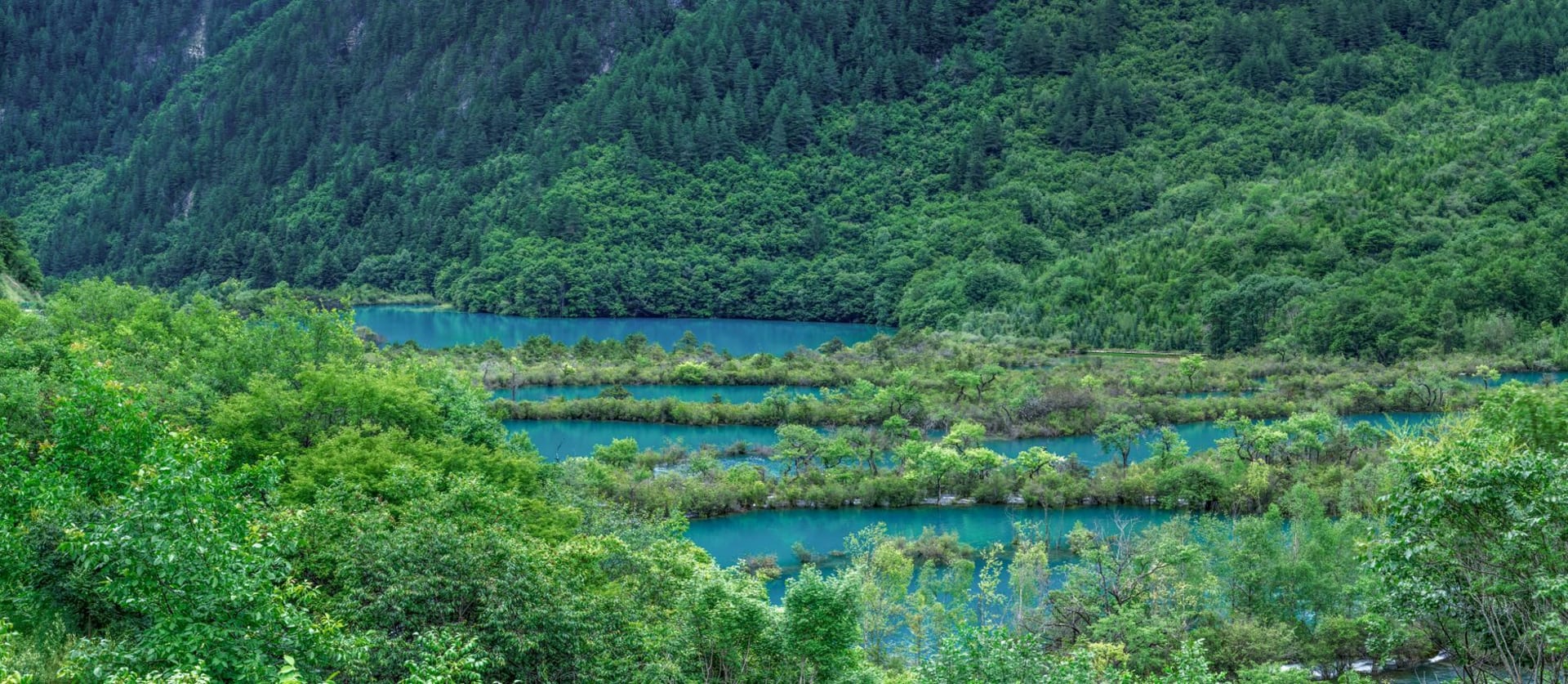
Sichuan is one of those rare places where the food, the landscape, and the culture all share the same essential character: intensely layered, impossible to reduce to a single note. The Jiuzhaigou Valley — where the cover photo was taken — is the most obvious proof of this. The lakes there have no reasonable explanation for their color. They sit in tiers between limestone ridges, ranging from turquoise to deep cobalt to a milky jade green depending on the minerals below and the light above. In early autumn, when the broadleaf trees turn orange and red around their edges, the whole valley looks like a painting someone pushed too far and accidentally made perfect. I walked the boardwalks for two full days and never felt like I had seen enough.
Further south, the Leshan Giant Buddha watches the confluence of three rivers from a cliff face, 71 meters of Tang Dynasty stone that took ninety years to carve. Sitting across from it on a slow river cruise, I felt what I usually resist feeling at famous landmarks — genuine awe. Not because of the scale, though the scale is absurd, but because of the stillness. Whatever this place was built for, it still works.
When to go: September and October are the best months — Jiuzhaigou’s foliage peaks, the rains ease off, and the summer crowds thin. Spring (March to May) is good for the panda breeding center at Chengdu, when cubs born the previous year are still small. Avoid July and August: Jiuzhaigou gets overwhelmed and the heat in Chengdu is oppressive.
What most guides get wrong: They funnel you through Jiuzhaigou and the panda base and send you home. That is Sichuan for beginners. The real depth is in the food neighborhoods of Chengdu — specifically Jinli and the old tea houses of Wenshu Monastery — and in the smaller Tibetan towns like Kangding at the province’s western edge, where the altitude hits 2,500 meters and the culture shifts completely. Sichuan is not one place. It is at least four, all of them worth your time.