Kangding
"The butter tea arrives in a thermos the size of a fire extinguisher. You drink until the thermos is empty. This is not negotiable."
The Song Before the Town
Almost every Chinese person over thirty knows the song: Kāngdìng Qínggē, the “Kangding Love Song,” a folk melody about a girl named Li Jiamei who is beautiful, and a young man who loves her, and the moon over the mountain. It was collected and published in the 1940s and has been sung by every notable Chinese vocalist since. I mention this because the first thing that happens when you arrive in Kangding is that someone plays it — from a shop, a restaurant, a phone — and you understand that the town has been living inside its own legend for eighty years. It wears this with a lightness that I found charming rather than tiresome.
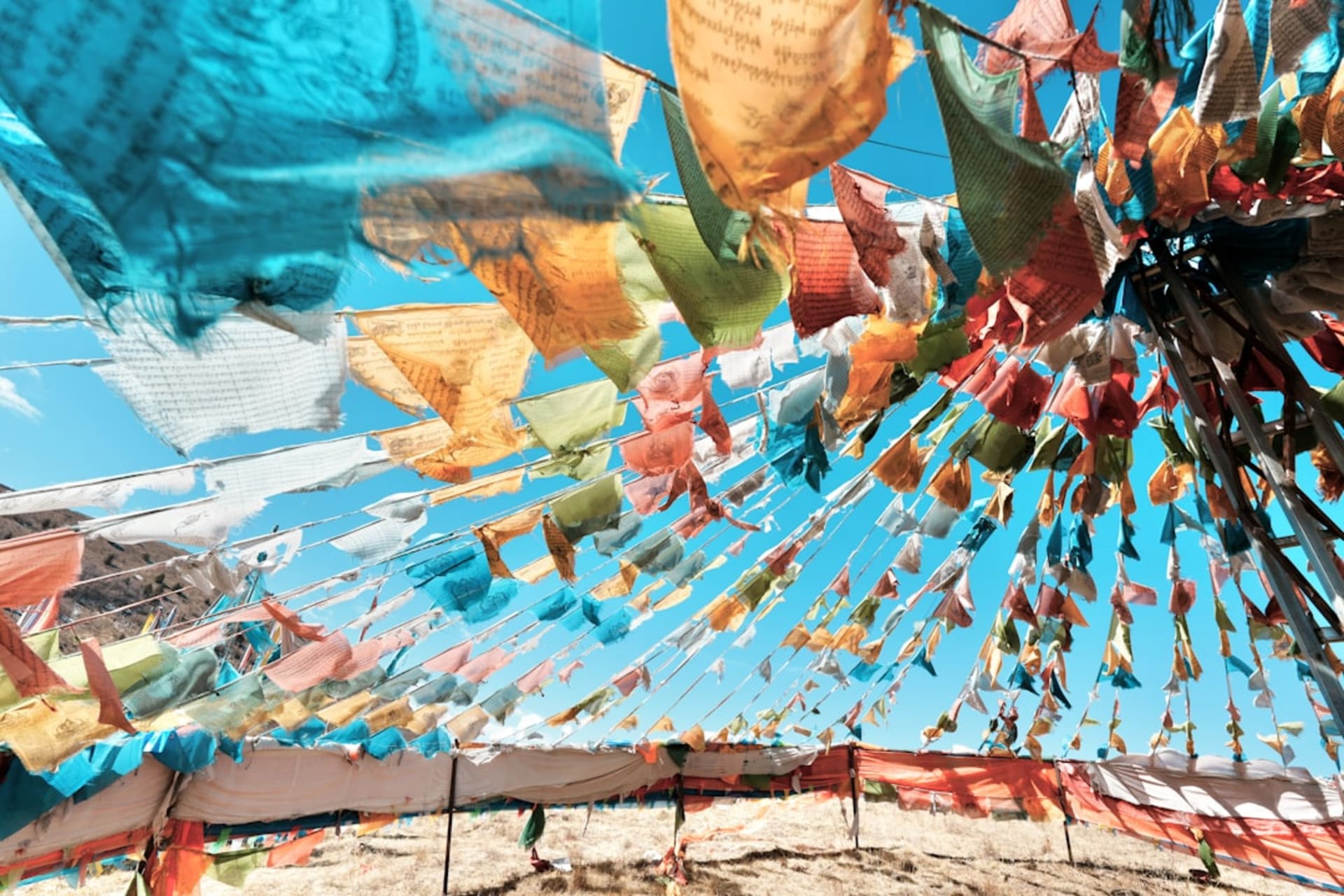
The town itself is compressed into a narrow valley where the Zheduo and Yala rivers merge, the buildings stacked up the slopes because there’s nowhere flat to go. At street level: a horse market that still functions, monks from Anjue Monastery walking in groups, Han Chinese tourists photographing the same corner, Tibetan women in traditional chuba jackets selling yak butter by the block. The languages overlap in the market — Mandarin, Tibetan, a little Kangba dialect — and the air at 2,600 meters has a sharpness that clears the head.
Butter Tea and the Morning
I started each day at a small Tibetan teahouse near the horse market, a low room with wooden benches and a wood-burning stove in the corner. The butter tea — pō chá — is divisive: rancid-rich yak butter churned with strong black tea and salt into something that tastes nothing like what the word “tea” implies. It is deeply savory, warming in a way that goes past temperature into the bones. The first cup I held for ten minutes pretending to drink it while I worked up to the reality. By the third morning I was ordering the refill without prompting.
They also serve tsampa, roasted barley flour mixed directly into the tea until it becomes a thick paste you eat with your fingers. This is the breakfast that has sustained people on the plateau for centuries, which becomes obvious after a single morning of walking uphill at altitude.
Gongga Shan on the Horizon
Minya Konka — Gongga Shan — is the highest peak in Sichuan at 7,556 meters, and on clear days it’s visible from the pass above Kangding. I took the cable car to Paoma Mountain for the view: the town is tiny below, the valley narrows toward the gorge, and the snow peak appears to the southwest with the casual enormity of something that has been there since before the concept of human observation. The cable car attendant pointed at it and said something in Mandarin I didn’t catch. The man next to me translated: “He says it’s hiding today. You can only see half.” The half that was visible was already too much.
The Gateway Function
Kangding’s real purpose, historically and practically, is as a threshold. The Tea Horse Road — the ancient trade route exchanging Sichuan tea for Tibetan horses — passed through here for centuries. The monastery above town, Nanwu Si, was a stopping point for caravans. Now it’s travelers heading to Daocheng, Garze, or Litang who stop to acclimatize and stock up. There’s a useful function to a gateway town: it’s never trying to be the destination, which gives it a relaxed quality that the actual destinations often lack.
When to go: May through June and September through October are ideal — clear skies, manageable temperatures, and the mountain visible more often than not. The Tibetan New Year (Losar, usually February) brings celebrations to the monasteries but also closed roads and limited accommodation. July and August are warm but rainy; the gorges flood and the passes can close temporarily.