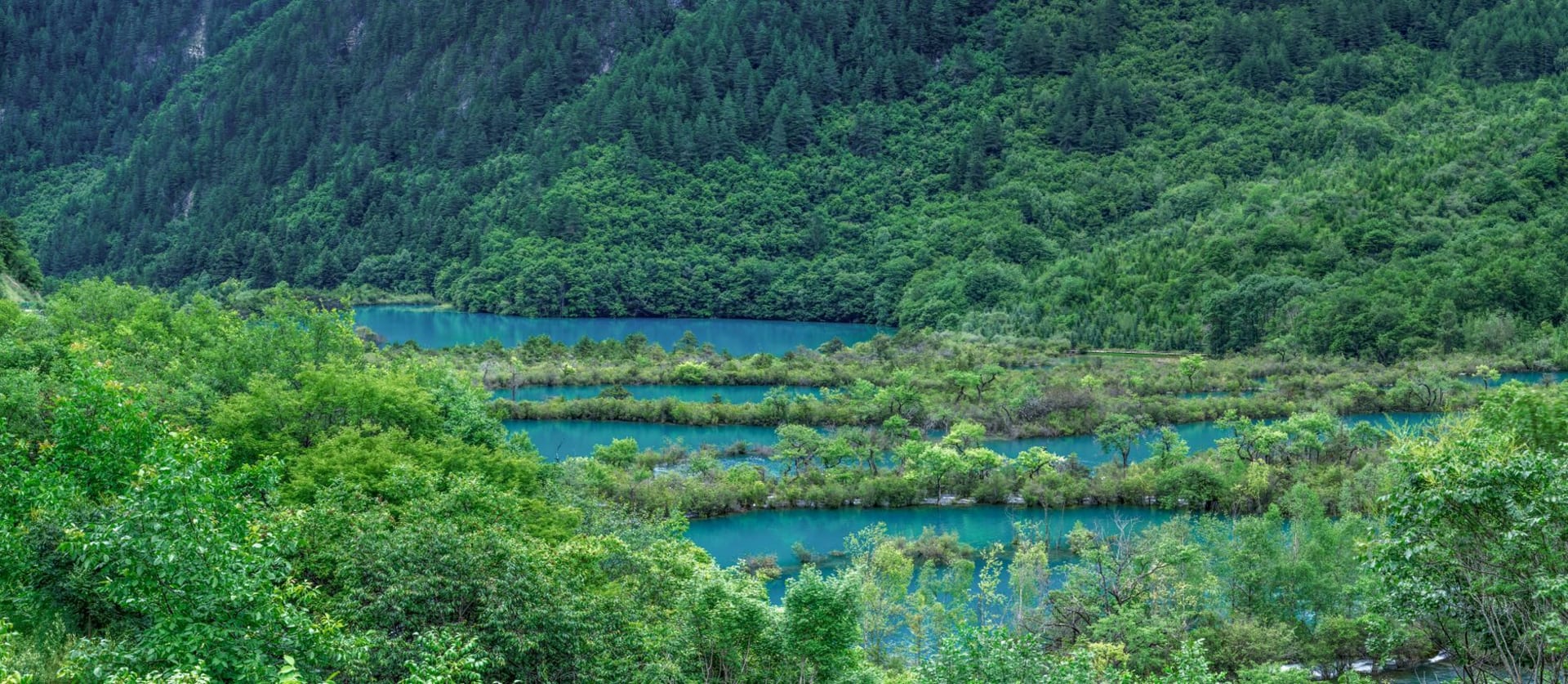
Jiuzhaigou Valley
"I kept looking for the moment the lakes would look ordinary. It never came."
The bus from the valley entrance deposits you at a ticket gate, and then you round a bend in the path and see the first lake through the pines, and for a moment you wonder if someone has interfered with it — if the color is some optical trick or the product of dye run off from somewhere upstream. It is not. The water in Jiuzhaigou Valley is genuinely, inexplicably, absurdly colored. It ranges from a milky jade green in the shallows to a deep cobalt in the center of the larger lakes to a turquoise so saturated it looks digital. The colors come from calcium carbonate deposits on the lake beds and the particular minerals dissolved in the spring-fed water, but knowing the chemistry does nothing to reduce the strangeness of standing in front of it.
I spent two full days on the boardwalks. The valley is arranged in three branches — the Rize Valley, the Zechawa Valley, and the Shuzheng Valley — and the lakes step down through each one in tiers connected by waterfalls, the water moving from one basin to the next with the particular sound of water that has been moving through limestone for a very long time. The boardwalks hover just above the water surface in some places, so close you could reach down and drag your fingers through it, though the signs ask you not to. I did not.
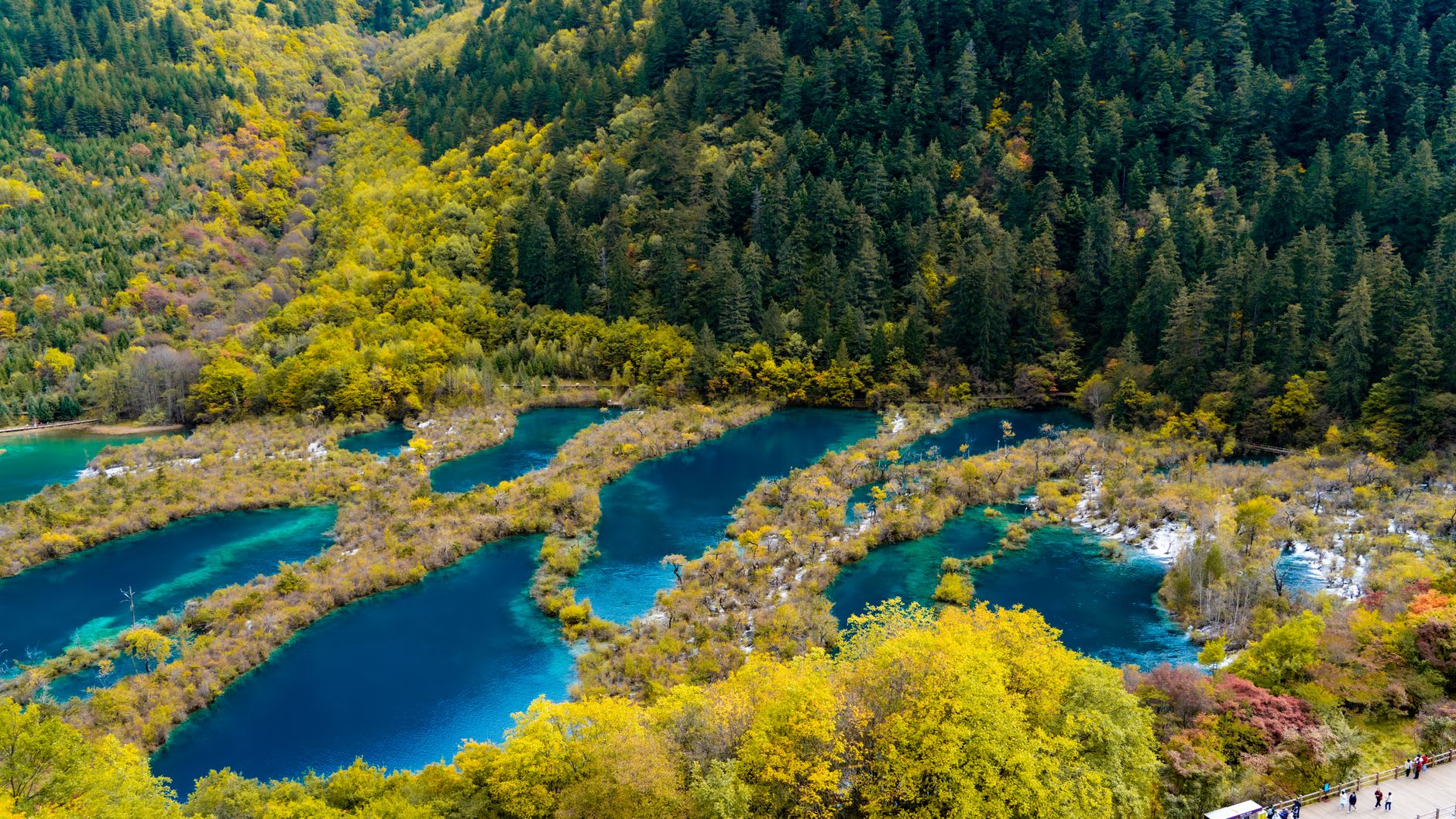
Five Flower Lake stopped me for nearly an hour. It is shallow enough to reveal the texture of its bed — submerged tree trunks from before some long-ago collapse lie perfectly preserved in the water, white and ghostly below the turquoise surface, visible as clearly as objects through glass. The lake is simultaneously a body of water and a kind of display case for itself. Autumn made it better: the surrounding broadleaf trees had begun to turn, and from the platform above the lake the reflections scattered orange and red across the turquoise surface in a way that felt visually irresponsible.
Pearl Shoal Waterfall is the antidote to the still lakes — a wide shallow rush of white water spreading over a hundred-meter travertine shelf, the water fracturing into a thousand channels before reassembling and dropping into the pool below. I arrived just after a rain and the volume was high, the spray reaching the boardwalk and leaving my jacket damp. Nobody around me seemed to mind.

The crowds are the one honest difficulty. In summer, Jiuzhaigou processes tens of thousands of visitors a day, and the boardwalks narrow at the famous viewpoints to the width of a slow shuffle. I came in late September and found them manageable, though still busy. The trick is to start walking in the opposite direction from everyone else — the valley’s most famous lakes are near the top, so most visitors take the tourist bus up and walk down. Going up on foot in the early morning before the buses begin their runs gave me the first hour almost entirely alone.
When to go: Late September through mid-October is the peak of the autumn foliage and the most beautiful the valley ever looks. May and early June are quieter and still green. July and August bring maximum crowds and some trail closures — avoid if possible. The valley closes in winter after significant snowfall.