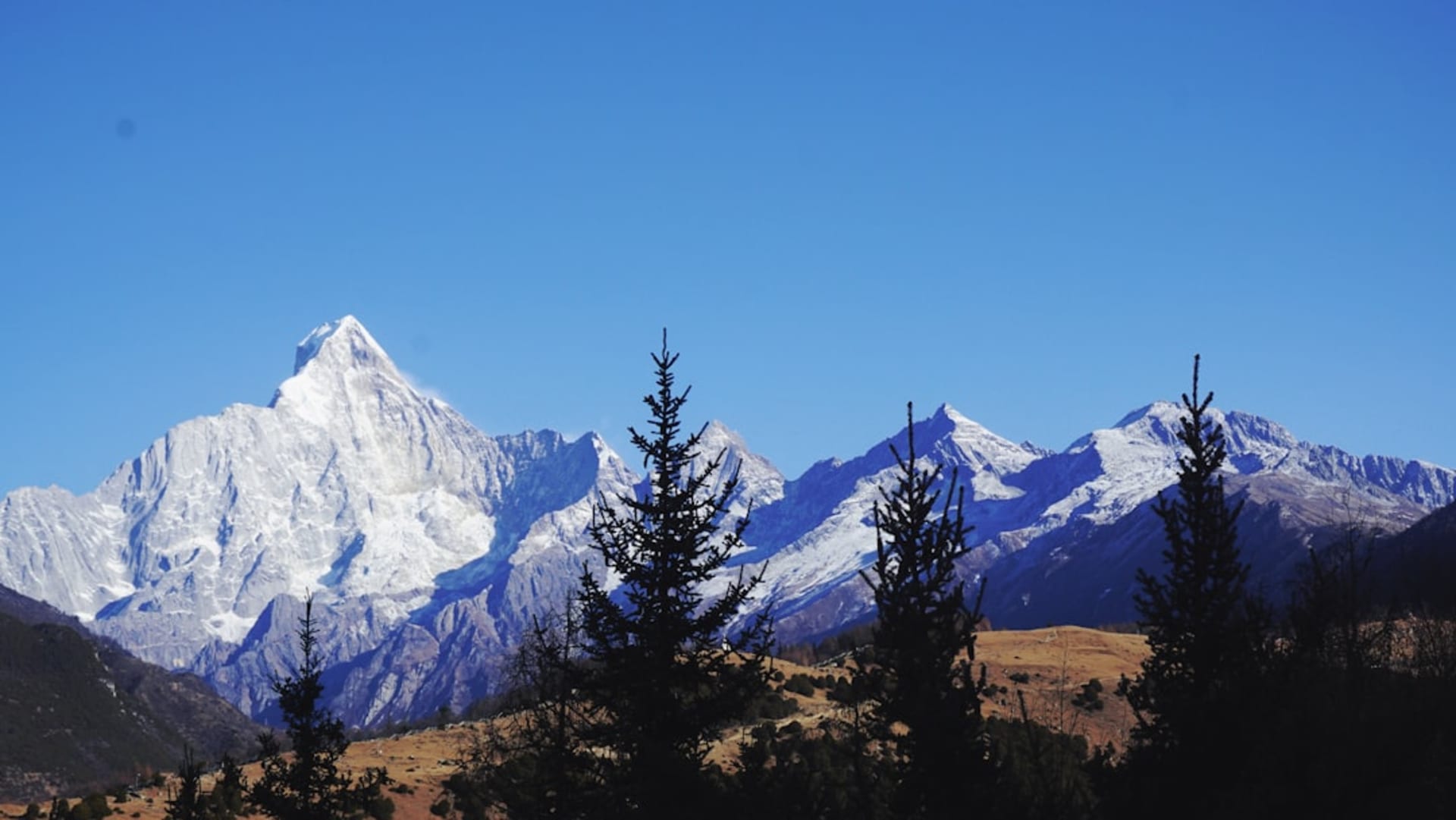
Danba
"Every village is a different language, a different style of tower, a different explanation for why their watchtowers are older than yours."
The Valley and Its Towers
The Dadu River carves the valley deep and the tributary gorges deeper still. Danba County sits at the confluence of several of these, and the landscape is layered vertically: river at the bottom, terraced fields working up the slope, stone houses with flat roofs and painted window frames, and then the towers. The watchtowers of Danba — some dating to the Tang Dynasty, some possibly older — are the visual signature of the region, built from carefully fitted local stone without mortar in some cases, reaching fifteen to twenty meters. They were defensive structures, built by individual clans to protect grain and family during the wars that periodically swept the river valleys. Now they stand as architecture without a function except beauty and gravity.
Suopo township has the most concentrated collection. I walked up from the road in the early afternoon, the path between stone walls smelling of dried hay and something floral I couldn’t identify — possibly juniper smoke from a house nearby. An elderly man on a roof was doing something with tiles and ignored me entirely, which I appreciated. The towers cast long shadows by 3 p.m.
Jiaju: The Village That Won a Vote
Jiaju is listed on signs throughout Danba as “one of the most beautiful villages in China,” a designation arrived at through a national tourism vote. I was prepared to be skeptical — these rankings usually produce overcrowded places with entrance gates and a gift shop selling things nobody local would buy. Jiaju is not quite that, though it’s heading in that direction. What survives the tourism infrastructure is the setting: houses scattered across a steep south-facing slope, each with a flat roof stacked with firewood, walls painted white with decorative corner panels in red and black, surrounded by walnut and poplar trees that turn amber in October. From the viewpoint above the village, it looks like a painting done by someone who had never been told what restraint is.
The families who live there still farm the terraces below. Corn hangs drying from the eaves. This is not a museum.
The Women of Danba
Danba’s Jiarong Tibetan women are known throughout Sichuan for their jewelry — coral and turquoise worked into elaborate headdresses and necklaces passed down through generations. At the weekly market in Danba town, you see this jewelry worn not for performance but for ordinary commerce: buying vegetables, arguing over prices, carrying children. The weight of coral around a woman’s neck at a vegetable stall is a specific and unexpected thing. I’ve been to enough “traditional market days” staged for visitors to recognize the real one by the absence of anyone asking to be photographed.
Lia spent forty minutes at one stall run by a woman selling dried chilis and smoked yak meat, communicating through a translation app and a lot of pointing. She bought a small coral pendant and a half-kilo of chili that turned out to be the hottest thing either of us had eaten in months, including in Chengdu.
Moving Through the Valleys
The side valleys — Suopo, Zhonglu, Moxi — each have their own character and their own tower clusters. You need a vehicle to move between them, and the roads are narrow and frequently unpaved. Renting a car with a driver in Danba town for a day costs less than you’d expect and opens up terrain that the buses don’t reach. The driver I hired had grown up in Suopo and narrated the entire valley from the perspective of someone who had been hearing its histories since childhood. He stopped at an unmarked viewpoint above the river and told me the tower visible across the gorge had been built by his grandmother’s clan seven generations back. That’s not the kind of thing a guidebook gives you.
When to go: Mid-October to early November for the walnut and poplar trees in full golden color — this is when the valley looks like the photographs. April brings rapeseed flowers on the terraces below the watchtowers. Avoid summer (July–August) when heavy rain makes the side roads risky. Winter is cold and some villages become difficult to access, but the towers look extraordinary in snow.