Tuva Republic
"The throat singer was seventy years old and the second note came from somewhere below his ribs."
Getting to the Center of Asia
Tuva is difficult to reach and this is part of the point. There is no railway. Flights from Moscow take four hours. From Krasnoyarsk, the road crosses the Western Sayan Mountains through Yergaki Natural Park — a drive of eight hours that would be shorter if the scenery didn’t keep demanding stops. I drove this road with a hired car in late August and arrived in Kyzyl after dark, having pulled over eleven times.
Kyzyl is a small capital of roughly a hundred thousand people. In the central square there is an obelisk marking the geographic center of Asia — a claim the city makes with such certainty that you don’t question it, though geographers apparently dispute the calculation method. The obelisk has a globe on top. The Yenisei officially begins here, from the confluence of the Biy-Khem and Kaa-Khem rivers. The sacred origin point of a major river is a different kind of thing to stand beside than a museum exhibit about one.
Throat Singing and What It Does
Khoomei — Tuvan throat singing — is one of the stranger things the human larynx can produce. The singer generates a drone in the chest and simultaneously amplifies harmonics in the nasal cavity and throat to produce a second, melodic pitch that sounds like it’s coming from a different instrument in a different room. I heard it first in a cultural center in Kyzyl, the formal version: polished, precise, educational. Then later at a guesthouse in the countryside where someone’s uncle played after dinner, informally, looking at nothing in particular — and that version was something else entirely.
The Tuvan National Orchestra performs traditional instruments alongside throat singing. The igil — a two-stringed bowed instrument with a horse-head carved at the top — produces a sound that feels better suited to steppe and open sky than to any concert hall.
Shamans and Sacred Landscapes
Shamanism never fully left Tuva, despite Soviet suppression. The shaman societies operating openly in Kyzyl occupy a mixed range: some are cultural preservation organizations, some are active ceremonial practices, some occupy the difficult middle ground between the two. I visited one center on recommendation and sat in on a consultation that wasn’t mine to interpret.
The landscape itself operates as a kind of text. Ovaa — stone cairns with prayer flags — mark hilltops and mountain passes. You circle them clockwise and leave something if you have something to leave. The steppe between Kyzyl and the Mongolian border is treeless and enormous, and the sky above it is the kind that makes theology make sense in ways that surprise you.
Into the Taiga
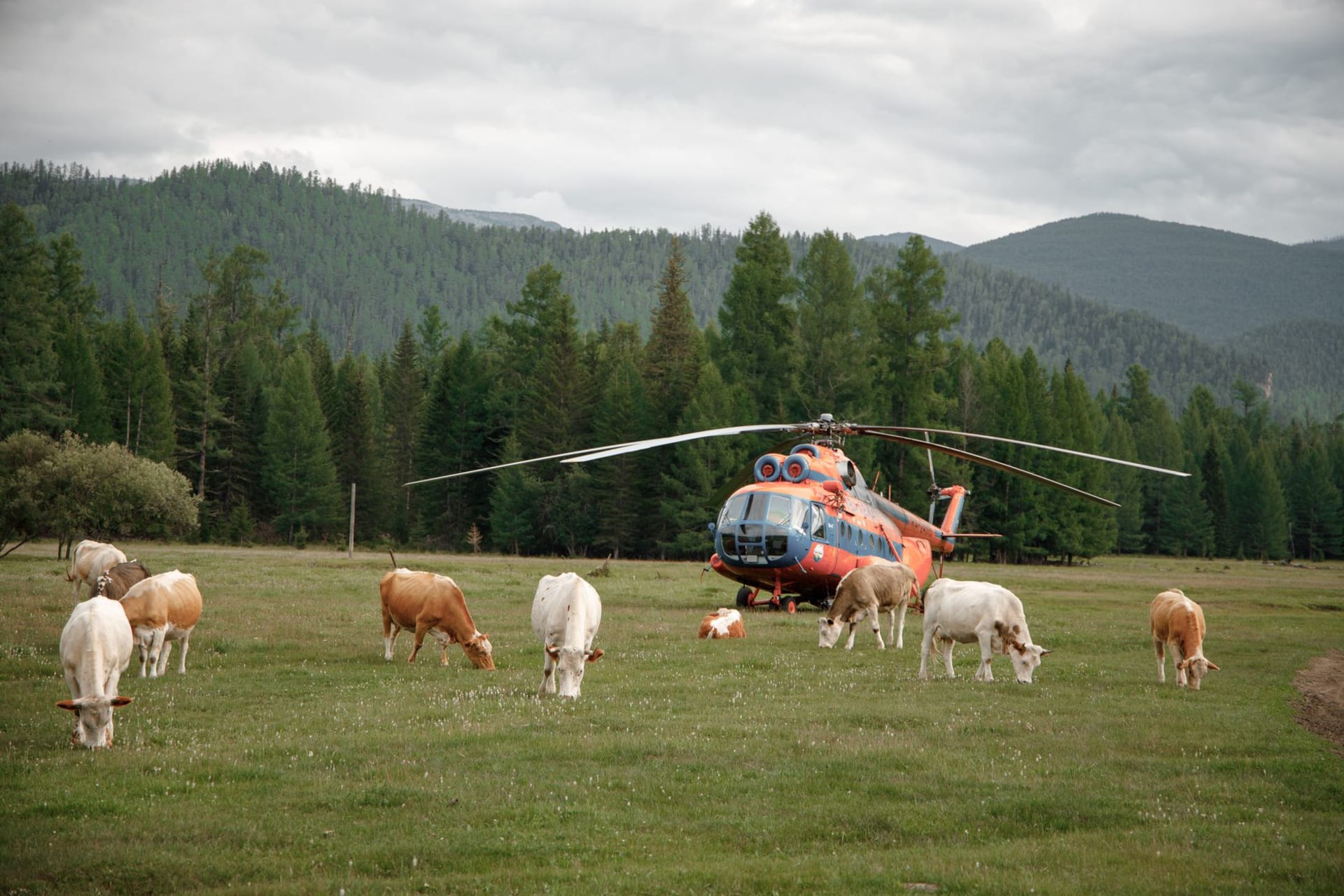
The northern part of Tuva is dense Siberian taiga, crossed by rivers and reindeer tracks. The Todzhinsky district is home to Tuvan reindeer herders whose people live in chums — teepee-like structures — and move seasonally with their herds. Access requires planning, permits, and either a local guide or serious independence. I didn’t make it this far on this trip. It’s the reason I’m going back.
When to go: July and August for steppe travel, river rafting on the Kaa-Khem and Biy-Khem, and the Ustuu-Huree music festival in late July, which draws throat singers from across Central Asia. June is good and less crowded. September for golden light and cooling temperatures before snow closes the mountain passes. Winter travel is possible but requires serious preparation and local contacts.