Lake Baikal's sacred, wind-swept island, where Buryat shamanism, steppe, and turquoise ice meet in Siberia's wild heart.
Lia and I took the ferry from Sakhyurta on a grey morning, crammed onto the deck with a couple of Buryat grandmothers hauling sacks of onions and a van full of backpackers headed the same way we were. The crossing itself only takes fifteen minutes, but it felt like stepping through a door — mainland Siberia behind us, and ahead, this enormous slab of rock and steppe floating in the middle of the world’s deepest lake. Olkhon is the largest island on Baikal, nearly 730 square kilometers, and you feel that size almost immediately once you’re on it: the roads turn to dust, the horizon opens up, and there’s this particular silence that isn’t empty so much as full of something.
We based ourselves in Khuzhir, the island’s main village, and walked out to Shaman Rock on our first evening, before dinner, while the light was doing that long golden thing it does at high latitude in summer. I’d read that Buryat and Mongolian Buddhist traditions count it among the nine most sacred sites in Asia, and standing there I didn’t need convincing — there’s a gravity to the place that has nothing to do with the view, though the view is extraordinary too, cliffs dropping straight into water so clear you can see the stones on the bottom.
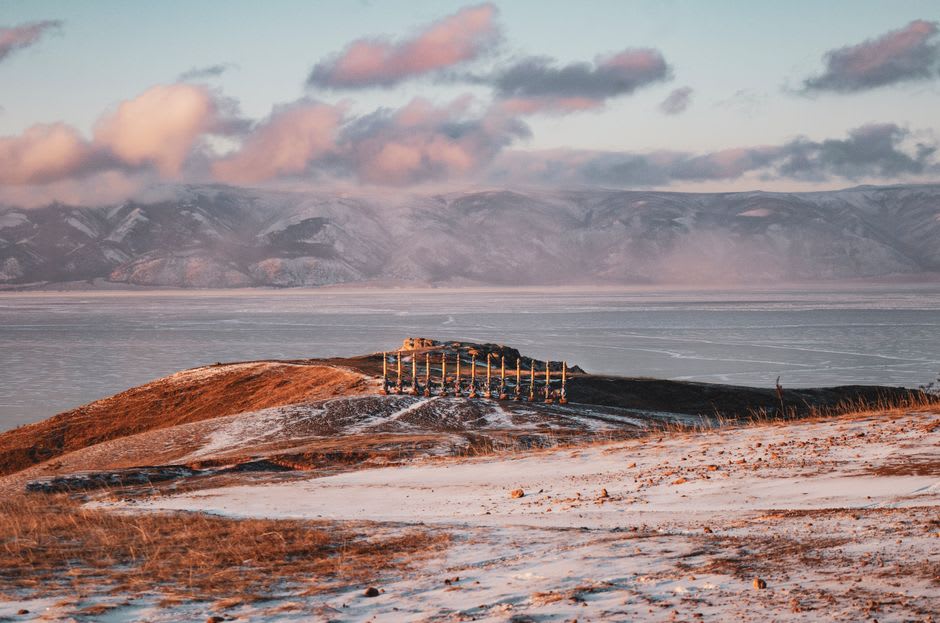
What surprised me most was how varied the island is for something so small. We rented an old Soviet UAZ van with a driver named Bair for a day and rattled north through sand dunes and open steppe that looked almost Mongolian, then, an hour later, we were climbing through forested hills that could have passed for Karelia. Bair’s family has herded livestock and fished this shoreline for generations, and he talked about the lake the way you’d talk about a relative — with affection, a little worry about its moods, total familiarity. We ate smoked omul, Baikal’s local fish, off newspaper at a roadside stall, and I remember Lia saying it was the best thing she’d eaten in Russia, which is a real claim after three weeks of borscht and pelmeni.
We came in August, so the island was steppe-gold and the lake was swimmable, if you’re brave — Baikal water stays cold even in summer, and I only lasted about ninety seconds before my whole body was screaming at me to get out. Locals kept telling us we should come back in winter, when the ferry stops and ice roads open across the frozen lake instead, and when Baikal’s surface turns this famous, almost unreal turquoise blue you can see straight down through. Someday I’d like to go back and stand on that ice.
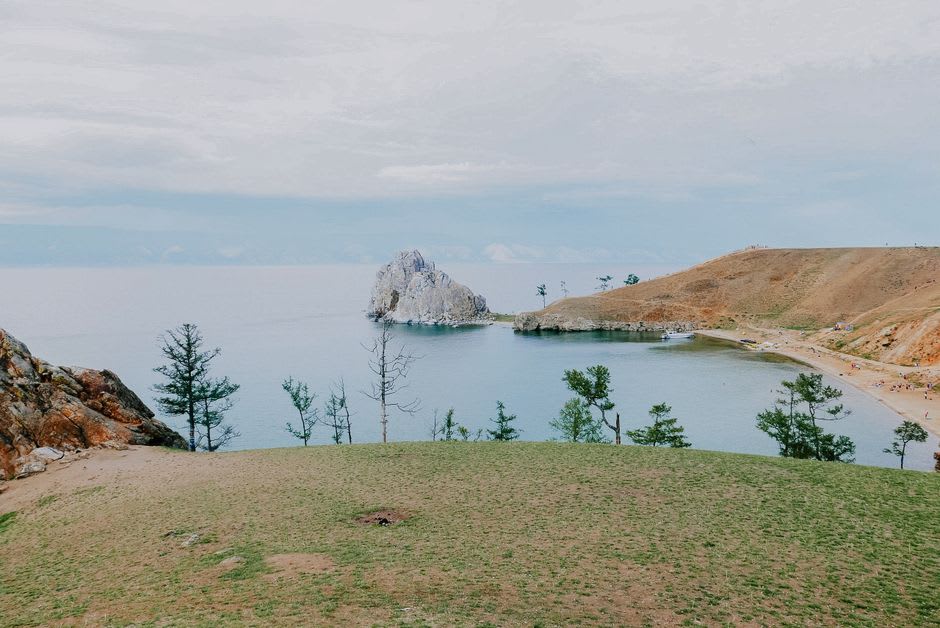
When to go: July and August are best for hiking the steppe and swimming (briefly) in the lake, while late February through March brings the famous clear turquoise ice — just plan around whichever crossing, ferry or ice road, is actually running.
Keep exploring
More from Siberia
 siberia
 Omsk
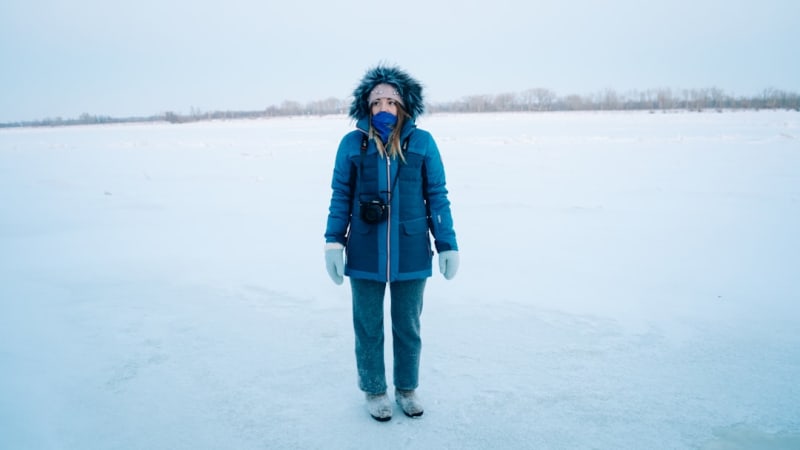
The city that once exiled Dostoevsky and shaped his darkest novels, now a handsome river town on the Irtysh with Cossack, Soviet, and contemporary layers pressing quietly against each other.
Explore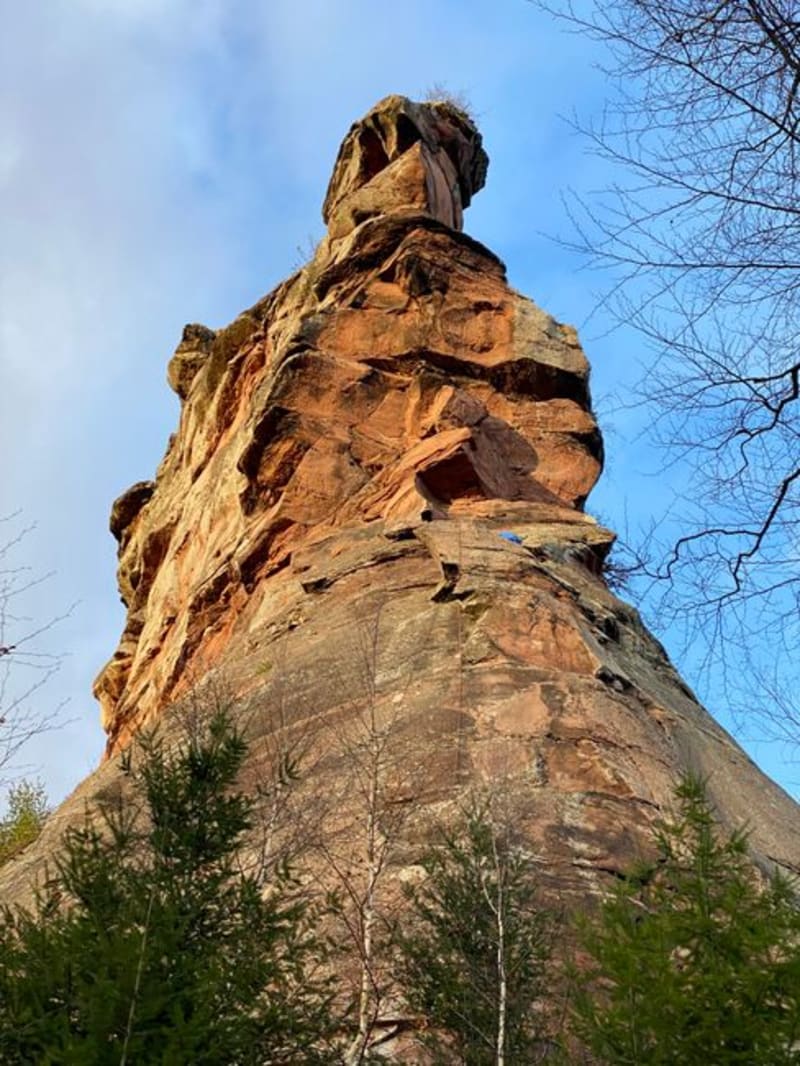 siberia
 Stolby Nature Reserve
A taiga wilderness south of Krasnoyarsk where syenite pillars rise from the forest and free climbers have tested themselves for over a century.
Explore siberia
 Tomsk
An old Siberian university town of ornate wooden houses and student energy that still carries the carved, snow-dusted elegance of a nineteenth-century provincial capital slowly coming apart at the seams.
Explore siberia
 Trans-Siberian Railway
Nine thousand kilometers of taiga, steppe, and accumulated time zones — the slowest and most honest way to grasp what Russia actually is.
Explore siberia
 Tuva Republic
A remote mountain republic at the geographic center of Asia where shamans still work the hillsides, rivers run cold from Mongolian glaciers, and men sing two notes simultaneously without appearing to try.
Explore siberia
 Yakutsk
The coldest permanently inhabited city on Earth, where the ground beneath your feet has been frozen solid for twenty thousand years and the locals consider this unremarkable.
Explore