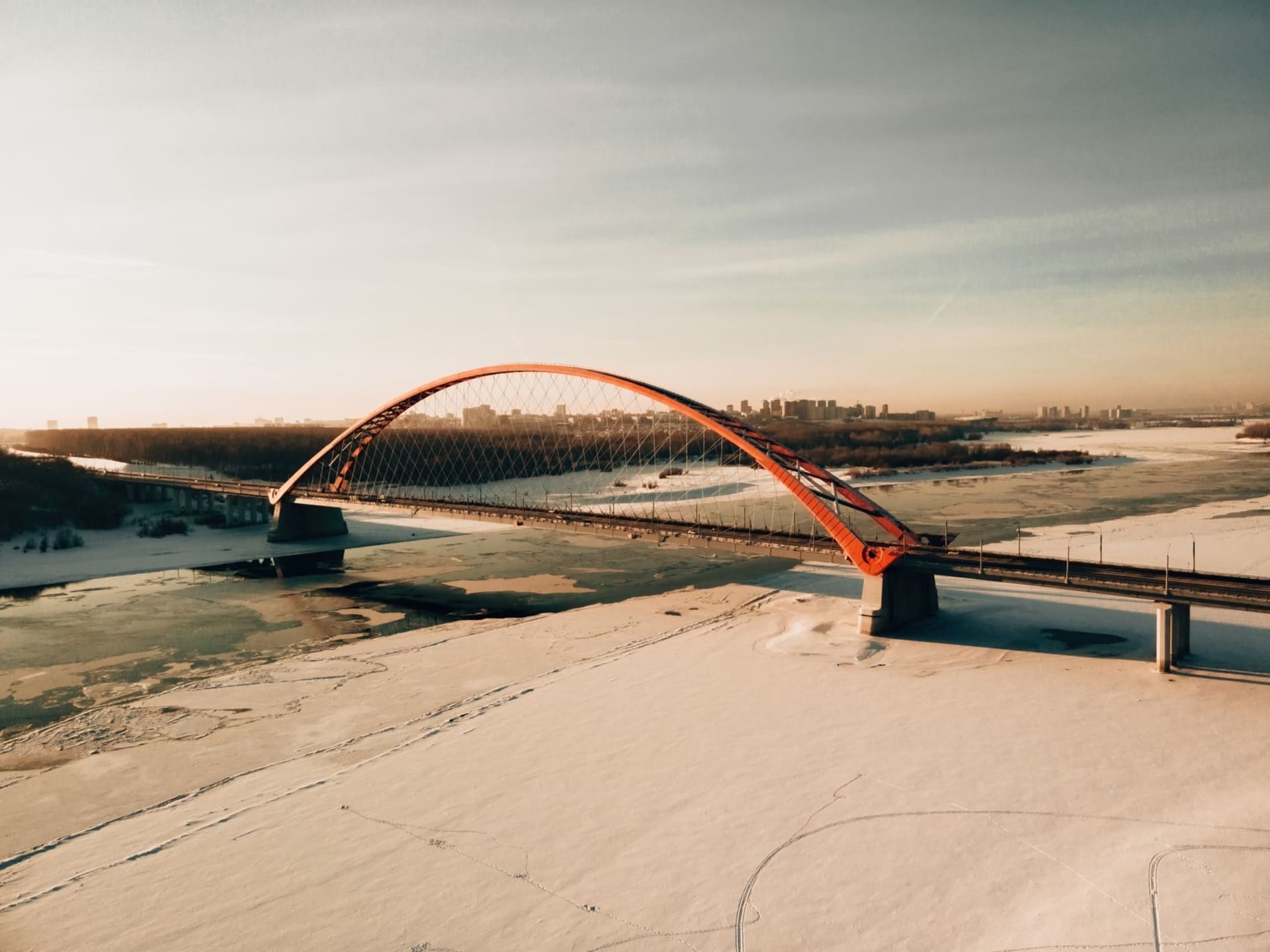
The City That Shouldn’t Exist
Novosibirsk was built because the Trans-Siberian Railway needed to cross the Ob River. No natural harbor, no gold deposit, no ancient trade route — just a bridge, and then a city growing around it at a pace that embarrassed older settlements. By the time I arrived by overnight train from Omsk, it was already past two million people and still expanding into the birch forest on all sides.
The cold at the station was a dry, mineral cold, the kind that clarifies rather than numbs. February in Novosibirsk runs around minus twenty, and the locals dressed for it with a practicality that made my layered approach look theatrical. I got my bearings on Krasny Prospekt, the main boulevard, where Stalin-era apartment blocks alternate with glass towers and the Orthodox cathedral sits beside a concert hall with quiet civic confidence.
The Opera House Problem
The Novosibirsk State Academic Opera and Ballet Theatre is the largest opera house in Russia. Not one of the largest — the largest. It seats seventeen hundred people, and the dome is visible from most of the city center. I’d done enough research to know this but not enough to prepare for the actual scale of it standing in Lenin Square. The building was finished in 1945, which means Siberians were laying mosaic floors and gilding cornices while the war was still ongoing. Make of that what you will.
I went to a production of Swan Lake that cost roughly what a good lunch in Mexico costs me. The dancing was serious. The orchestra was serious. The woman next to me drank an entire thermos of tea during the intermission and seemed to find nothing unusual about this.
Akademgorodok
Ten kilometers south of the city center, the forest opens into Akademgorodok — Academic City — built in the 1950s as a purpose-designed science hub. Khrushchev’s idea: take the best Soviet researchers, give them houses among the pine trees by the Ob Reservoir, and let them think without Moscow breathing down their necks. It mostly worked.
The streets carry names like Morskoy Prospekt, the Sea Prospect, after the artificial reservoir locals call the Ob Sea. In summer people swim in it. In winter they drill holes in the ice and do the same, which belongs in a different category entirely. The Siberian Branch of the Russian Academy of Sciences still operates here, and there’s a cluster of tech startups and co-working spaces that felt genuinely incongruous against the Soviet-era research institutes. I spent an afternoon in a coffee shop that could have been in Berlin, working beside what appeared to be a quantum computing team in their thirties.
Eating Seriously
Novosibirsk’s restaurant scene surprised me more than the opera house. Siberian cuisine leans on pelmeni, fish from the Ob, and a density of dairy products that would concern any cardiologist. I ate pelmeni three times and am not sorry. There’s also a serious craft beer scene, a Georgian restaurant that filled me with the particular joy Georgian food always produces, and a farmers’ market in the Zayeltsovsky district that runs even in February — smoked omul from Baikal, pickled everything, slabs of butter the color of egg yolk.
When to go: May through September for bearable temperatures and maximum activity. February through March for extreme cold as an experience in itself — the city functions normally, which is its own kind of spectacle. Avoid November: all the cold, none of the winter atmosphere.