The River That Doesn’t Freeze
The Yenisei is one of the longest rivers on Earth, and at Krasnoyarsk it runs fast enough that the water stays open well into winter while temperatures on the banks reach minus twenty-five. The steam rising from the open current creates a permanent low fog along the riverside. I walked the embankment on my first morning and watched fishermen working the fog-wreathed edges, pulling in fish with a casualness that suggested this was neither remarkable nor particularly cold.
Krasnoyarsk sits in the geographic middle of Siberia and feels it — distant from everything in the comfortable way of cities that have accepted their position. The Trans-Siberian passes through here, and the station is the kind of Soviet monument that photographs well at any time of day. I’d come in from the west after two days on the train, and Krasnoyarsk felt like civilization in the specific sense of a place that has accumulated enough human weight to push back against the surrounding forest.
Stolby Reserve
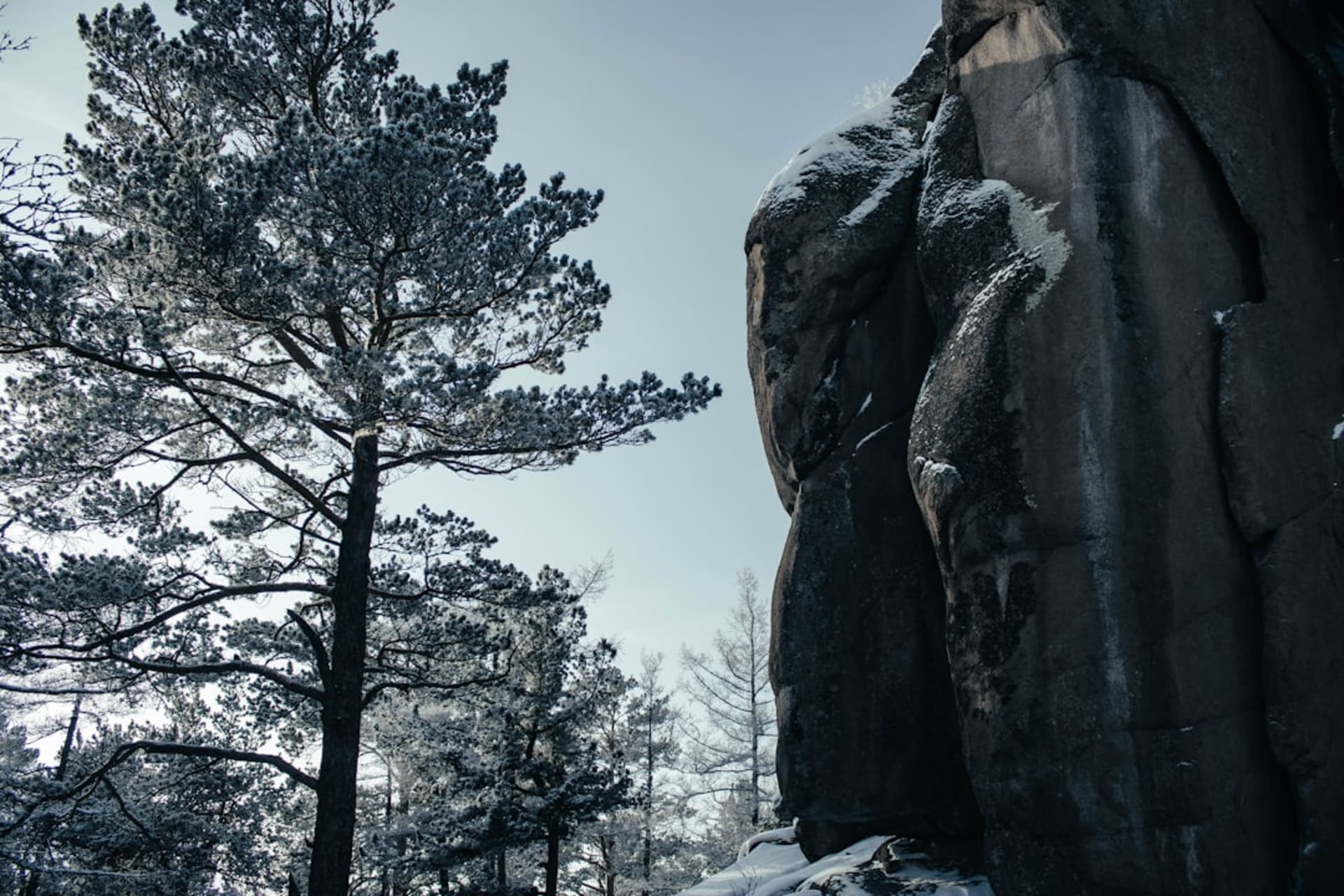
The Stolby Nature Reserve is the reason Krasnoyarsk punches above its tourist weight. The rock formations — syenite pillars pushed up through the taiga over millions of years — sit ten kilometers from the city center by trail, or forty minutes by gondola for those who prefer to arrive at the top with energy remaining. I took the gondola up and walked down, which I recommend.
The pillars have names: Grandfather, the Feathers, the Krashenskaya Column. They range from a few meters to over eighty. The Stolby climbers — Stolbisty — have been scrambling these rocks without ropes since the nineteenth century, developing their own subculture and their own grades of difficulty. In summer the trails fill with families. In autumn the taiga turns every shade between gold and rust and the pillars appear to float above the color. I went in late September and could have stayed a week.
The City Itself
Krasnoyarsk has a hydroelectric dam — one of the most powerful in the world — which means it has money and power infrastructure that other Siberian cities don’t quite match. The city center carries the confident architecture of a place that considers itself important: a philharmonic, a contemporary art museum in a converted factory, a pedestrian street that functions in the ways pedestrian streets are supposed to. The Surikov Art Museum holds a collection that would attract serious attention if it were in a more visited city.
I spent an afternoon there and then ate dinner at a restaurant overlooking the Yenisei that served Siberian salmon with lingonberries and a reduction I’m still thinking about. The prices were lower than I expected. They often are in cities where the competition is mostly locals.
Getting Up the River
In summer, river boats operate on the Yenisei north from Krasnoyarsk toward the Arctic, making stops at villages with no road access. The journey to Dudinka takes four days. I didn’t take it — wrong season, wrong timing — but talking to a woman at the boat terminal who’d made the journey in both directions, summer and winter by snowmobile track, made me want to come back and do it properly.
When to go: Late May through September for hiking in Stolby and river access. September and October specifically for autumn color in the taiga around the rock pillars. December through February for the dramatic Yenisei fog and winter atmosphere at the embankment. Avoid April and November: mud season and frozen-but-not-interesting.