
Scalloway
"For two hundred years this was the capital of Shetland, which tells you something about how power looked from the water."
Shetland's ancient capital on the west coast of the Mainland, a working fishing harbor dominated by the gaunt ruin of a 17th-century castle and holding a wartime history of Norwegian resistance more significant than its size suggests.

The Other Capital
Lerwick replaced Scalloway as Shetland’s principal town in the late 17th century as Dutch herring trade shifted commerce to the east coast. Before that, Scalloway — sitting on a sheltered west-coast voe — was where Shetland administered itself, such as administration was possible at the edge of a northern archipelago with unreliable weather and a complicated relationship with Scottish and Norwegian law alike. The shift from Scalloway to Lerwick was gradual and mercantile rather than dramatic, but it left Scalloway as a settlement carrying the evidence of former importance: the castle.
Patrick Stewart, Earl of Orkney, built Scalloway Castle in 1600. Patrick Stewart was, by the historical consensus, a tyrant who used unpaid forced labor from the local population to construct it, and who was eventually executed in Edinburgh in 1615 for rebellion and misconduct. The castle is now a ruin maintained by Historic Environment Scotland, accessible free of charge, and it dominates the small harbor in a way that feels more accusatory than picturesque.
Inside the Castle
The interior is open and the remaining walls rise three stories in the corner towers. Standing inside the great hall, roofless and gull-colonized, you can make out the window embrasures, the fireplace surrounds, the corbelling where floors once joined the walls. There’s a quality of ruin architecture that I find more evocative than restoration — the incomplete suggests the complete more powerfully than the complete can suggest itself.
The castle was used as a brewhouse and then a storage space after the earl’s fall from power, which feels like an appropriate demotion. The village of Scalloway grew up around it over the following centuries, the fishing harbor expanding as the castle contracted, and now the two exist in a slightly surreal juxtaposition: medieval stone ruin directly behind supermarket.
The Shetland Bus
Scalloway Museum, a small modern building near the harbor, focuses largely on what’s locally called “The Shetland Bus” — one of the most improbable episodes of the Second World War. Between 1940 and 1945, a series of fishing vessels made clandestine crossings between Shetland and occupied Norway, running agents, weapons, and equipment east, and bringing refugees and intelligence west. The crossings took place in winter to use the cover of darkness, which meant navigating one of the North Atlantic’s most ferocious sea lanes in conditions designed to destroy small wooden boats.
The operation is remarkable not just for its logistics but for its human cost: twenty-two men died on these crossings, and the boats and crews that survived became the stuff of Norwegian national mythology. The museum handles this history well. There are photographs of the crew members that make clear how young most of them were. There’s a model of the Hessa, one of the boats involved, and a display case of equipment that looks low-tech even for its era — the kind of thing that makes you understand that improvisation was the primary operational mode.
The Harbor and the Hills
The harbor itself is working rather than decorative — fish processing happens here, and the air carries the specific cold-salt-diesel smell of an active port. The hills behind the village close in from three sides, and on a clear day the water in the voe is very dark and very still. I walked the road around the south side of the bay in the early evening and found the light on the castle ruin from that angle was the best angle — the stones going amber while the harbor water went silver, and the whole thing reflected in the voe’s surface.
When to go: Year-round for the castle and museum, which are open in reduced hours over winter. The harbor is most active in summer; the museum is at its best in May–September when the full exhibition program runs.
Keep exploring
More from Shetland Islands
 shetland-islands
St Ninian's Isle
A perfect double-curved sand bar tying a green island to the Shetland mainland, where a boy once dug up a hoard of Pictish silver.
Explore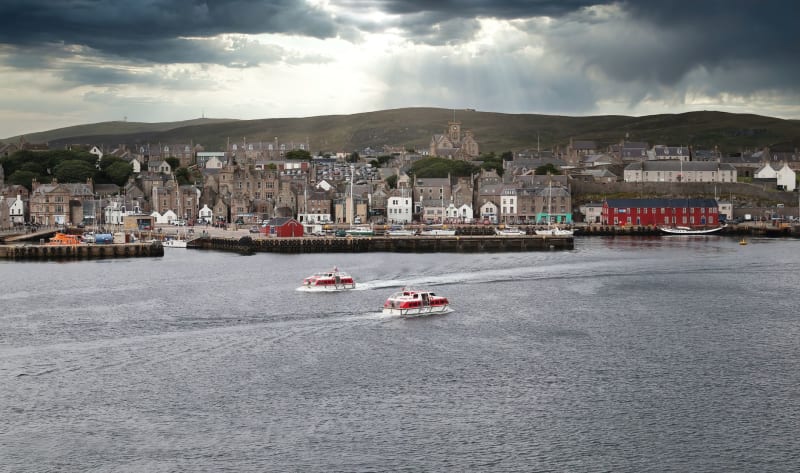 shetland-islands
Sumburgh Head
A lighthouse-crowned headland at Shetland's southern tip where Atlantic gales, puffin colonies, and 5,000 years of human history collide in improbable harmony.
Explore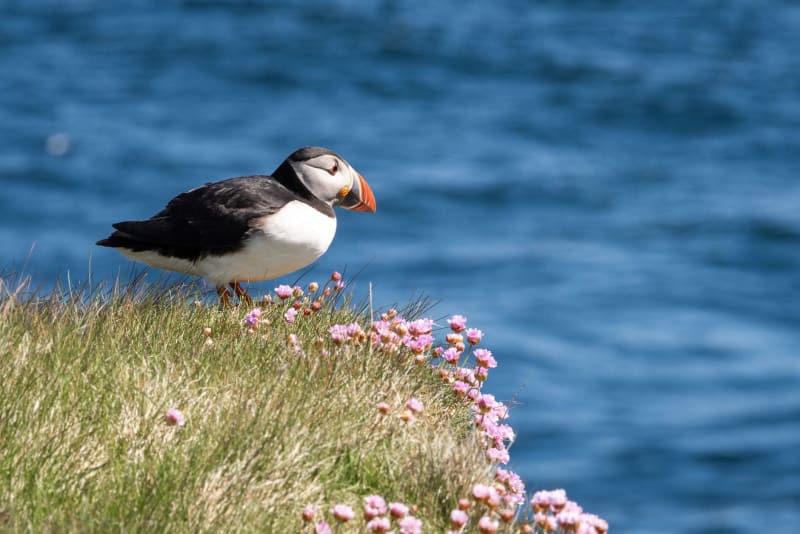 shetland-islands
Unst
Britain's northernmost inhabited island, reached by two ferry crossings from the Shetland Mainland, where wild serpentinite uplands, Europe's most northerly brewery, and a famous bus shelter reward the effort of getting there.
Explore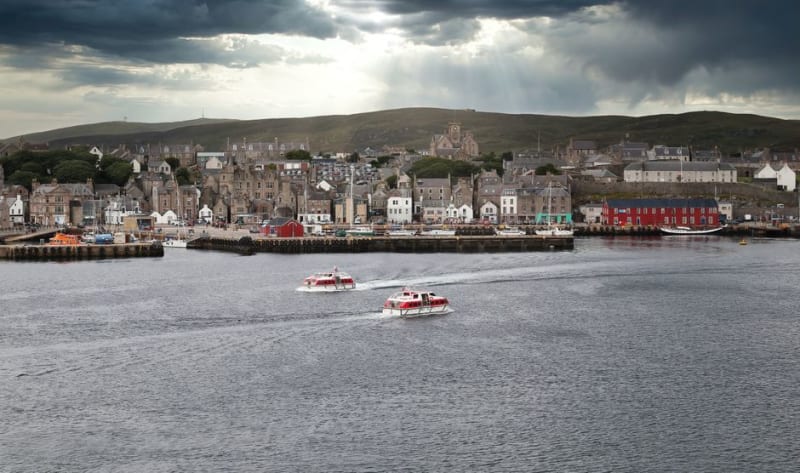 shetland-islands
Whalsay
Known locally as 'the bonny isle', home to a deep-sea fishing fleet whose landings rival much bigger Scottish ports.
Explore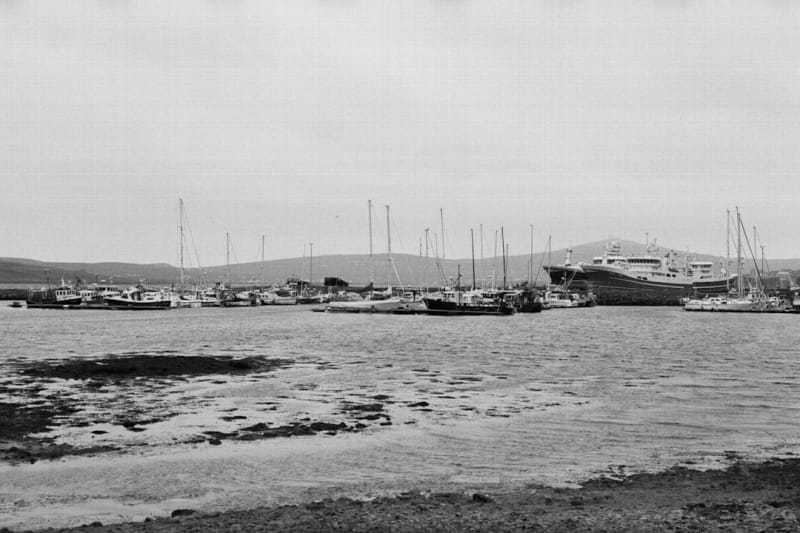 shetland-islands
Yell
Shetland's largest outlying island, a wide peat moorland crossed by a single main road, known for its otter population, coastal voes, and a quietness so complete it starts to feel like a physical substance.
Explore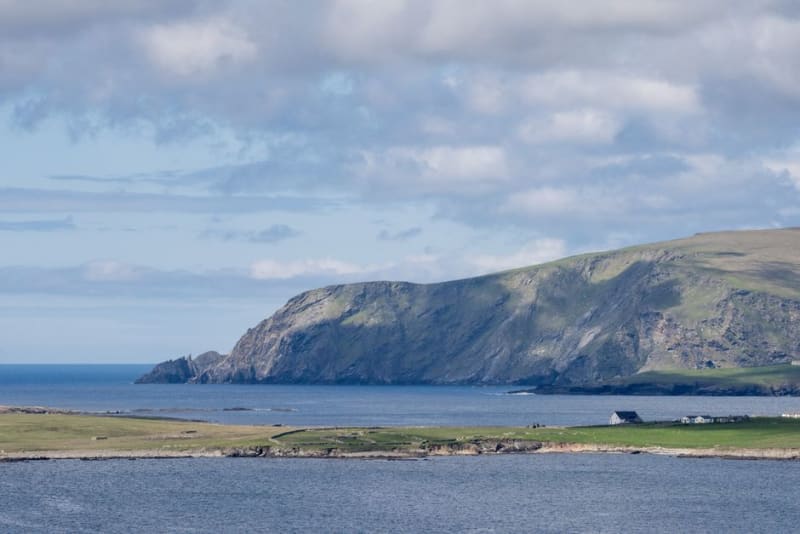 shetland-islands
Bressay
A seven-minute ferry from Lerwick lands you on an island of quiet farmland and sudden cliffs, with Noss looming beyond.
Explore