Novi Sad
"Novi Sad greets you from the fortress walls like a city that knows it's worth climbing toward."
The 'Athens of Serbia' pairs a majestic Danube-side fortress with a European Capital of Culture heritage and the beloved Exit music festival.
I crossed the Varadinski Bridge on foot, dragging my bag over the cobblestones, and stopped halfway across to look up at Petrovaradin. The fortress does not rise — it looms, limestone-heavy and indifferent to time, its famous clock tower reading the hours backward, the minute hand longer than the hour hand to be visible to passing fishermen on the Danube below. That detail alone told me I was somewhere that had been paying attention to itself for a long time.
The Fortress and the Fog
Lia called it the Gibraltar of the Danube. I called it the most beautiful place I’d stood all year. We arrived in early morning when the mist still held to the river, and the city on the far bank — the old streets of Zmaj Jovina and Dunavska — dissolved into a pale suggestion of itself. Up on the ramparts, the cold carried the particular sharpness of a continental autumn, the kind of cold that makes coffee taste earned. We found a small cafe inside the fortress walls, ordered two domaća kafa, and watched barges cut slow lines through the water below.
The fortress has its own subterranean network — sixteen kilometers of tunnels carved through the rock, damp and cool even in summer, which is part of why Exit Festival claims this as its home. Every July those tunnels and ramparts fill with sound. When I visited in September the stages were long dismantled, but I could feel the ghost of it in the trampled grass near the main gate.
Zmaj Jovina and the Afternoon Light
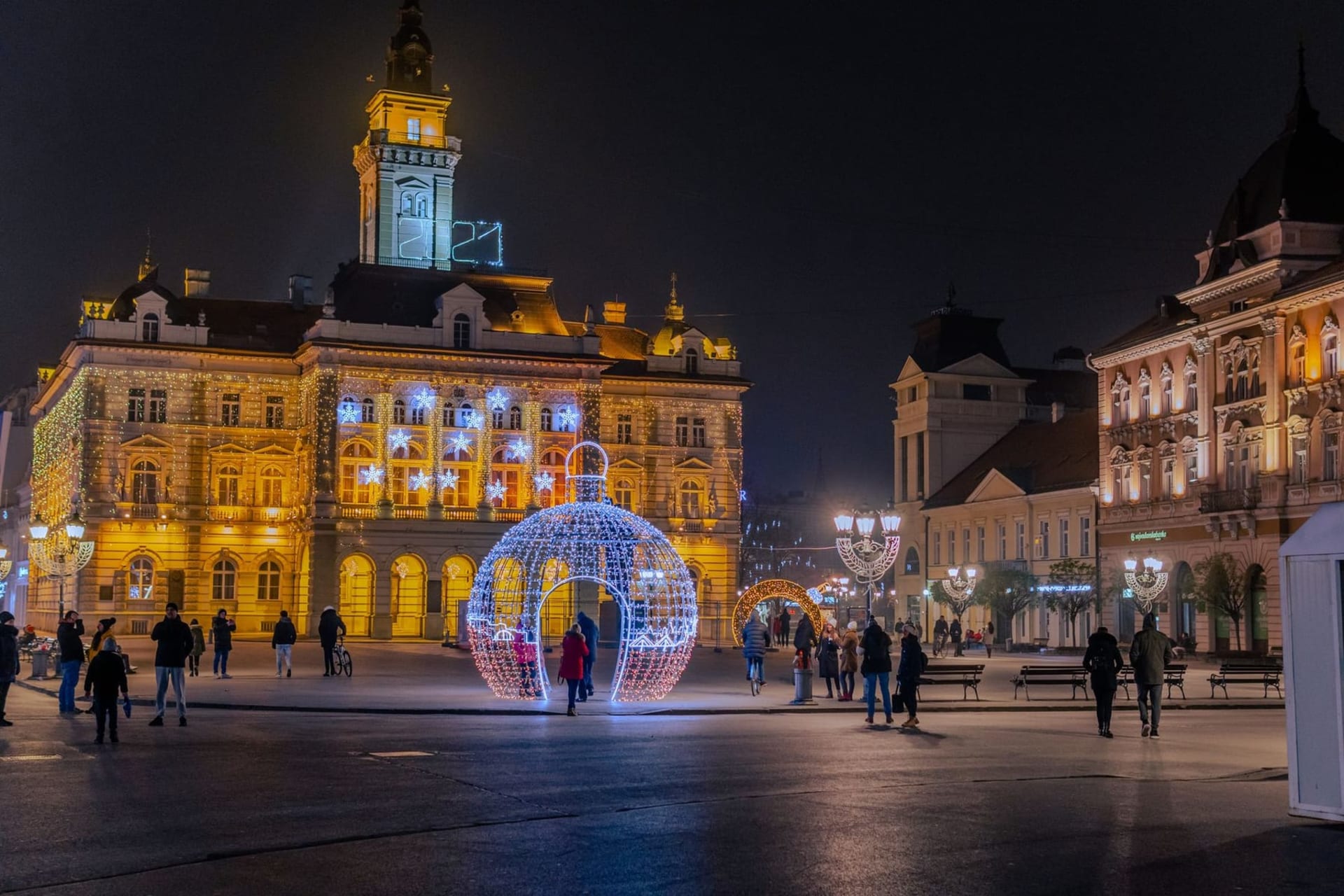
Down in the pedestrian zone, Zmaj Jovina Street runs long and easy between low neoclassical facades, the buildings painted in that particular Austro-Hungarian palette of mustard and cream. The afternoon light in early September falls at a low angle and turns everything amber. I ate a bowl of pasulj — the Serbian bean stew, smoky with pork and deep with paprika — at a place on a side street near the Episcopalian Cathedral, the kind of restaurant that has no sign worth reading but a full room by noon.
The unexpected discovery came in a courtyard just off Miletićeva Street: a small collective of ceramic studios, painters, and one bookshop with a cat sleeping on a stack of Serbian poetry. Nothing was labeled in English. A woman sold me a coffee glaze bowl for four euros and seemed mildly amused by my attempts at Serbian. I carried that bowl all the way back to Mexico. It survived.
When to go: September sits in the sweet spot — the Exit crowds are gone, the Danube light is extraordinary, and the temperature still allows long evenings outside on the kafana terraces. July brings the festival but also the heat and the queues.