Popenguine
"Everyone drives past Popenguine on the way to somewhere else. That's exactly its appeal."
A cliffside fishing village on the Petite Côte where a Marian shrine draws pilgrims each May, a protected reserve of red laterite cliffs drops straight into the Atlantic, and almost nobody stops on their way further south.
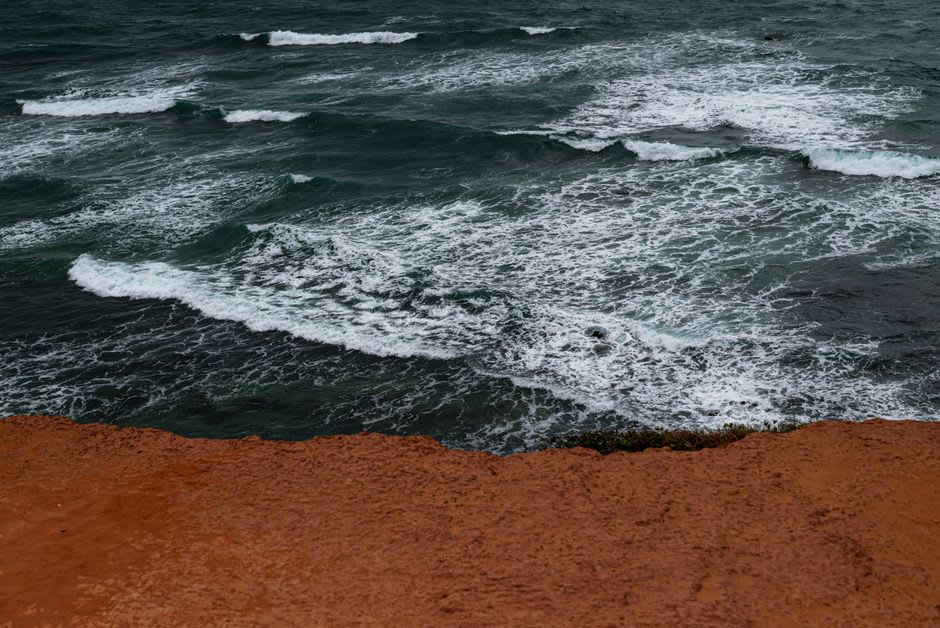
I found Popenguine almost by accident, a wrong turn off the coast road that ended up being the best mistake of that particular week. Where most of the Petite Côte flattens into beach and resort, here the land rises into genuine red cliffs — laterite cut sharp by the Atlantic, the kind of geology that looks like it belongs somewhere in Portugal rather than Senegal. A protected natural reserve covers the clifftop scrub, and I spent a slow hour walking its edge with a local guide who pointed out patas monkeys moving through the low bush and a handful of migratory birds he clearly could have named for the rest of the afternoon if I’d let him.
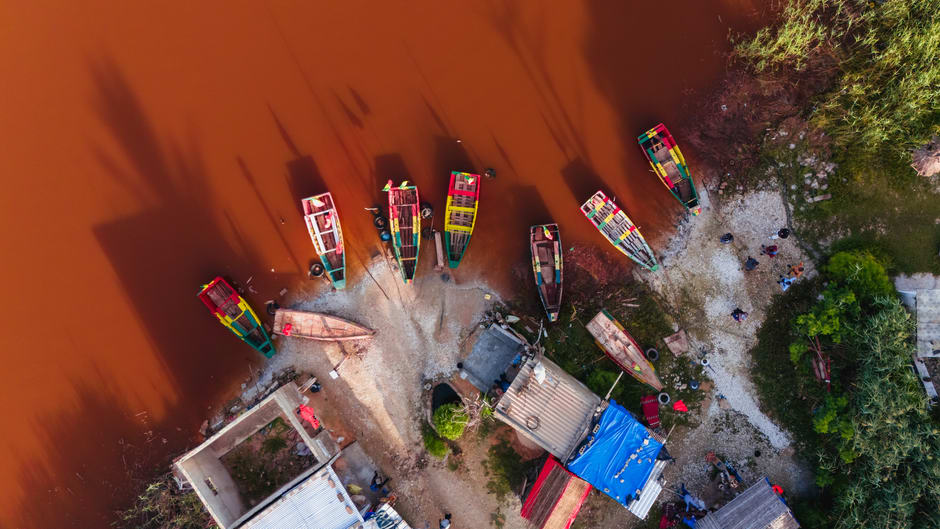
The village below the cliffs is Serer, small, and built around fishing in the unhurried way that towns get when the tourist buses mostly pass them by. Pirogues came in while I was there, painted in the same reds, blues, and greens I’d started noticing all along this coast, and a group of women met the boats to start sorting the catch directly on the sand, moving fast and talking over each other in a rhythm that had clearly been worked out over decades.
Above the village sits the shrine of Notre-Dame de la Délivrande, a Catholic sanctuary that pulls tens of thousands of pilgrims every year in late May for one of West Africa’s largest Marian pilgrimages — a striking thing to encounter in a country that’s overwhelmingly Muslim, and a reminder of just how comfortably Senegal’s religious identities have learned to sit beside each other. I wasn’t there for the pilgrimage itself, but the empty plaza and quiet chapel on an ordinary afternoon still carried something of the devotion the crowds bring each spring.
I ate grilled thiof, the local white fish everyone in Senegal insists is the best in the ocean, at a plastic-table spot overlooking the water, and watched the light go from white to gold to the deep orange that seems to be the Petite Côte’s specialty. Nobody hurried me to leave.
When to go: Year-round for the cliffs and beach, but late May specifically if you want to witness the Marian pilgrimage — expect the village to fill up considerably around then.
Keep exploring
More from Senegal
 senegal
 Richard Toll
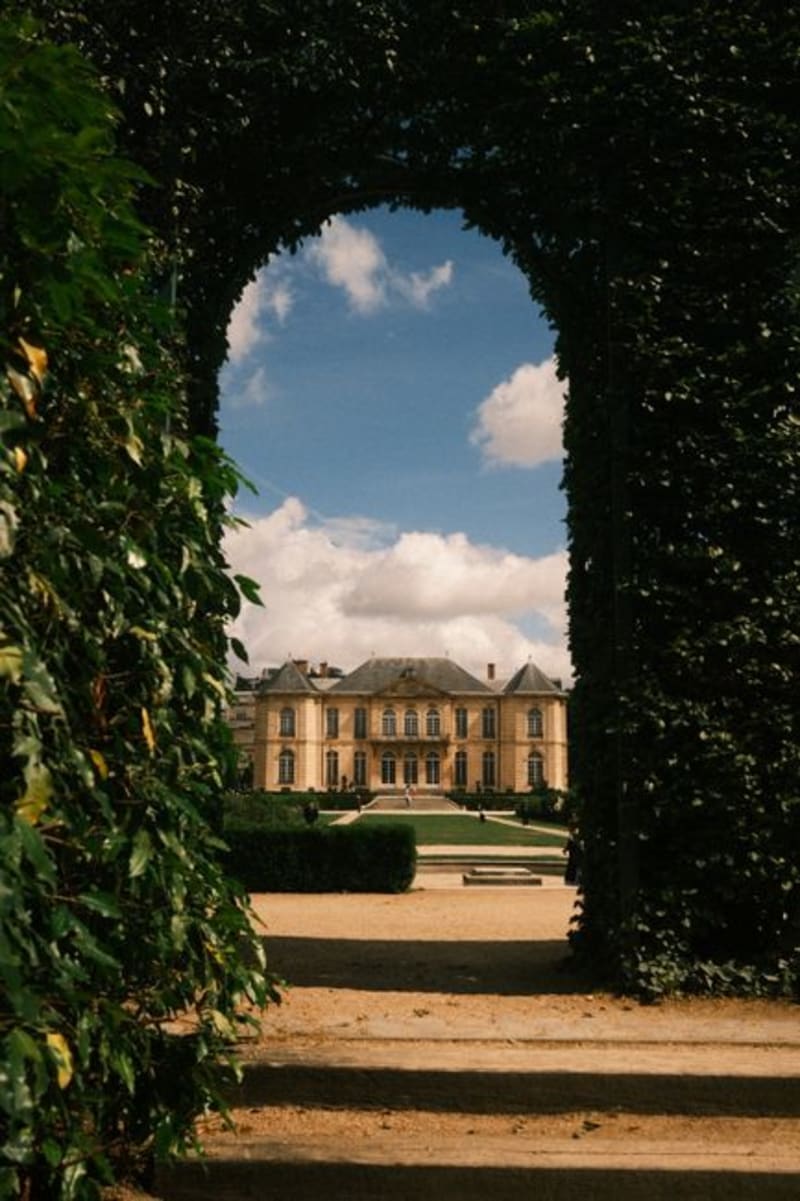
A sugar town on the Senegal River built around a nineteenth-century French agronomist's failed garden, where a fairy-tale château sits oddly among cane fields and the river runs wide and slow toward Mauritania.
Explore senegal
 Saint-Louis
A crumbling UNESCO island of faded French colonial grandeur, where pirogues crowd the river at every hour.
Explore senegal
 Sine-Saloum Delta
A labyrinth of mangrove channels and shell middens, where pelicans and fishermen share the same silver water.
Explore senegal
 Tambacounda
A dusty railway junction city in Senegal's eastern interior that almost everyone passes through and almost nobody stops in, though the market, the heat, and the old station tell you plenty if you give them an evening.
Explore senegal
 Thiès
Senegal's second city and its old railway heart, where colonial-era workshops now house tapestry weavers producing some of West Africa's finest woven art, and the trains that built the town still occasionally rattle past.
Explore senegal
 Touba
The holy city of the Mouride Sufi brotherhood, built around the tomb of Cheikh Amadou Bamba, where one of West Africa's most powerful religious and economic institutions has constructed its own urban world by its own rules.
Explore