St Andrews
"The ruins are the most alive thing in St Andrews — the cathedral has been a skeleton for five centuries and it still dominates everything."
I arrived in St Andrews on a Tuesday afternoon in October when the wind coming off the North Sea was doing serious damage to anyone attempting to carry an umbrella, and the town seemed entirely unbothered by this. The students in their red gowns walked into the gale as if it were not happening. The golfers on the Old Course bent into it with a kind of determined acceptance. A woman outside a bakery was eating a pastry and had long since stopped trying to protect it from the wind. I loved this about St Andrews immediately: it is a place that has been dealing with very specific weather for nine hundred years and has arrived at a settled relationship with discomfort.
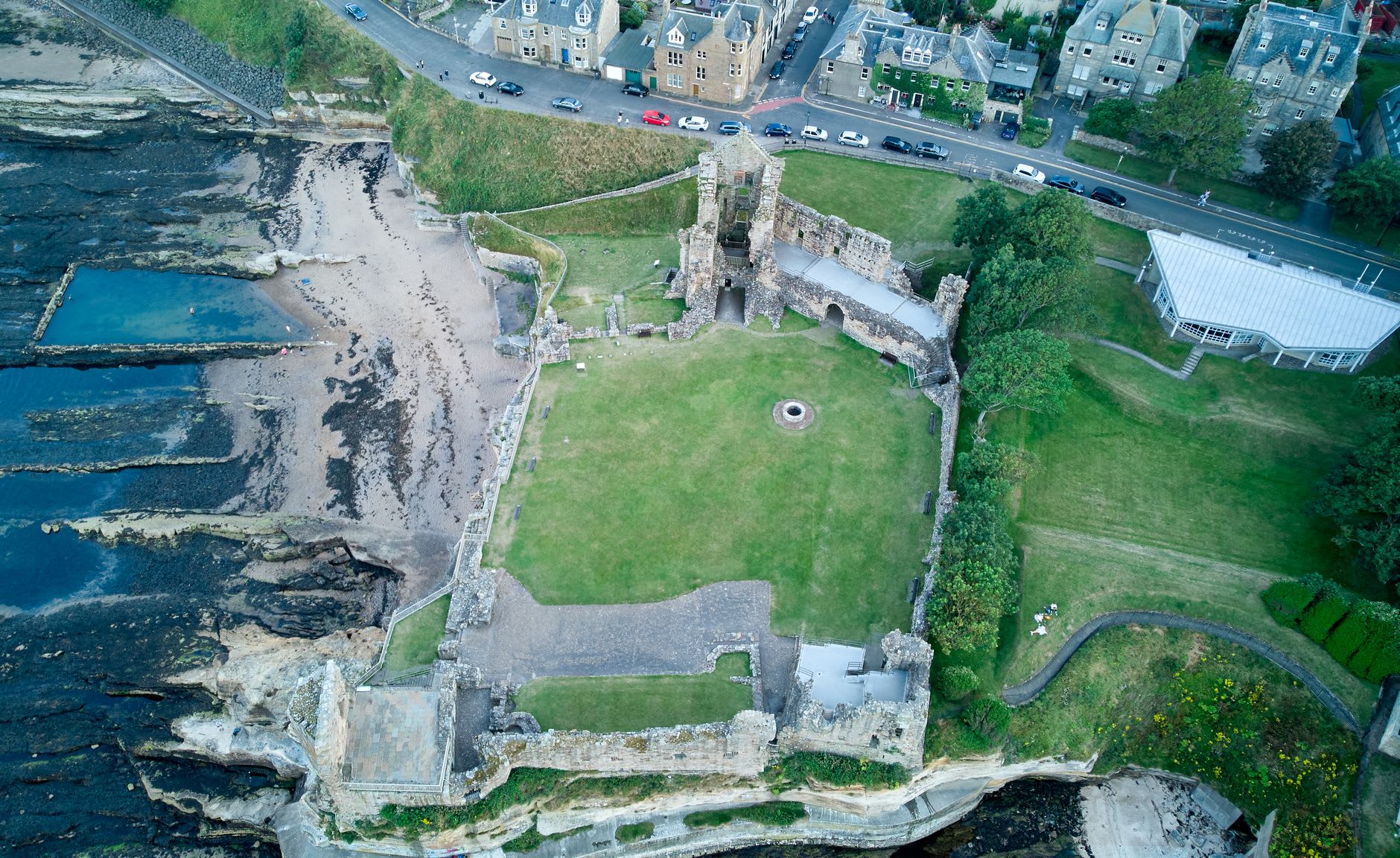
The cathedral ruins at the town’s eastern edge are the thing that hits you first. Completed in 1158 and destroyed over the following four centuries by Reformation violence and simple abandonment, what remains is the skeletal end walls and a collection of towers that look like something from a dream — or a nightmare, depending on your mood. The bones of the thing are so present, so enormous, that the building feels more present as a ruin than most intact churches feel whole. I stood in the nave — open to the sky — for a long time in the wind, thinking about the scale of what had been lost and made. The graveyard that fills the old floor plan is extraordinary: slate headstones tilting at angles, the inscriptions worn almost smooth.
The town itself is organized around three parallel streets — South Street, Market Street, and North Street — that converge at the cathedral, and this geometry gives it a medieval clarity that the university buildings, scattered among the burgess townhouses, reinforce rather than disrupt. The University of St Andrews is the oldest in Scotland, founded in 1413, and the students in their scarlet gowns — an Elizabethan requirement for spotting them in the local brothels, various people told me, though this may be apocryphal — give the streets a theatrical quality, especially on Sunday mornings when they walk in procession along the pier. I watched this from the harbour wall, eating a warm cheese scone from a paper bag, and felt the pleasant confusion of not being sure which century I was in.
The golf is unavoidable and I say this without resentment. The Old Course is the most famous golf course in the world and it runs along the coast on the town’s western side, separated from the beach by almost nothing. Even if you don’t play — I don’t — there is something compelling about watching people from every country on earth making the walk of a lifetime along a stretch of coastal turf that has been used for the same purpose since the fifteenth century. The pro shop sells enough branded merchandise to fund a small country. The Swilcan Bridge, a single stone arch over a burn that bisects the course, has been photographed by more people than most major world monuments.

The food is better than a town of this size has any right to expect. The fish and chips on the harbour are as good as anywhere in Scotland — the haddock in a batter that shatters, the chips thick and floury inside. There are also excellent bakeries, a few serious restaurants, and a pie shop on South Street whose steak pie I ate on a bench in the wind and thought about for several days afterward.
When to go: Spring and early summer when the gorse on the coastal path is burning yellow. Autumn is beautiful and the university population fills the town with energy. Avoid the major golf championships — the town locks up completely around them. Winter is bare and cold and oddly peaceful.