Europe
Scotland
"I came for whisky and left rearranged by the silence."
I arrived into Inverness on a September evening when the light had that amber quality that makes everything look slightly unreal — the kind of light photographers chase and never quite capture. I had driven up from Edinburgh in a rented Volkswagen, nervous about roundabouts and left-hand driving, and by the time I crossed into the Highlands I had completely forgotten about both. You don’t drive through the Scottish Highlands so much as surrender to them. The A9 opens up and suddenly there’s nothing on either side except moor and distance and clouds dragging their bellies across the hillsides.
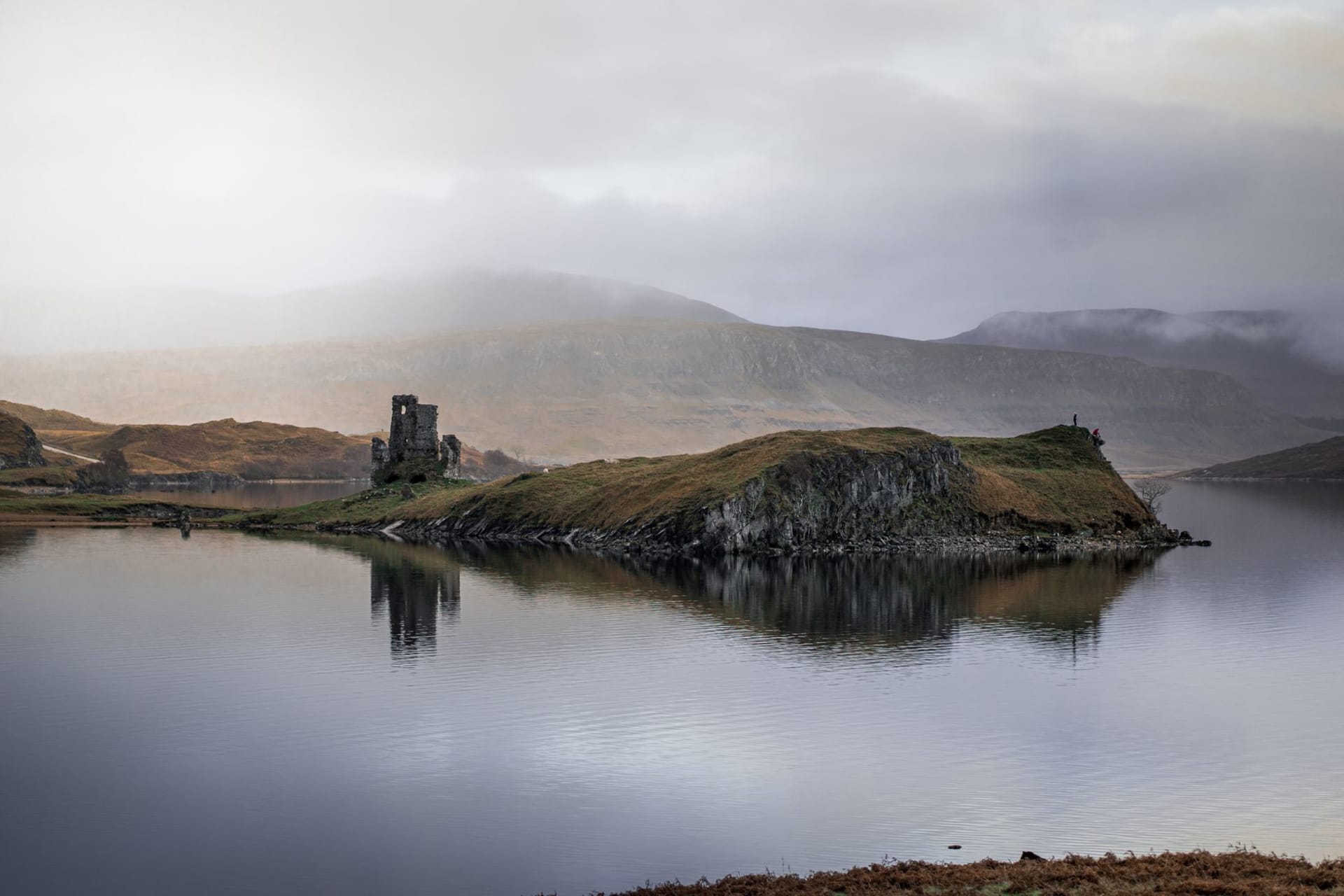
What surprised me most about Scotland was the intimacy of it. I’d expected grand and remote, and I got that — the first time I stood at the edge of Loch Assynt with Ardvreck Castle half-dissolved in morning mist, I felt the particular smallness of being a tourist from another continent in a place that has been dramatic for a thousand years. But Scotland is also strangely personal. The people are direct in a way that reads as brusque until you realize it’s actually respect — they’re treating you like an adult. A fisherman in Ullapool handed me a paper bag with smoked mackerel and refused money because it was “just the extra.” In a pub in Plockton, someone I’d never met sat down and spent an hour explaining the politics of Highland land ownership. Nobody performed anything for me.
The food corrected every assumption I had. Haggis, yes, but also: hand-dived scallops served in their shells in a harbour-side shack in Oban, cullen skink thick enough to stand a spoon in, a rough oatcake with aged cheddar and bramble jam that I ate on a stone wall while rain arrived sideways from the Atlantic. And the whisky — tasted in the distillery at Talisker on a raw November afternoon, a dram of something peaty and medicinal that warmed from the inside out and tasted specifically of that island, that coast, that weather.
When to go: May to September gives you the longest daylight hours — in June the sky barely darkens. September is particularly good: the midges thin out, the heather is purple across the moors, and the tourist buses have mostly gone. Avoid July and August on the North Coast 500 if you can; the road becomes a caravan convoy. Winter has its own brutal appeal if you’re prepared for it.
What most guides get wrong: Scotland is sold as a road-trip destination — the North Coast 500, castles, whisky trails — and the road trip is real and worth doing. But the guides push you through it too fast, ticking viewpoints. The country rewards stillness. The best thing I did was rent a cottage on the Applecross peninsula for four days and mostly stay there: walking the same stretch of shore each morning, watching the light do different things to the same mountains. Scotland is not a series of Instagram stops. It’s a place that works on you slowly, and you have to give it time to do that.