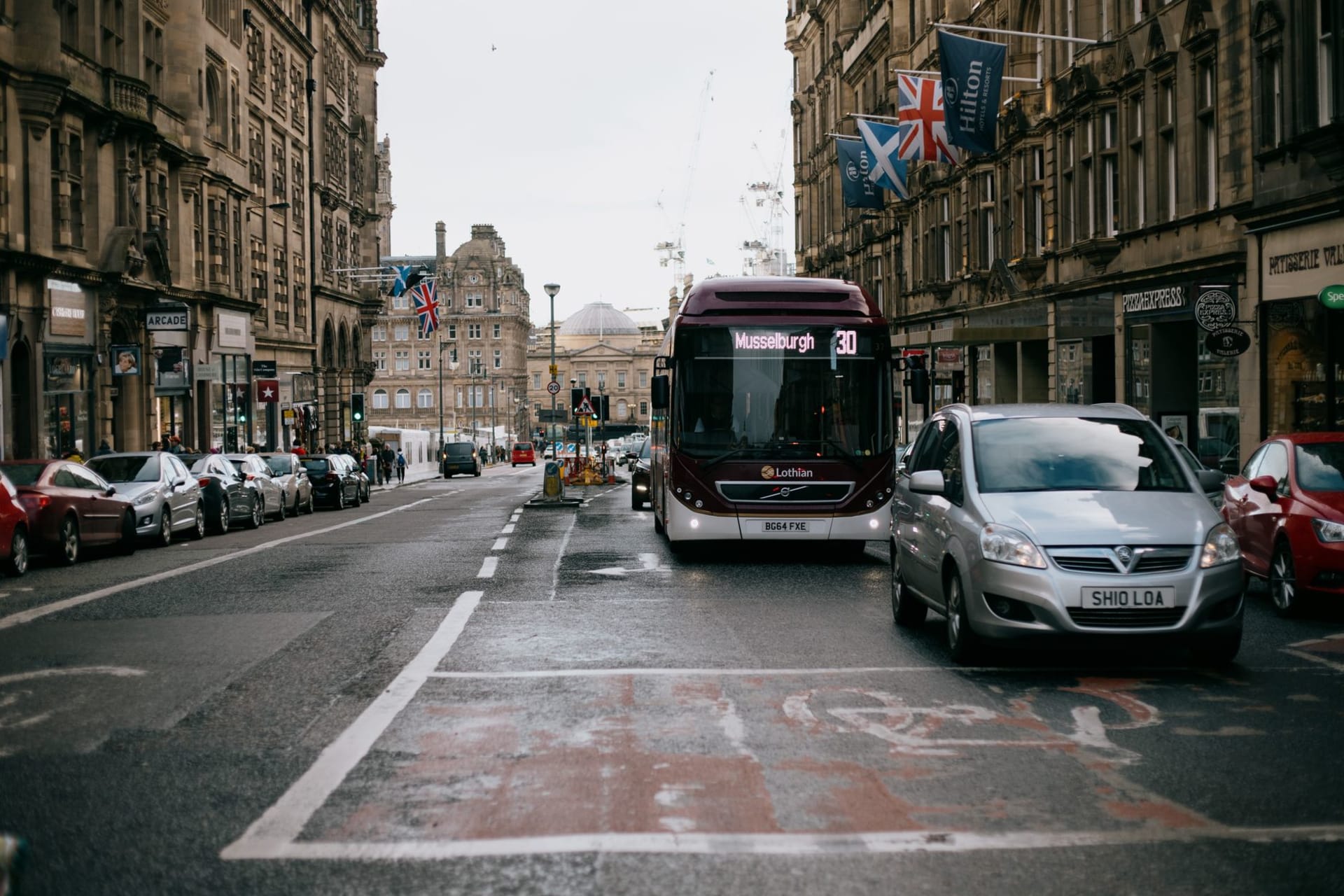
I came into Edinburgh from the south, and the castle appeared before I expected it — materialising above a ring road flyover, stone on black rock, impossibly theatrical. I pulled over in a bus lane for thirty seconds just to look. That’s Edinburgh for you: it ambushes you with itself. By the time I’d checked into a guesthouse on a cobbled lane off the Canongate and the proprietor had handed me a glass of Speyside without asking, I understood that this city operates on its own terms and will not apologise for the inconvenience of its beauty.
The Old Town is built on a ridge running down from the castle to the Palace of Holyroodhouse, and everything tumbles off this spine in wynds and closes — narrow alleys that disappear between tenements so high they blocked out medieval sunlight. I spent an afternoon just turning into things: a courtyard with a single tree, a staircase leading to a pub that seemed to exist in 1987, a close where the stones were worn concave by four centuries of feet. The closes have names — Fleshmarket Close, Mary King’s Close, Anchor Close — and the names tell you more history than most guidebooks.

I ate at a place near the Grassmarket that had six tables and a handwritten menu: cock-a-leekie soup with a depth of flavour that suggested the stock had been going since last Tuesday, followed by venison from the Pentland Hills with root vegetables cooked until they were tender and sweet. The wine list was unashamedly short. The owner — who was also the cook, and possibly the waiter — talked about sourcing with the quiet intensity of someone who actually cared whether the potato was grown correctly. I left happy and slightly dazed.
Across the valley in the New Town, the mood shifts entirely. Wide Georgian streets, neoclassical facades, and the cold order of Enlightenment planning. But Stockbridge, at the New Town’s western edge, breaks the formality: independent bookshops, a farmer’s market on Sundays, cafés where the coffee is taken seriously and the newspapers are read slowly. I walked along the Water of Leith, a river that cuts improbably through the city, past a heron standing absolutely still in the current. The city felt, for a moment, genuinely quiet.

The thing about Edinburgh that took me longest to understand is how it holds contradictions. It is both a city of celebration — the Festival in August turns the whole place into the world’s largest theatre — and a city of real melancholy. The winters are dark and wet and the wind on Calton Hill is something you feel in your fillings. Muriel Spark grew up here and it shows in her work, that cold precision, the sense that beneath the surface of things something is being suppressed. Robert Louis Stevenson wrote Jekyll and Hyde after a nightmare in this city, and you walk around the Old Town at night and you understand completely.
When to go: May and June offer the best light and manageable crowds. August brings the Edinburgh Festival and Fringe — extraordinary, chaotic, exhausting, worth it if you book accommodation six months out. September is quieter and often beautiful. Winter has its own atmosphere: Christmas markets on the Mound, fog on the castle, a certain grim dignity the city does particularly well.