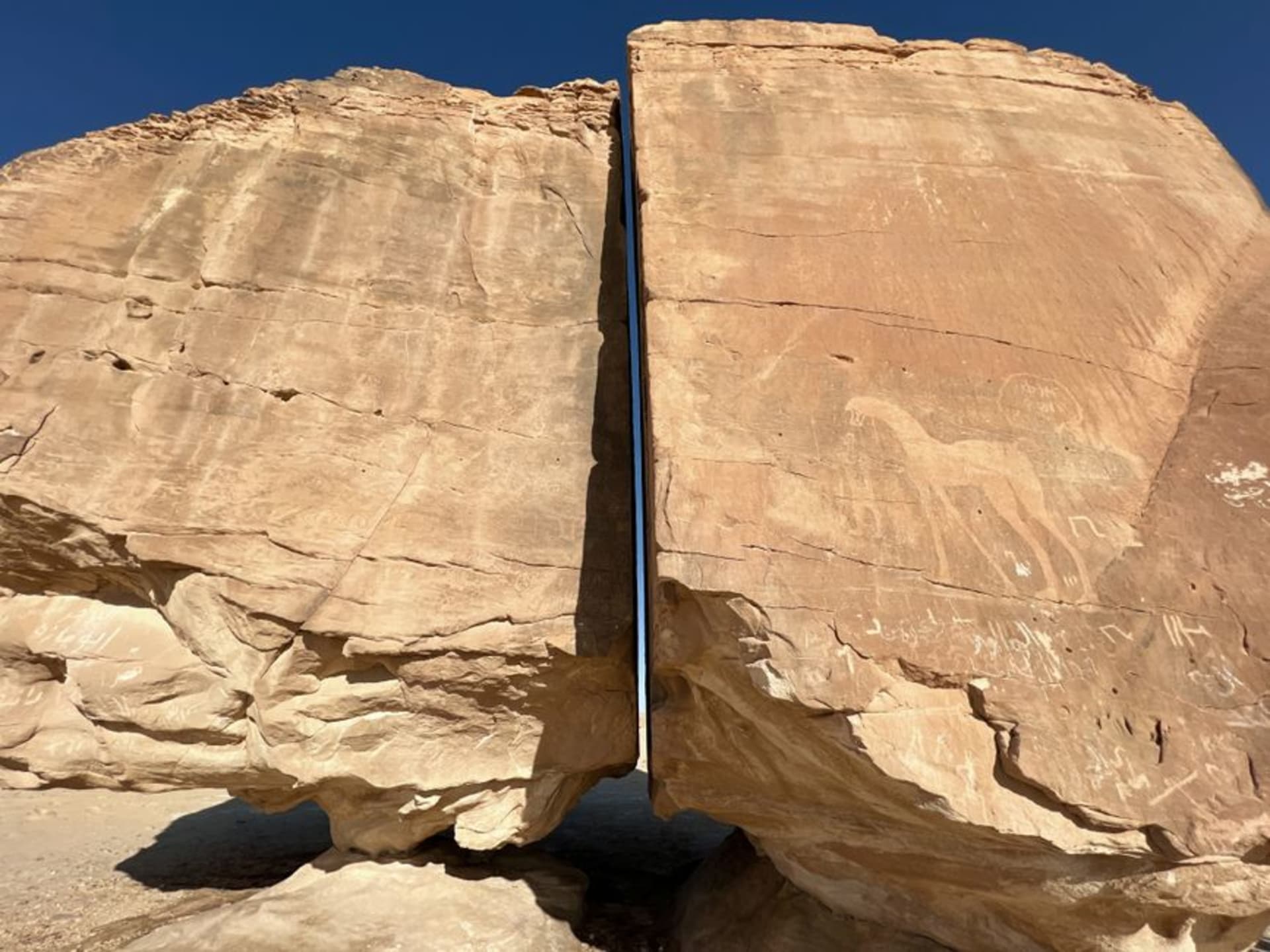
Jubbah
"Ten thousand years ago there was a lake here. All that's left of it is stone memory."
Thousands of Neolithic carvings on a sandstone outcrop mark where a vanished lake once drew lions, ibex, and the people who painted them.
Lia and I got to Jubbah just after sunrise, when the Nefud desert still had some cool left in it, and I remember standing at the base of Jabal Umm Sinman trying to picture what the guide was describing — a lake, right here, lapping against this same rock. It sounded almost like a joke given the sand stretching out in every direction, dune after dune to the horizon. But the carvings don’t lie. Within minutes of walking along the base of the outcrop we were looking at a procession of ibex pecked into the sandstone, then a lion, then cattle — animals that have no business being in a desert this dry, unless the desert wasn’t always like this.
That’s the thing that stuck with me the whole day: Jubbah isn’t a single carving or a single site, it’s thousands of them, layered across generations who came back to this same lakeshore over and over during the Neolithic, when this whole region — what people now call “Green Arabia” — was wetter and green enough to support herds and hunters. Our guide pointed out how you can almost read the rock like a timeline, with older, more weathered figures overlapping fresher ones, hunters with bows next to animals that vanished from the Arabian Peninsula entirely.
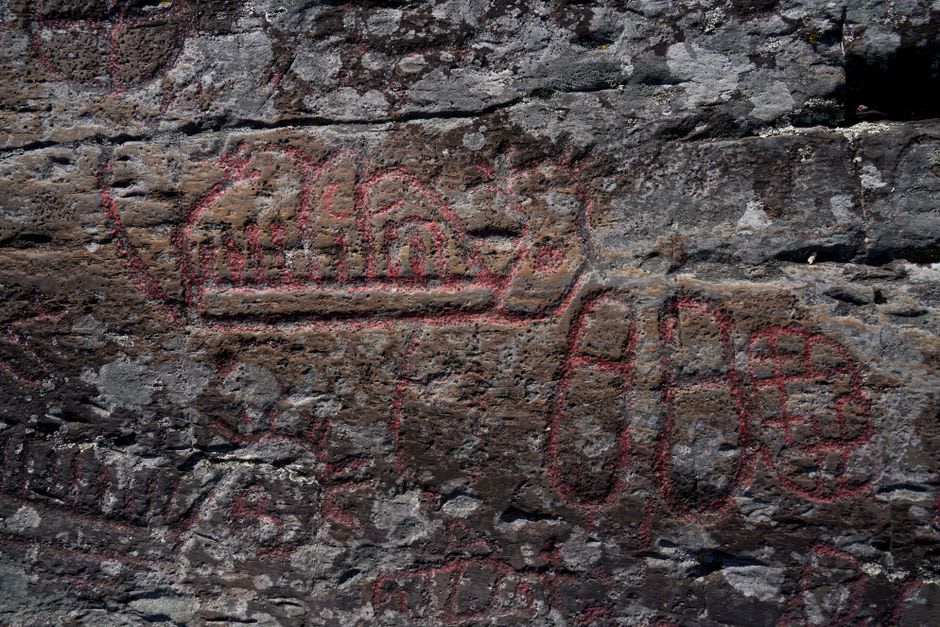
We spent a long, hot stretch of midday just walking the base of the outcrop with our necks craned upward, and I kept losing Lia for ten minutes at a time because she’d found another panel and wouldn’t move until she’d photographed it from three angles. What got me most wasn’t even the animals — it was the human figures, some of them with raised arms, some seemingly dancing, carved by people who had absolutely no idea their marks would outlast the lake, the climate, the wildlife, everything else around them. Jubbah and the nearby site of Shuwaymis were named a UNESCO World Heritage Site together in 2015 under “Rock Art in the Hail Region,” and standing there it’s obvious why — nowhere else have I seen this much open-air prehistoric art in one place, unprotected by glass or rope, just sitting in the desert light the way it’s sat for ten millennia.
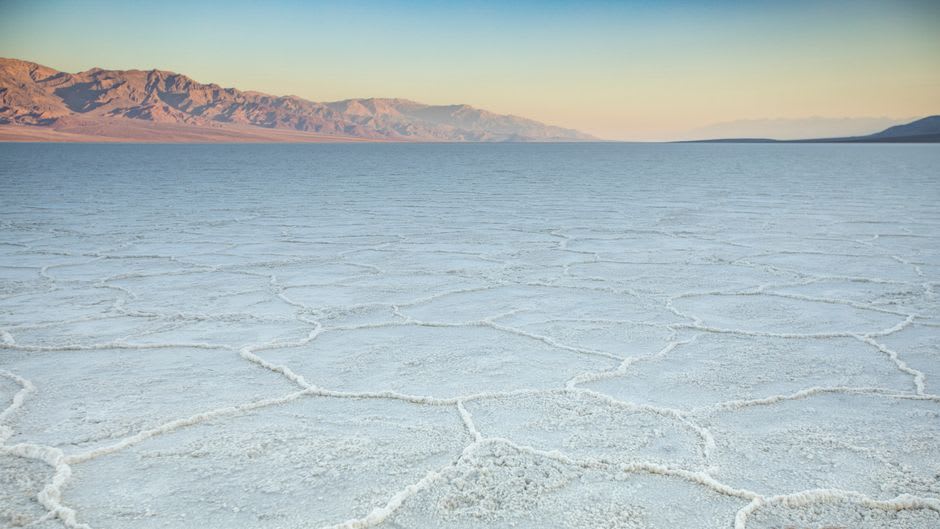
By late afternoon the light turned gold and the carvings seemed to sharpen, shadows pooling in every groove the ancient artists had cut. We ate dates and drank tea with our driver near the base of the jabal, looking out over what used to be lake bed, and I remember feeling genuinely small in a way that ruins rarely make me feel — this wasn’t architecture, it was just people, marking a place they loved before it changed into something else entirely.
When to go: Aim for November through March — the Nefud desert’s summer heat is brutal and makes even a short walk around the outcrop miserable, while the cooler winter mornings let you actually linger over the carvings.