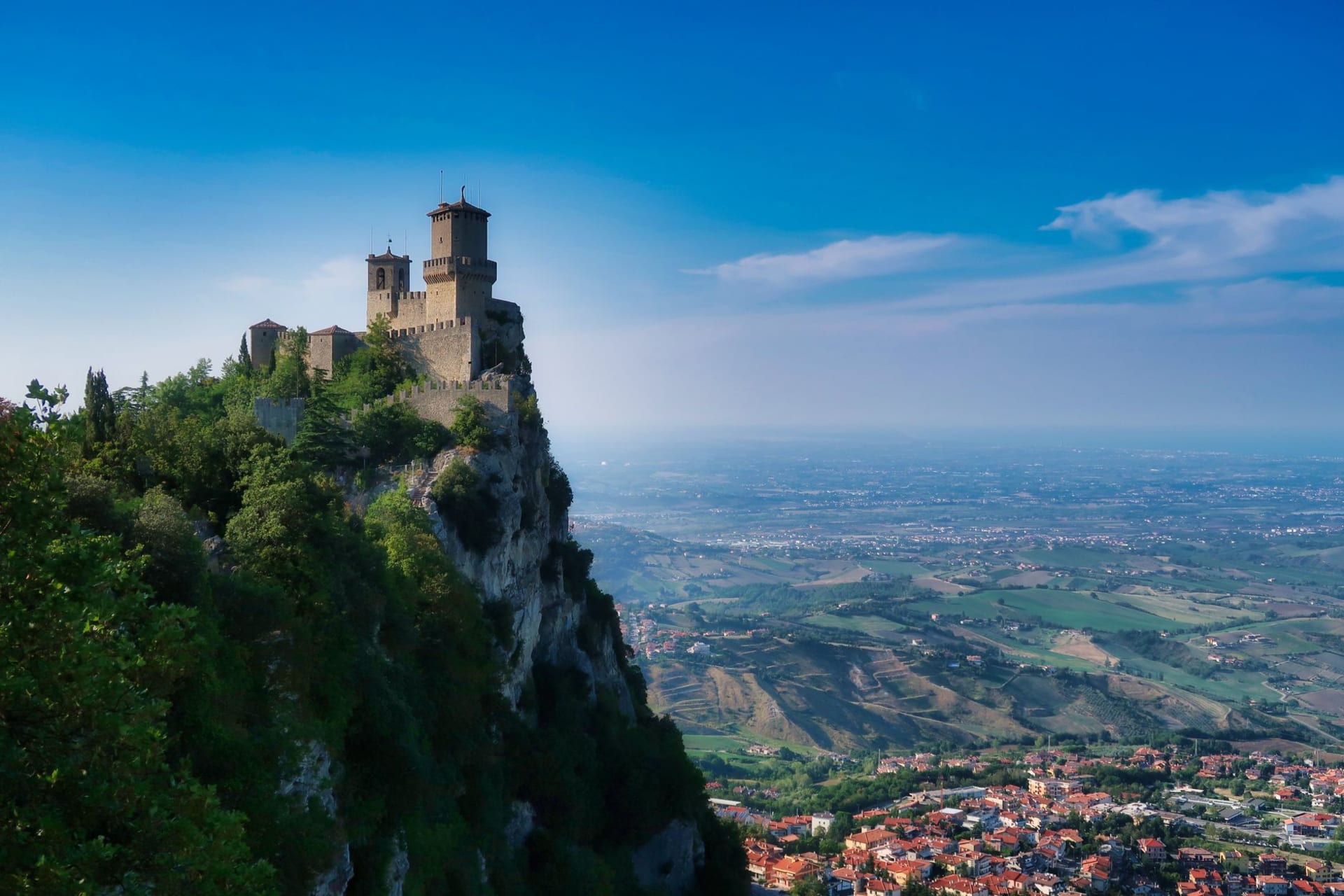
Passo delle Streghe
"They called it the Path of the Witches because no one could explain why you'd walk a cliff that exposed unless something compelled you. I walked it three times."
The name is better than it deserves to be, or perhaps it is exactly right. The Passo delle Streghe — Pass of the Witches — is the cliff path that runs along the outer edge of Monte Titano’s limestone ridge, connecting the Guaita and Cesta towers along a route that is ancient, narrow, and not recommended for anyone troubled by heights. It was apparently named for the women accused of witchcraft who were once imprisoned in La Guaita and forced to walk this path to their trials. The name stuck, which says something about the impression the path leaves on the people who walk it.
I found the path by accident, having taken a wrong turn from the main tourist circuit and followed a stone staircase through an arch in the outer wall. The city fell away immediately. On the left: the wall, solid, medieval, knee-high at most. On the right: the cliff face dropping roughly two hundred meters to the green Romagna countryside below. Ahead: a path of pale limestone slabs about a meter wide, curving around the ridge toward the second tower. The wind was coming from the south, steady and cold, and it was the kind of wind that doesn’t knock you over but reminds you continuously that it could.
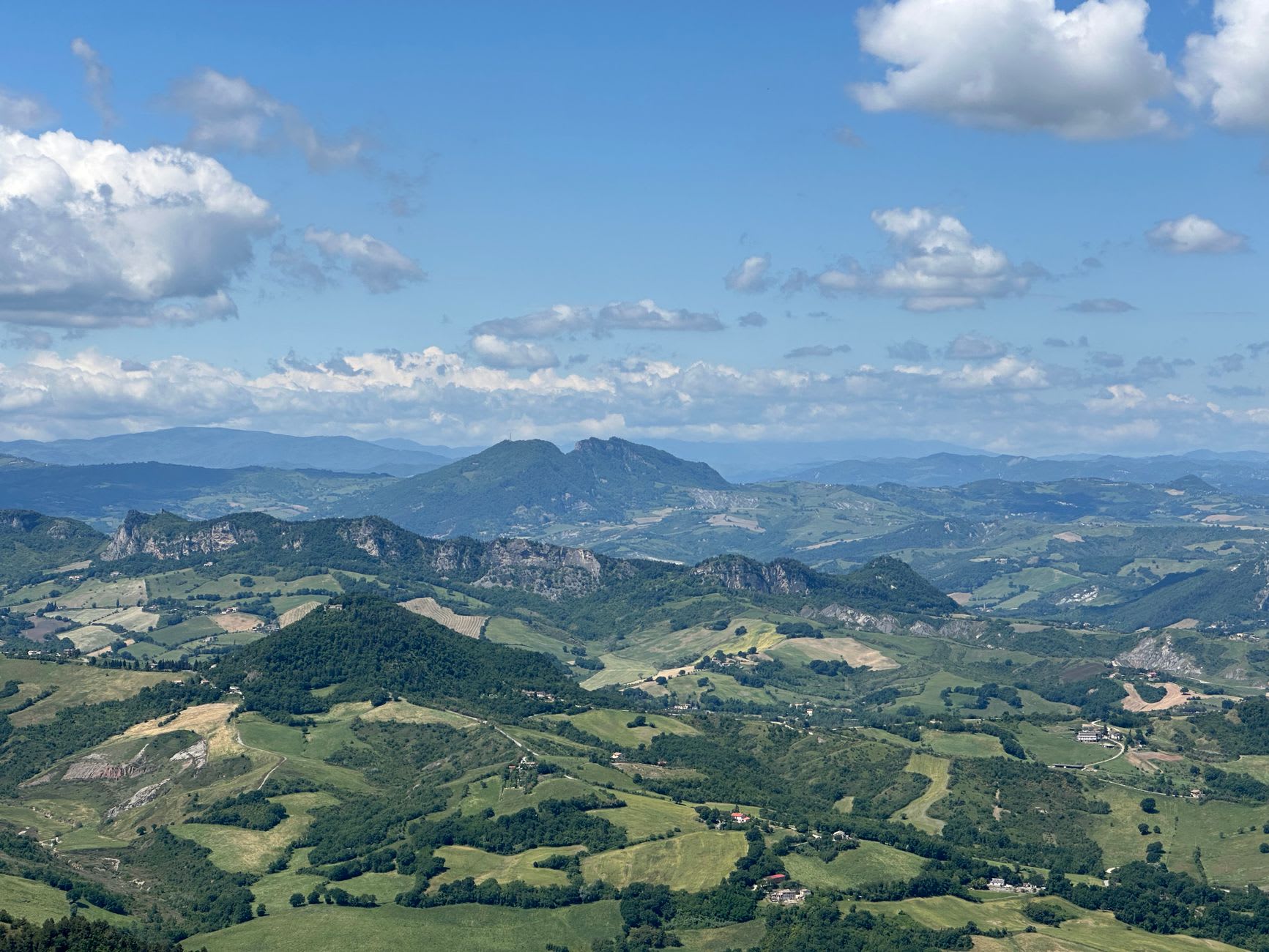
Walking the Passo delle Streghe is one of those experiences that can’t be adequately described by the facts of it — a twenty-minute walk on a stone path between two medieval towers — because the feeling of it is entirely disproportionate to the description. The exposure is constant and demanding. The view is extraordinary. You can see the entire arc of the Adriatic coast from Rimini south toward Pesaro, a silver smear at the edge of the plain, and the inland hills stepping up in layers toward the dark line of the Apennines. You can see the Italian countryside spread below you in a way that makes it look like a map, and you understand immediately why this ridge was militarily significant and why anyone who held it felt, reasonably, like they held the world.
About halfway between Guaita and Cesta the path crosses a point where the ridge narrows and the drops on both sides are visible simultaneously. I stopped here, braced against the wall, and watched a pair of Alpine swifts working the updraft off the cliff face below — wheeling and diving at a speed that made their wings look inadequate, catching insects I couldn’t see, utterly indifferent to the height. They had the advantage of evolution. I had only my handrail and my nerve.
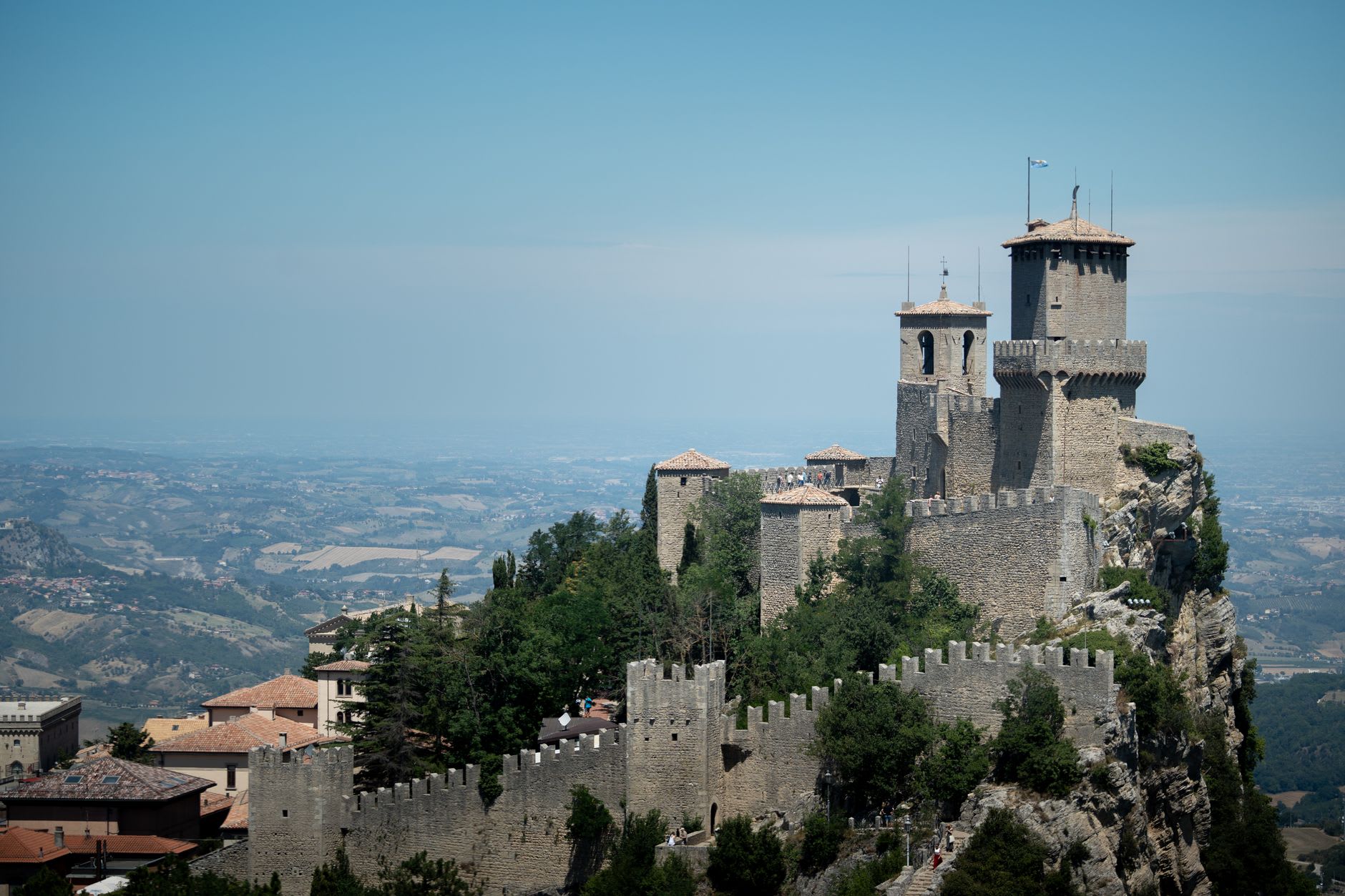
I walked the path three times over two days, because the morning light and afternoon light give it entirely different characters. In the morning the eastern cliff face catches the sun directly and the limestone glows a warm ochre. In the afternoon the path goes into shadow and the view east becomes a study in graduated blues — the plain, the sea, the sky, all the same color but different intensities. The walk takes about twenty minutes from Guaita to Cesta at a moderate pace, but there is no reason to do it at a moderate pace.
When to go: The Passo delle Streghe is walkable year-round but most dramatic in spring and autumn when the light is lower and the views sharper. Avoid in wet weather — the limestone slabs are genuinely slippery when wet and the drop is real. In summer it can be crowded mid-morning; go early or late. Strong winds make the exposed sections challenging but not dangerous; severe weather closes the path.