
Montegiardino
"Six hundred people live here and none of them seemed surprised that I had come, which suggested either remarkable hospitality or a very small tourist footprint."
Montegiardino appeared on no map I was given at the tourist office in the historic center, which was the first sign I should go there. I found it on a paper map I bought at a stationery shop in Borgo Maggiore — a small dot in the southeastern corner of the republic, connected by minor roads through farmland, marked as the smallest of San Marino’s nine municipalities. Population: roughly six hundred. A taxi driver I flagged outside the market got me there in ten minutes. He dropped me at the edge of the village, named a price that seemed entirely reasonable, and told me he would come back in an hour if I called.
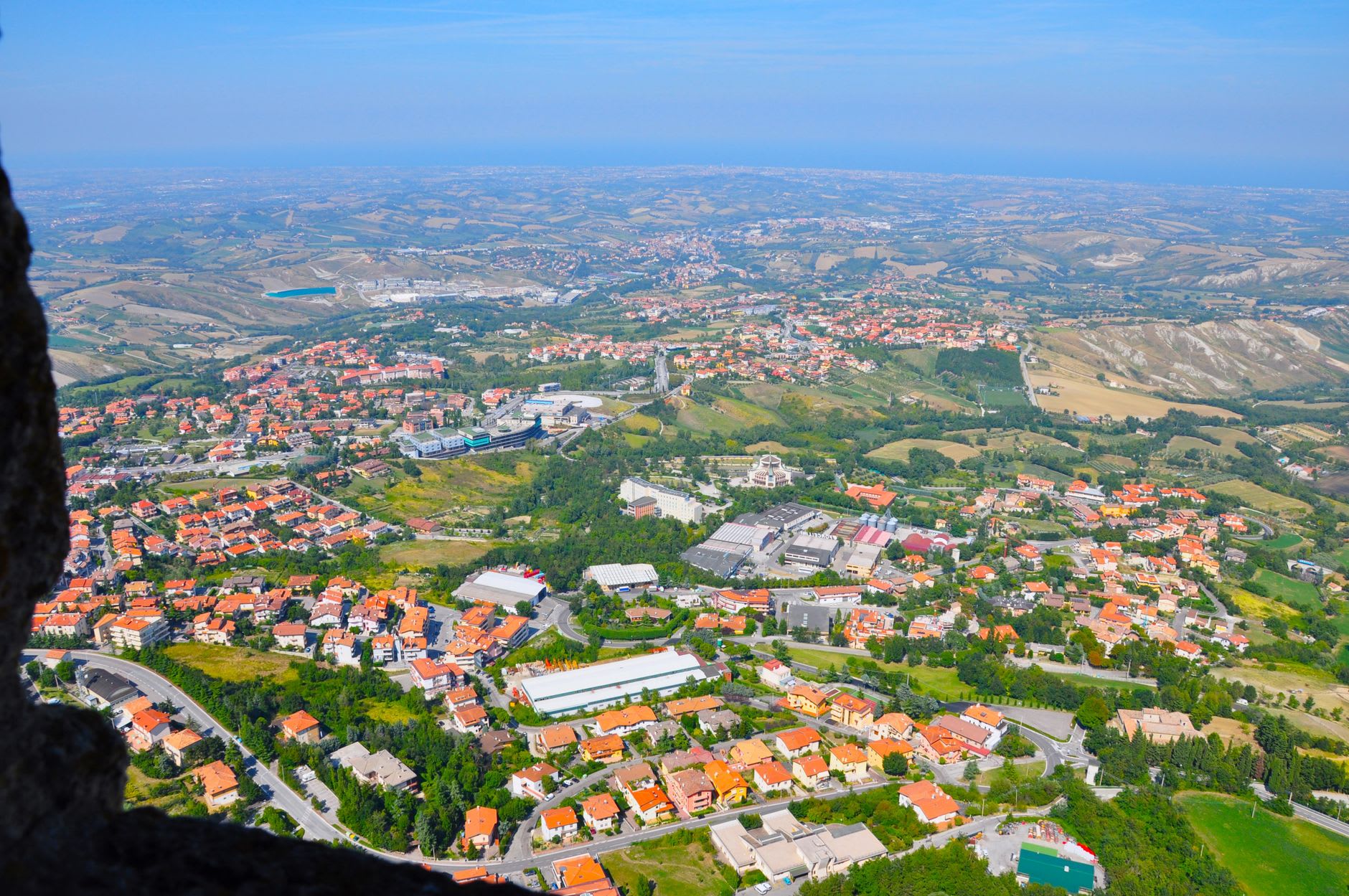
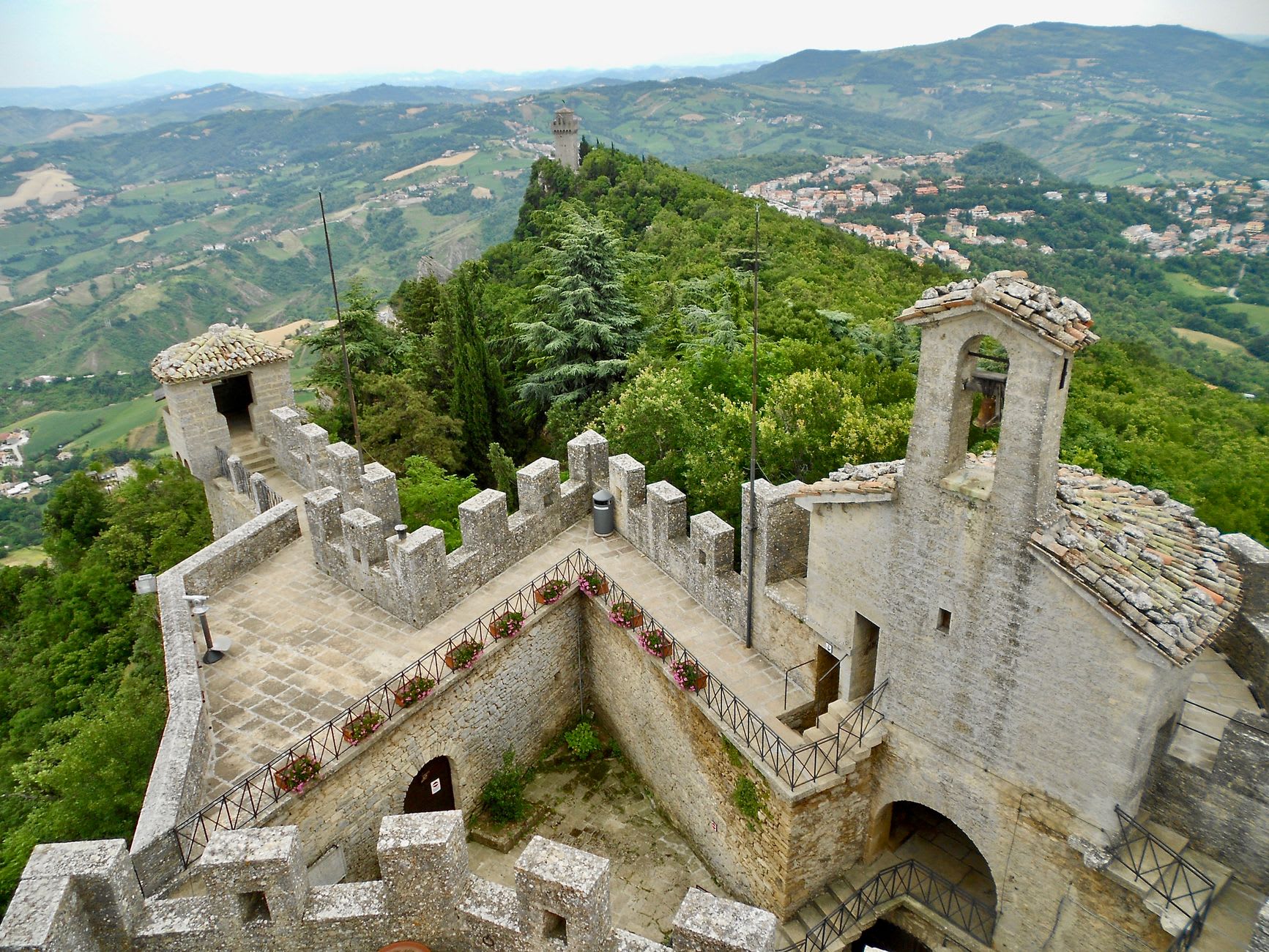
The village is a compact medieval settlement on a modest hilltop — nothing as dramatic as Monte Titano, but a quiet elevation above the surrounding farmland that gives views over the southeastern hills toward the Italian border and the beginning of the Marche region. There is a stone tower, a Romanesque church, a handful of lanes narrow enough that two people cannot walk side by side without turning sideways, and a small piazza where a café-bar was operating with the low-key seriousness of a place that serves the same dozen regular customers every morning and has long since stopped thinking about expanding. I ordered a coffee and sat at the single outdoor table and watched a cat walk the length of a garden wall with tremendous dignity.
The church of San Lorenzo is Montegiardino’s architectural centerpiece — a simple Romanesque structure with a striped stone facade and an interior that smells of cold stone and old wax. The single nave contains a painted wooden crucifix of the fifteenth century and several votive offerings accumulated over decades: silver hearts, small plaques in Italian giving thanks for recoveries from illness, a faded photograph pinned to a board near the side altar. The accumulated gratitude of six centuries of people in a village of six hundred, addressed to the same carved figure.
Outside, I walked the perimeter of the old walls, which took approximately twelve minutes. Below the walls the vineyards began — Sangiovese mostly, the same grape that makes the Sangiovese di San Marino IGT wines I had been drinking all week. The vines were still bare in April, their wire-trained rows running down the slope in parallel lines, and a man was working between them with a sprayer, moving at the deliberate unhurried pace of someone who has done this task many times and knows exactly how long it takes.
The taxi driver came back on schedule, as promised. On the drive back he mentioned, without particular emphasis, that his grandfather had been born in Montegiardino and that his family still had a small piece of land there. He seemed neither proud nor nostalgic about this — just accurate. It seemed like the appropriate register for a place that has been there for seven hundred years and expects to be there for seven hundred more.
When to go: Any season works. Spring and early summer are best for the vineyard landscape. The village is genuinely quiet at all times — there is no bad season and no particularly good one for crowds, because Montegiardino essentially has no tourists. The café-bar in the piazza is the only place to sit, and it is open every morning.