Faetano
"The wine this small republic makes from these slopes is better than it has any right to be, and the people who make it will tell you exactly why."
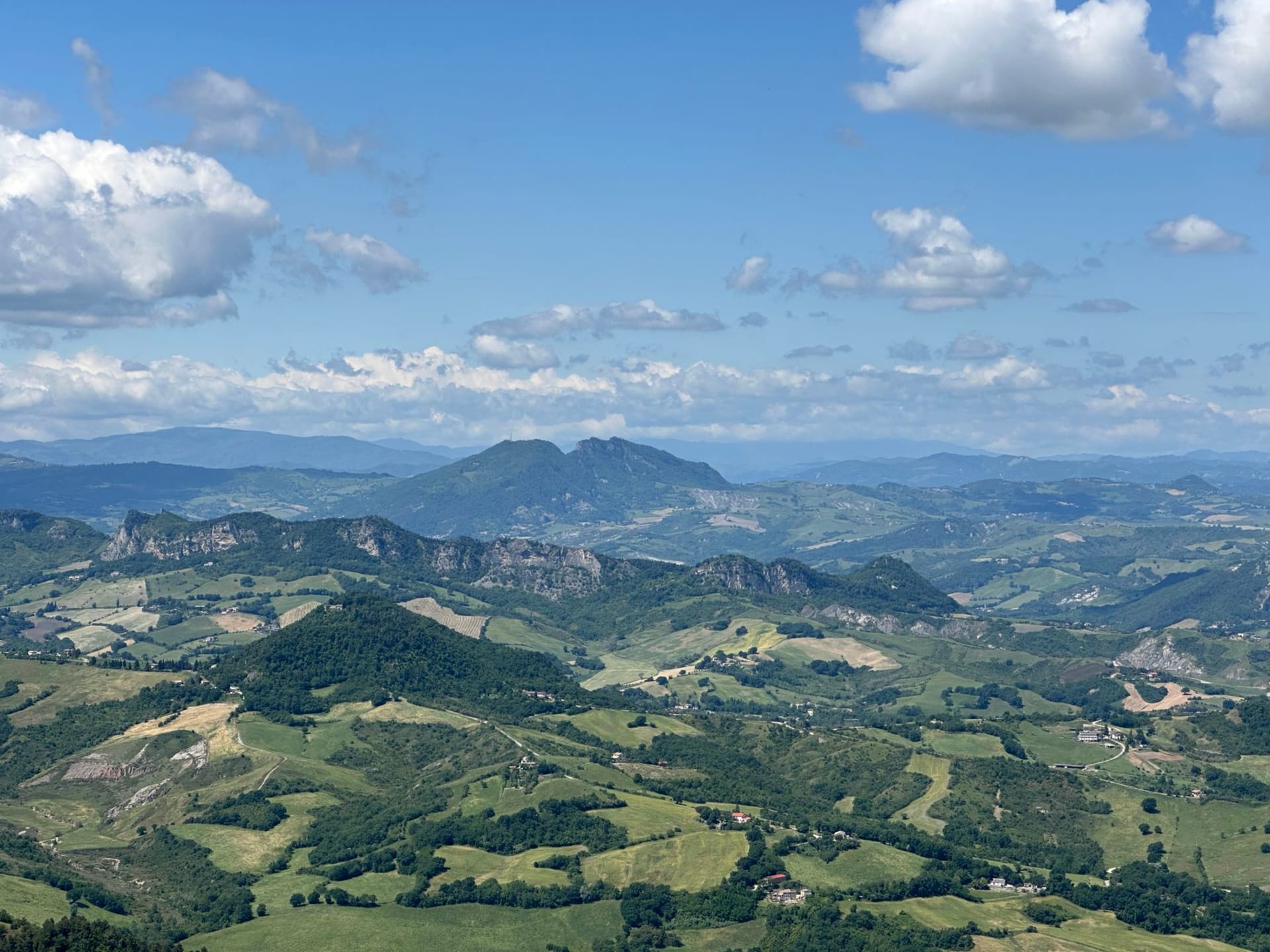
I didn’t plan to go to Faetano. I had rented a bicycle in Borgo Maggiore with vague intentions of cycling south along the minor roads, and Faetano was simply where the road led before the terrain got too hilly to continue comfortably. The municipality sits in the southeastern corner of San Marino, rolling agricultural land that drops toward the Italian border without any dramatic elevation, and at the time I arrived the Sangiovese vines that cover most of its slopes were just beginning their spring growth — tiny pale-green shoots along the trained wire rows, the soil between them a dark red-brown from recent rain.
There is a village center of sorts, modest even by San Marino standards: a church, a café, a small agricultural cooperative building where a man was loading boxes into a van with the purposeful speed of someone already running behind schedule. I propped the bicycle against a wall and went into the café, which was cool and dark and smelled of coffee and the faint sweetness of fermenting something — grappa, perhaps, or the lees of last year’s wine. The bartender was a woman of about forty who spoke in a Romagnolo-inflected Italian and poured me an espresso so dense it stood up on its own.

The wine produced in Faetano and across San Marino’s southern municipalities carries the IGT designation Sangiovese di San Marino, and it is considerably more serious than the republic’s tourist reputation might suggest. A small winery on the edge of the village allowed walk-in tastings from an honesty bar, which seemed either very trusting or very optimistic, and I spent an hour working through four different expressions: a young, bright, cherry-forward Sangiovese; an older reserve with leather and iron; a Sangiovese rosé that was cold and dry and exactly right for the afternoon temperature; and a local white I couldn’t identify that tasted of apricot and white flowers and prompted me to buy a bottle. The labels were handsome. The prices were lower than anything comparable in Romagna twenty kilometers away.
Cycling back toward Borgo Maggiore I climbed a low ridge from which I could see both the Italian farmland to the east — flat, intensively cultivated, the long sight lines of the Romagna plain — and the limestone profile of Monte Titano rising to the west with its three towers in silhouette. From this angle the towers looked like they belonged to the landscape rather than being imposed on it, which is perhaps the truest thing you can say about San Marino: a place that grew from its geography so thoroughly that the boundary between built and natural has had seven hundred years to blur.

The road back down was fast and slightly alarming, the bicycle more capable of speed on descent than I had anticipated, the evening light coming in orange and low from the direction of the Apennines. I arrived back in Borgo Maggiore with a bottle of white wine in my bag and a mild case of the kind of uncomplicated happiness that a good afternoon in agricultural countryside reliably produces.
When to go: September and October for the harvest, when the Sangiovese grapes are being picked and the wineries are in full ferment. The roads through Faetano are at their most beautiful with ripe fruit on the vines. Spring is also excellent for the flowering of the land. Summer is fine but hot; cycling in July is inadvisable in the afternoon.