
Acquaviva
"The smallest piece of the world's smallest republic, and still large enough to contain a Wednesday afternoon that felt like it had always been there."
I found Acquaviva on the way to somewhere else, which is probably the most honest way to find it. I had hired a car for the afternoon — the only sensible way to explore San Marino’s outlying municipalities without depending on an irregular bus schedule — and was navigating the northern roads when a sign appeared pointing down a lane toward what the map labeled as the municipality of Acquaviva. Population: roughly five hundred. Area: the smallest of the nine castelli. I turned down the lane.
The road wound through olive groves that were already silver-green with spring growth, the trees old enough to have gnarled trunks that suggested at least a century of cultivation. Between the olive groves, small vegetable plots appeared, some with early lettuces, one with a considerable crop of fava beans already reaching knee height. The air through the open window was cool and smelled of earth and something flowering that I couldn’t identify — maybe the wild plum trees in the hedgerows, small white blossoms scattered across the bare branches. It felt distinctly un-republic-like. It felt like the agricultural Romagna countryside I had been driving through for two days, continuous with it, as if the administrative border of San Marino were invisible here because the landscape had simply ignored it.
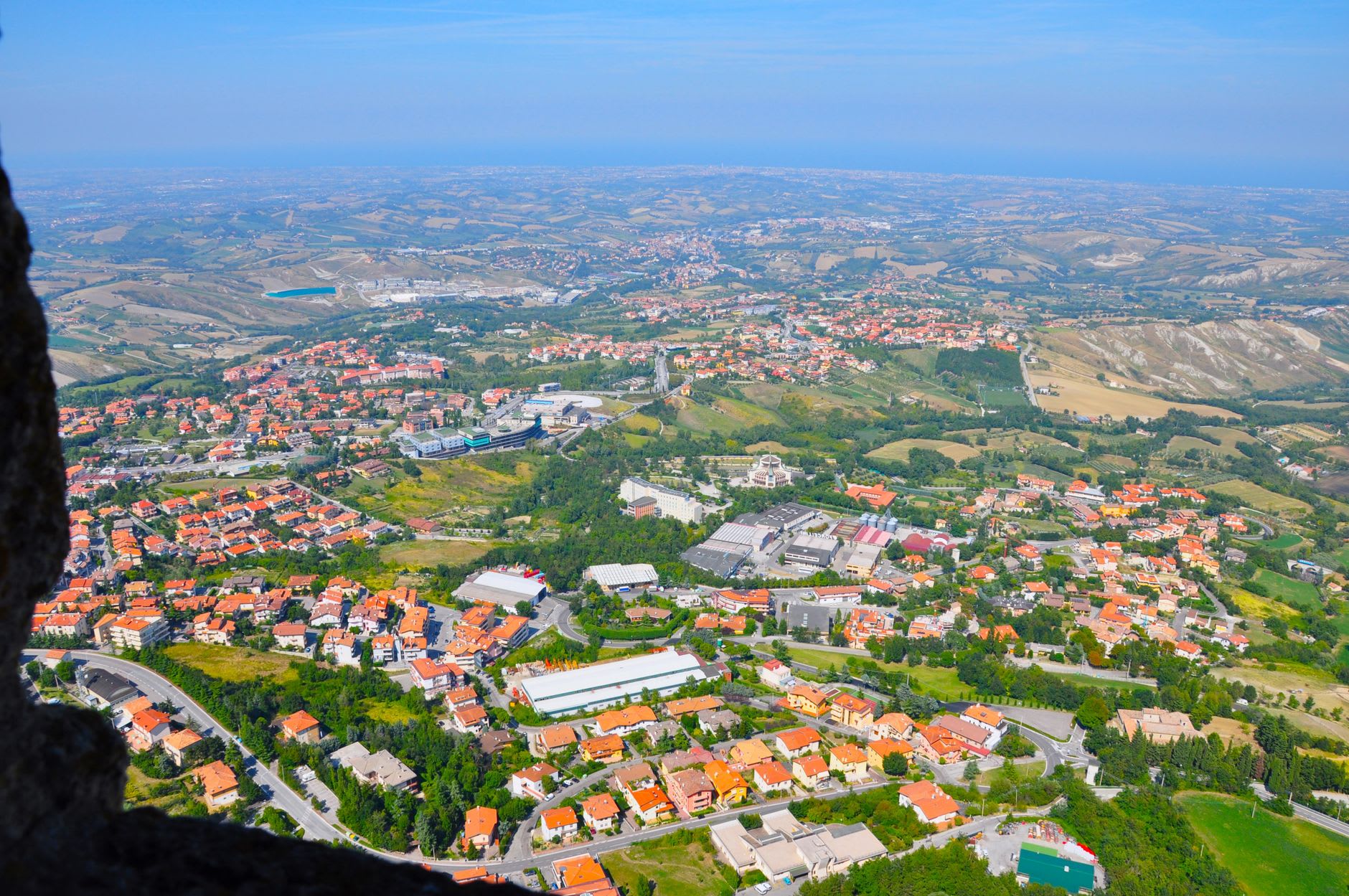
The village center of Acquaviva is a modest cluster: a church of San Giovanni Battista with a plain baroque facade, a handful of houses arranged around a small piazza, a bar that was open and serving what appeared to be the same four men who had been drinking coffee in it since the morning. I ordered a caffè lungo and sat outside in the mild afternoon. The bar owner, a man who looked to be in his sixties, came outside to collect my cup when I’d finished and asked, without particular curiosity, where I was from. When I said France he nodded as if this confirmed something he had suspected and went back inside.
What Acquaviva offers that the towers and piazzas of the capital do not is the particular pleasure of a place that has not organized itself around being visited. The piazza exists because it is where the church is and where people stop when they encounter neighbors. The bar exists because people need coffee and somewhere to sit. The olive trees exist because the soil and climate here are correct for olive trees, and someone four or five generations ago made the sensible decision to plant them. None of it is performing for me, which is what I wanted from an afternoon.
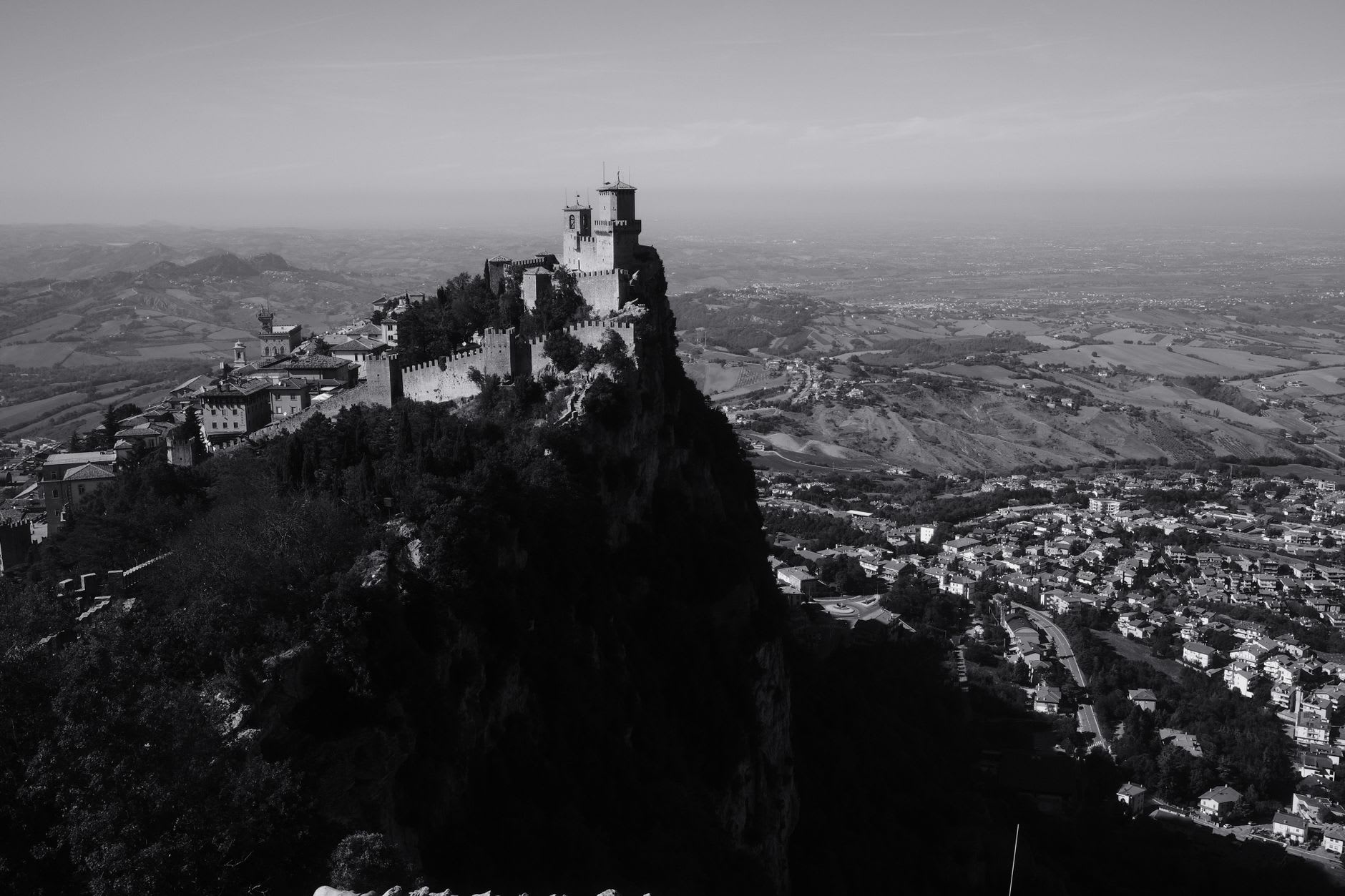
I walked the perimeter lanes for an hour, which was enough to see most of the municipality’s built area, and found a point where the road ended at a field gate and the view opened north over the Romagna plain toward Rimini, visible as a grey smudge at the edge of the Adriatic. From here San Marino’s peculiar geography was clear: a country perched on the edge of a plain, looking out at the sea, entirely surrounded by Italy but declining to become part of it since the year 301. The stubborn logic of that seems most comprehensible from its smallest, quietest corner.
When to go: Acquaviva is pleasant in any season and genuinely quiet at all times. Spring is the best moment for the olive grove landscape and the flowering lanes. The bar-café at the village center keeps local hours and may be closed on Sunday afternoons. The drive from the historic center takes about fifteen minutes on well-maintained minor roads.