Lalomanu
"I woke up here before the light and lay still listening to the reef — that sound is different from anywhere else."
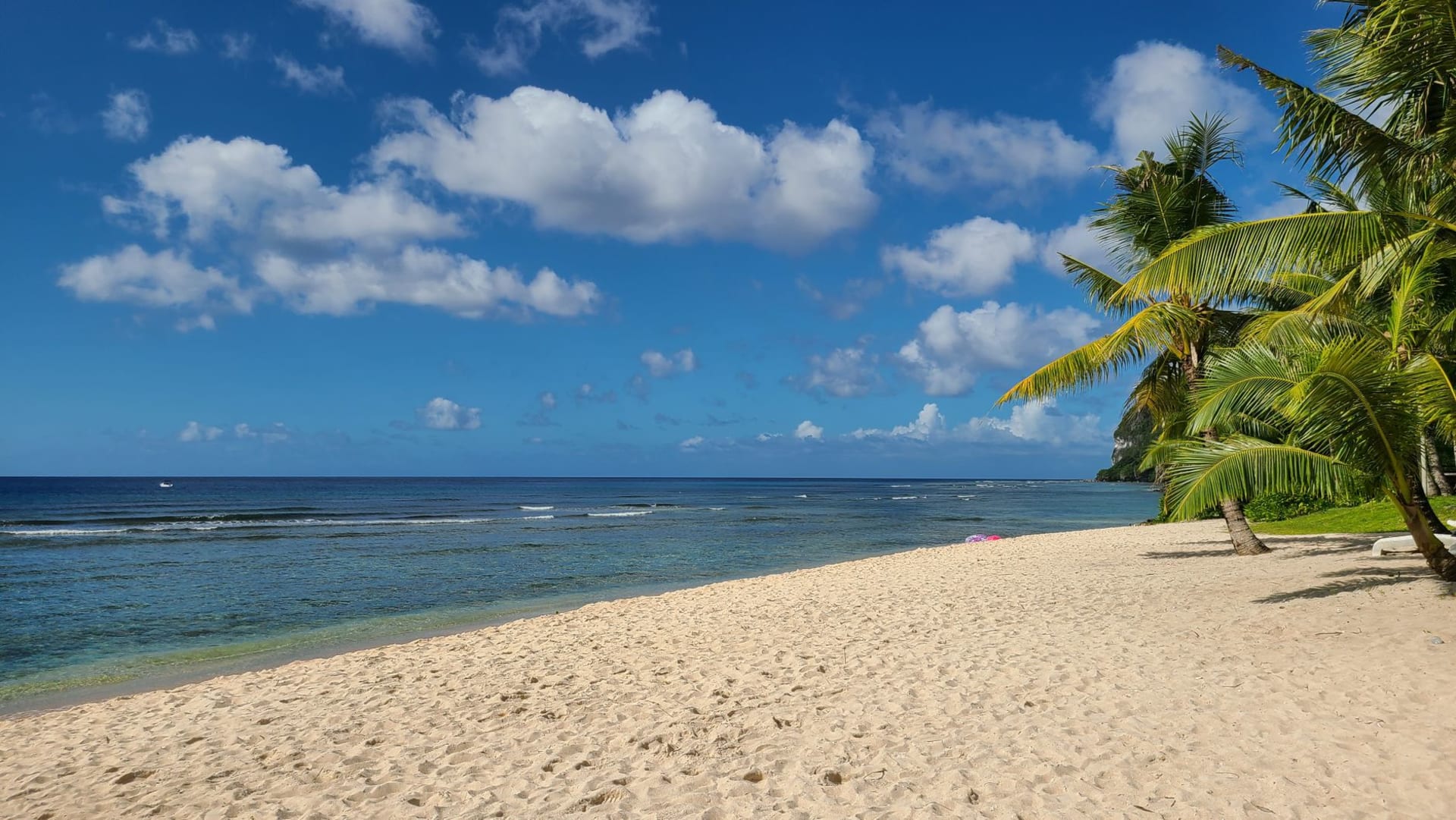
You reach Lalomanu by following Upolu’s east coast road past the last guesthouse sign and then a little further, which feels like the right way to reach a beach this good. The road comes through a low pass in the hills and then drops, and there it is: a bay enclosed by two volcanic headlands the color of charcoal, a beach of fine white sand that curves between them in a clean arc, and water in stages from pale green near shore to a deep impossible blue at the reef edge. It was late afternoon when I arrived and the light was coming in at an angle that lit the fringe of palms from underneath, so that the whole bay looked like it was being gently illuminated from within. I sat on my bag for a while before I did anything else.

The beach fales at Lalomanu are one of Samoa’s genuinely distinctive accommodation experiences — not because they are comfortable in any Western sense, but because they strip the night down to its essentials. The fale is a platform with a thatched roof and low walls, open to the air on all sides, with a mat on the floor and a mosquito net as your only real shelter. You sleep to the sound of the reef, which is constant and rhythmic and, once you stop fighting the unfamiliarity, genuinely soporific. The family that ran the fales where I stayed brought dinner — chop suey, oka, palusami (taro leaves baked in coconut cream) — on a low table without ceremony, and ate their own dinner in the main fale nearby, the sound of their conversation and the television mixing with the ocean sound in a way that felt entirely domestic and very far from a hotel.

The snorkeling off the beach is immediate and dense — the reef shelf drops within wading distance of shore, and the fish community there is the kind that suggests the reef has been mostly left alone. I saw a school of bigeye trevally moving in formation along the drop-off, then dispersing, then reforming, in a pattern that seemed to have no particular purpose beyond its own beauty. The village sits behind the beach, and on Sunday morning the church singing starts early and carries across the palm grove — not background noise, but a real full-throated sound that fills the whole bay. I lay in my fale and listened to it for half an hour without moving, which is not the kind of behavior I usually permit myself before coffee.
When to go: May through October. The beach is swimmable year-round but the wet season brings periods of wind and chop that cloud the water. Book beach fales well in advance for July and August, when demand from New Zealand and Australian visitors peaks. Stay at least two nights — one is not enough.