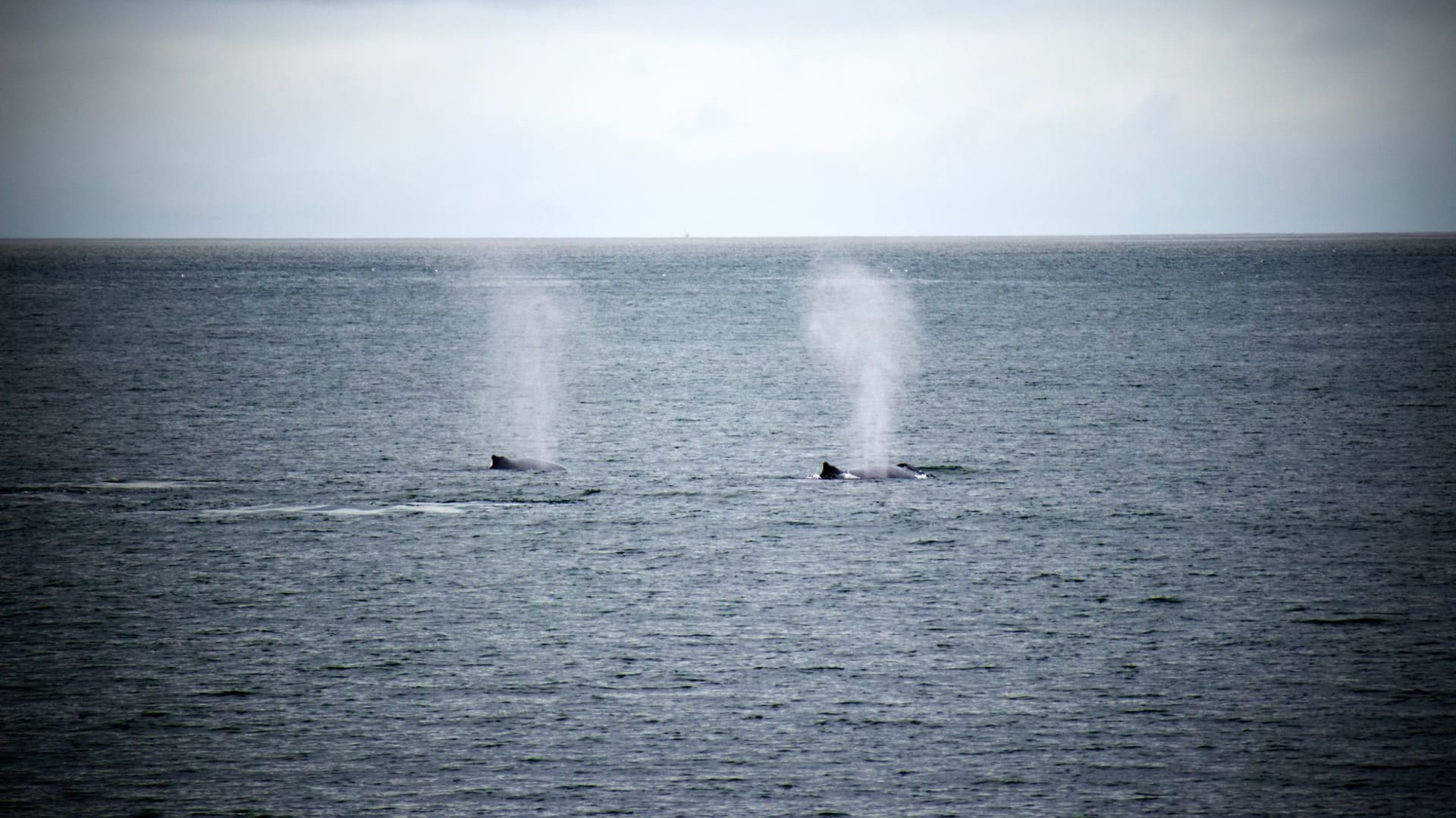
Alofaaga Blowholes
"You feel the ground shake a half-second before the water shoots up — the earth here is just a skin over the sea."
You hear the Alofaaga blowholes before you see them. Coming down the dirt track from the main road on Savai’i’s southwest coast, windows down in the late morning heat, there is a sound that starts as a rumble and resolves into something between a percussive thud and a sustained hiss — the ocean forcing itself at pressure through the lava tubes that riddle the coastline here. When you come out onto the flat basalt shelf that serves as a viewing platform, the scale of what’s happening takes a moment to absorb. The entire stretch of coast is pocked with vents, some small and producing steady jets, some — particularly the main three — erupting in intervals with a violence that produces spray columns ten, sometimes fifteen meters high. The mist from them covers a wide area and lands on your skin as a cool fine vapor. It is, without qualification, one of the more dramatic coastlines I have stood on.
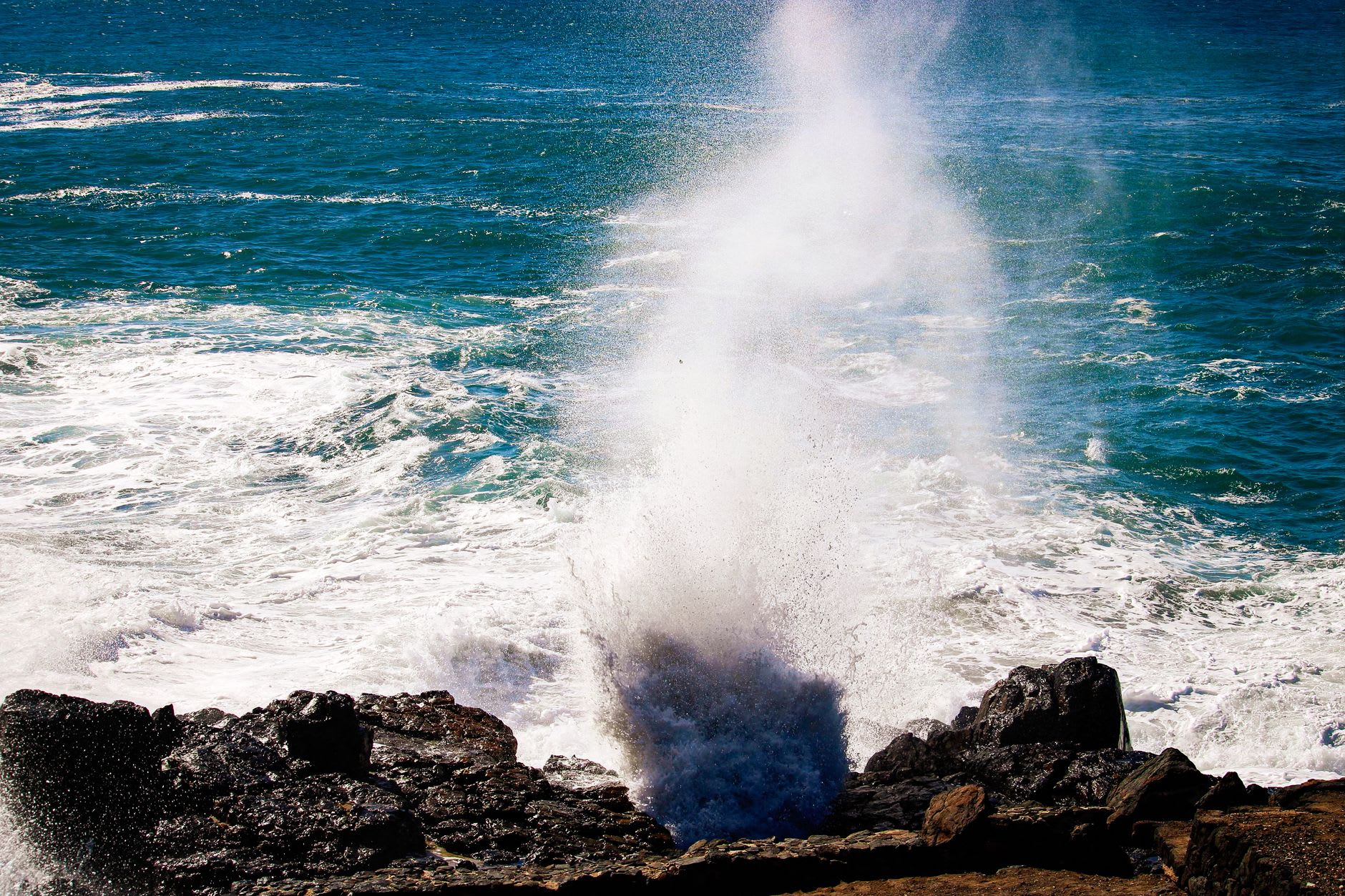
The local families who maintain the site have developed a tradition that is either the most reckless tourist activity in the Pacific or an extraordinarily calibrated piece of performance, depending on your disposition: they feed coconuts into the blowholes. A man will hold a coconut over the vent, wait for the pause in the cycle with the patience of someone who has done this several hundred times, and then — as the next wave drives through the tube below — let go. The coconut disappears down the fissure and then shoots up, often forty or fifty meters above the basalt, tumbling against the blue sky in a spinning arc before coming down somewhere in the water. I watched three of these in succession and the crowd — a family of New Zealand-Samoans, two French backpackers, a Japanese couple — collectively gasped each time, which says something about the primal quality of the spectacle.

The broader coastline around Alofaaga is worth lingering in. The basalt shelf extends for several kilometers in both directions, and at low tide you can walk sections of it, picking your way between tidal pools and the edges of vents that emit a constant warm breath of ocean air even when not active. The village of Taga sits a few kilometers up the coast and has one of those simple roadside shops where you can buy cold water, crackers, and tinned fish — exactly what you want after an hour standing in blowhole spray. The drive back north along the west coast of Savai’i, in the late afternoon, with the sun dropping toward the horizon over the open water, is its own reward.
When to go: Year-round, but the south coast of Savai’i can see rough weather in the wet season (November–April). The blowholes are most dramatic in heavier swell conditions, though too heavy a swell makes the basalt platform genuinely dangerous. The family on site will tell you what’s safe.