
Salinas Grandes
"The light coming off the salt was so bright it felt physical — like weather, not reflection."
I wore sunglasses and my eyes still hurt. The Salinas Grandes at noon are not a landscape you passively observe — they are an environment that acts on you, the light bouncing off the white salt crust from every direction simultaneously, producing a brightness that isn’t glare so much as total illumination. There are no shadows at midday on the salt flats. Everything is equally lit and the horizon, in all directions, is a clean line between white and blue so sharp it looks drawn. I stood in the middle of it for fifteen minutes just trying to get my bearings and couldn’t locate anything resembling a reference point.
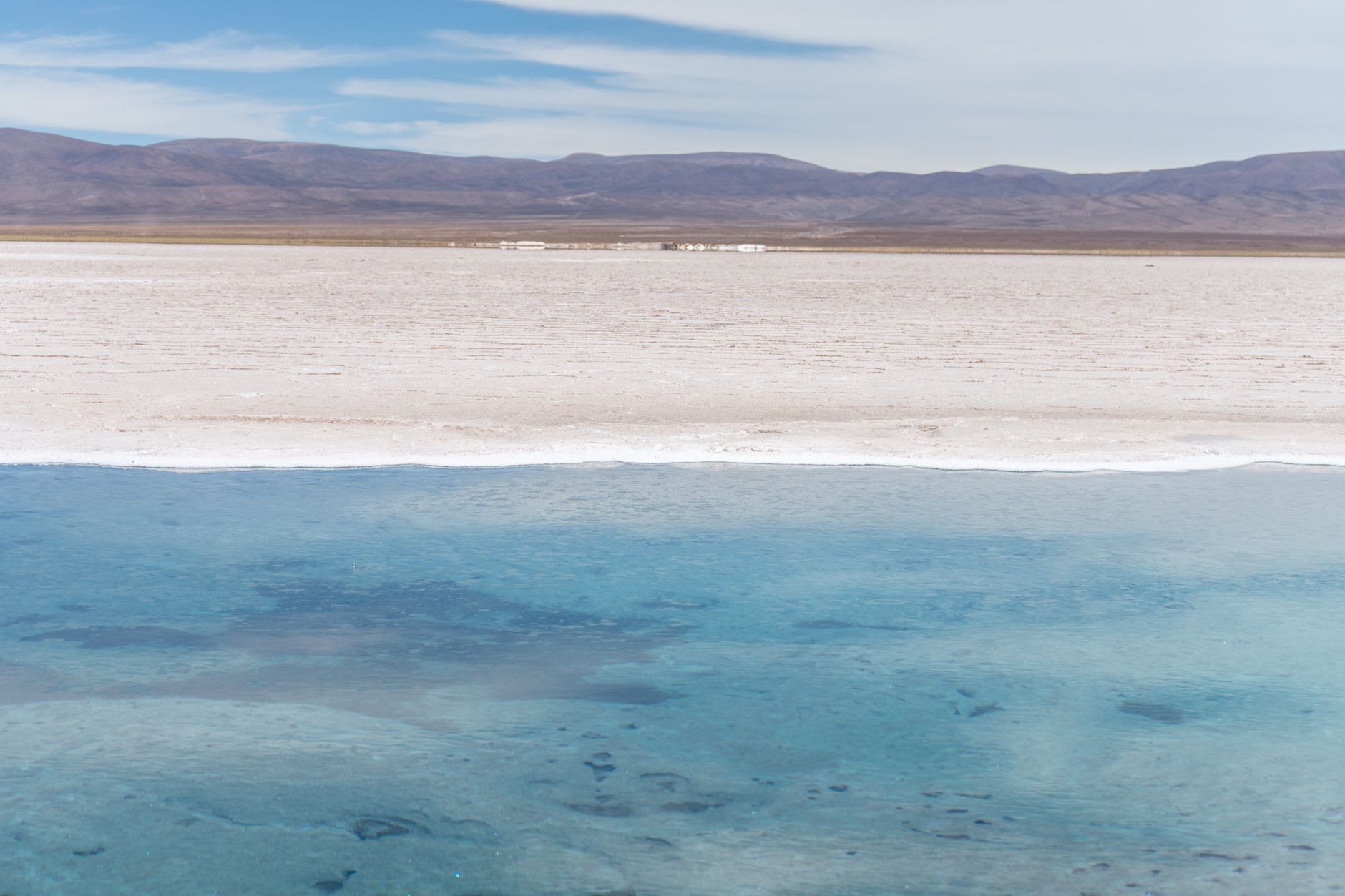
The Salinas Grandes sit at 3,400 metres on the Puna — the high plateau that straddles the Jujuy-Salta border — covering some 212 square kilometres. They are not as famous as the Uyuni Salt Flats in Bolivia and they are substantially smaller, but they have a quality that Uyuni, which I visited subsequently, doesn’t quite replicate: accessibility without infrastructure. There are no salt hotels, no flashmob photo tours, no tourist facilities beyond a small artisanal market at the edge. You park, you walk onto the crust, and you are immediately alone on it regardless of how many other vehicles are in the lot, because the scale absorbs them. The hexagonal patterns of the salt crust — formed as the brine pools dry and the salt crystallizes under the sun — are immediately recognizable from photographs and immediately more interesting in person, each hexagon slightly different, some raised at their edges, some filled with pink halophyte brine.
The salt here is actively worked. I found a man named Rubén doing the harvest with a basic metal rake at the edge of one of the brine pools, knee-deep in shallow water that was the colour of rosé wine from the halophyte bacteria. He had been working here for twenty years and found the question of what it looked like funny — he had never stood back from it and tried to see it whole. The salt cooperative that manages the flats also sells small sculptures carved from blocks of salt: llamas, churches, small figures that begin to dissolve in humid air. I bought one knowing it wouldn’t survive and it lasted three months in my apartment in Mexico before the humidity got it.
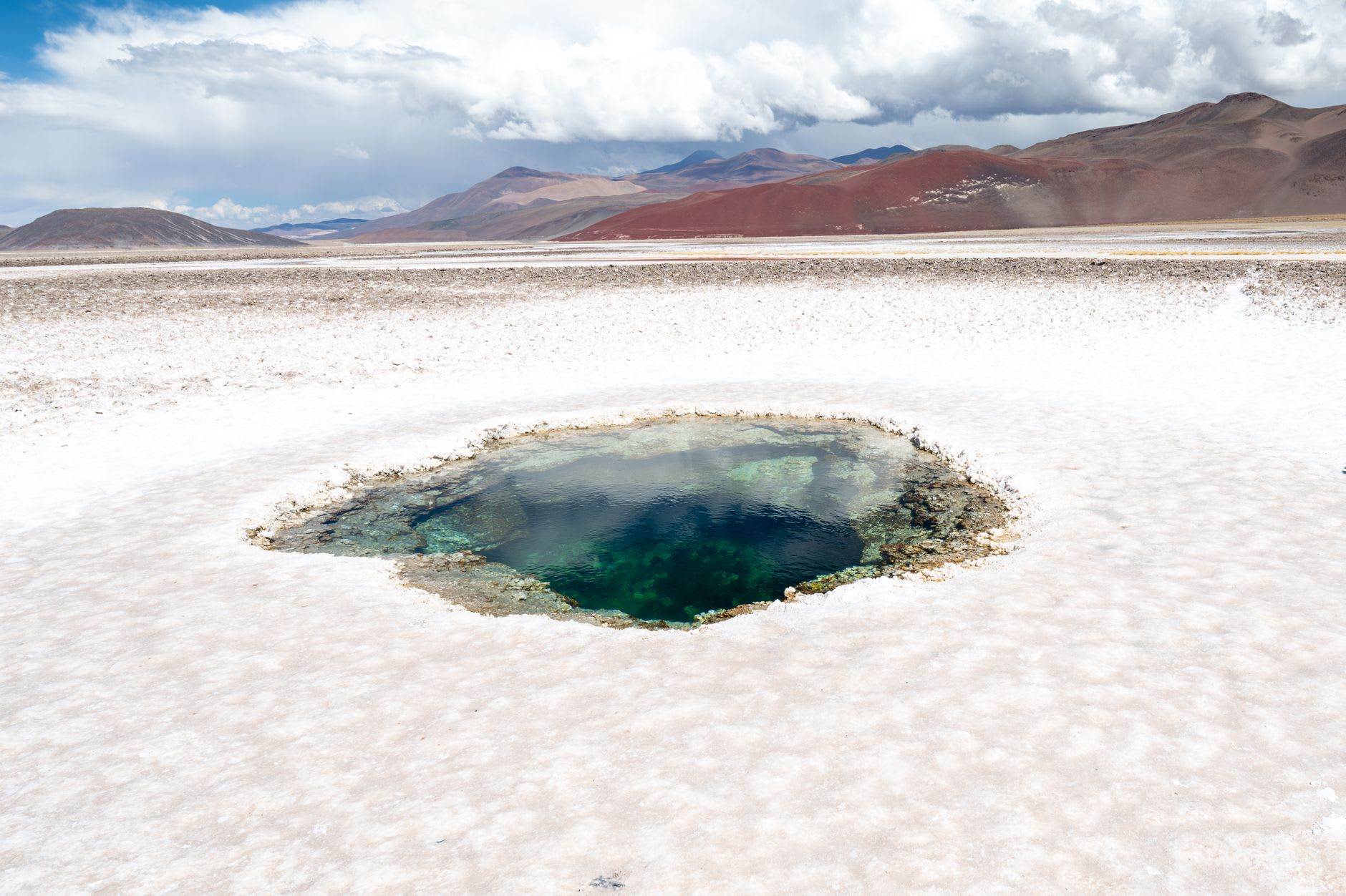
The approach from Jujuy via the Route 52 is itself remarkable — the road climbs from the Quebrada de Humahuaca over the Lipán Pass at 4,170 metres, and the landscape transforms from canyon to puna in the space of a few kilometres, the air thinning, the vegetation going from adobe-green to the grey-gold of ichu grass, llamas appearing at the roadside in family groups of five or six.
When to go: April through October in the dry season — the salt crust is firmest and most photogenic when the rains haven’t flooded the surface. Sunrise and early morning hours are exceptional: the light is softer, the blue of the sky is deeper, and the salt picks up a pale gold tone before the white overwhelms everything. Midday is brutal; bring SPF 50 and more water than you think you need at altitude.