Americas
Salta & Northwest Argentina
"Nothing prepares you for how saturated the colours get when the sun drops behind those canyon walls."
I arrived in Salta on a night bus from Jujuy with dust in my teeth and a crick in my neck, and the first thing I noticed was the smell — woodsmoke and carnitas and something floral I couldn’t name, floating through streets lined with colonial arcades the colour of turmeric. It was eleven at night and the Plaza 9 de Julio was completely alive. Families, teenagers, old men with mate gourds. Nobody had anywhere to be and yet everyone was there. I dropped my bag at the hostel and didn’t sleep for another three hours.
The northwest is emphatically its own country within Argentina. The food is pre-Columbian and proud of it: humitas steamed in corn husks, tamales packed with spiced beef and potato, locro — a thick stew of corn, beans and pork — that hits you like a blanket on a cold Andean afternoon. The empanadas here are baked, not fried, and each province has its own variation. The wines of the Calchaquí Valleys, grown at elevations that would disqualify them from almost any other wine region on earth, are lean and mineral in a way that changes what you thought you knew about Torrontés. I drank a bottle of it on a rooftop in Cafayate while the last light went gold over the Quebrada de las Conchas, and I have been chasing that moment ever since.
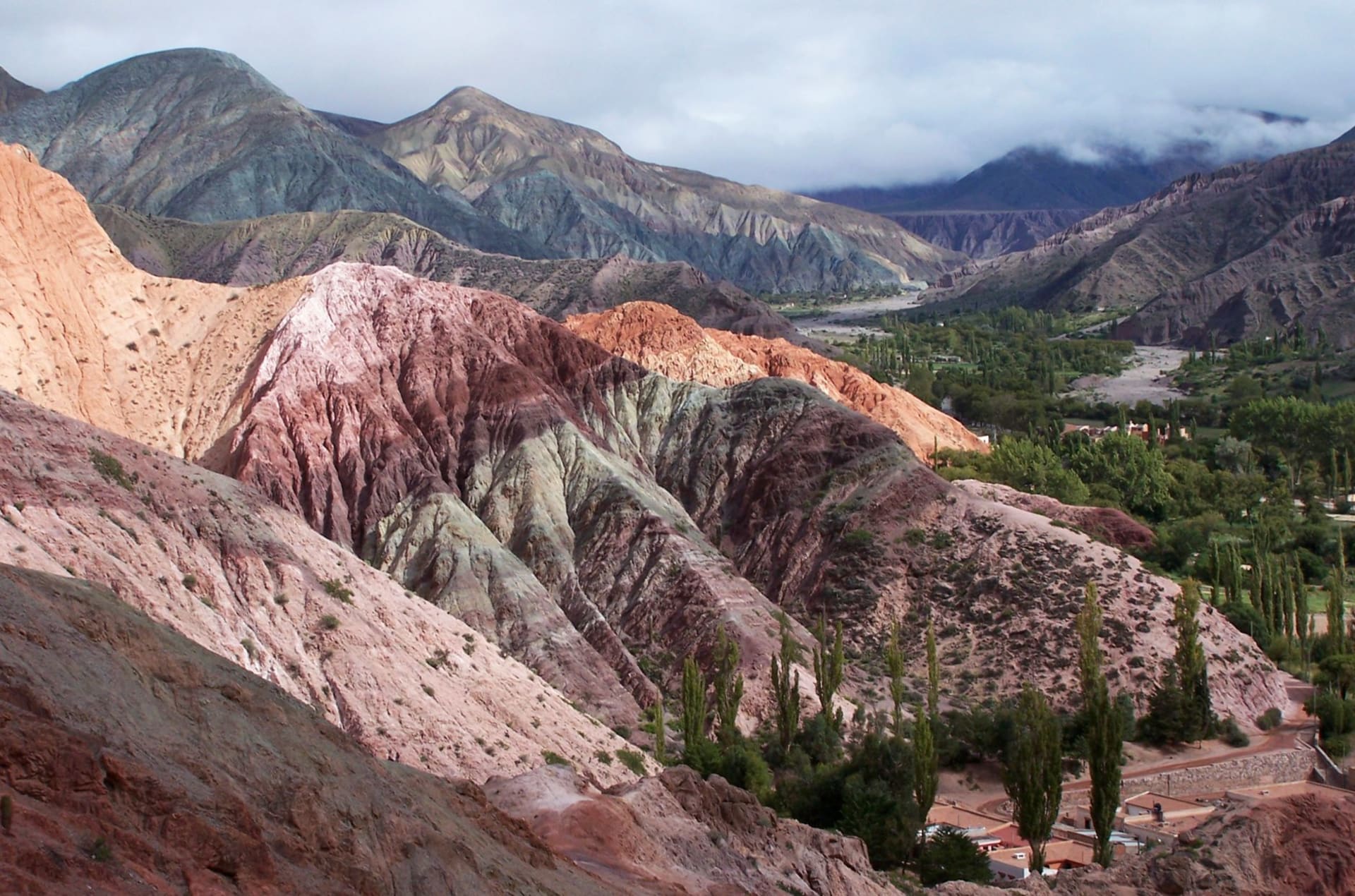
The Quebrada de Humahuaca is the visual argument for everything. Fourteen kilometres of canyon where the rock strata have been tilted sideways by tectonic violence until you can read geological time like a book laid open — ochre, violet, burnt sienna, grey-green — with tiny villages of adobe and eucalyptus tucked at the base. Purmamarca’s Cerro de los Siete Colores is the famous one, and it earns the photographs. But get there at six in the morning before the tour vans arrive from Jujuy, and stand in the silence with a coffee you bought from a woman in a pollera skirt at a folding table by the church, and understand that this is one of the places where the earth shows you something it isn’t showing most people.
When to go: April through June and September through November are the sweet spots — dry, clear skies, and the light in the canyon has that long golden quality that photographers dream about. July and August see cold nights at altitude and some tourist crowds around national holidays. Avoid January and February if you can: the rainy season brings spectacular storms but muddy roads and the occasional washed-out access track.
What most guides get wrong: They treat the whole region as a day trip from Salta city. You cannot do the Quebrada, the Calchaquí Valleys and Cafayate’s wine country in one loop without spending most of your time in a vehicle watching it through glass. The northwest rewards slowness — staying in Tilcara instead of Jujuy, sleeping in Cafayate instead of driving back at dusk. The difference between passing through and actually being here is measured in overnight stays.