
A narrow, wind-scoured canyon where road and railway climb together from the Lerma Valley toward the puna, walls striped in ochre and rust.
We left Salta City before sunrise, the kind of departure Lia usually vetoes, but I’d promised her the light would be worth it, and by the time we hit Campo Quijano the Lerma Valley was still holding its blue morning haze. Within twenty minutes the valley pinched shut around us and we were inside Quebrada del Toro, the Rio Toro somewhere below the road, invisible but audible, and the walls on either side started doing something I hadn’t quite expected: they turned colors. Not postcard colors, but real ones, ochre bleeding into rust bleeding into a pale green-gray, the same sedimentary layering I’d later see amplified at Cafayate but here compressed into a tighter, more urgent space.
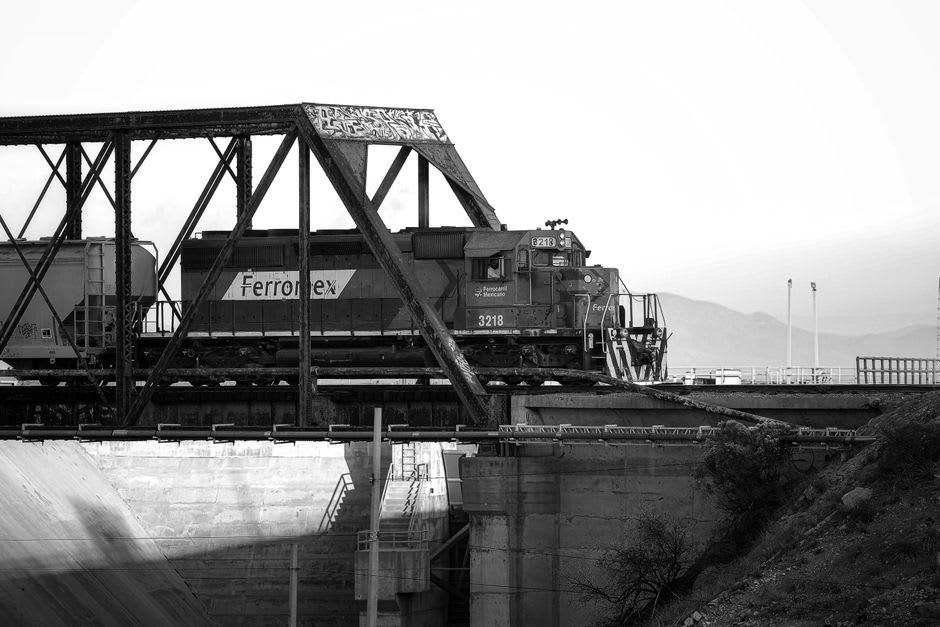
What got me was the engineering, honestly. I knew the Tren a las Nubes ran through here before we arrived, but I hadn’t grasped how the whole route is basically an argument with gravity. Richard Maury’s rail line switches back on itself and spirals through the rock to gain elevation the road simply muscles through more directly, and from certain pullouts you can see three different segments of the same track stacked at different heights on the canyon wall, like the mountain was asked to hold a conversation with itself. We didn’t catch the train that day, just a stretch of empty rail glinting where it crossed a bridge, and I stood there longer than Lia wanted to, doing the math on 217 kilometers and 3,000 meters and thinking about the guys who surveyed this by mule.
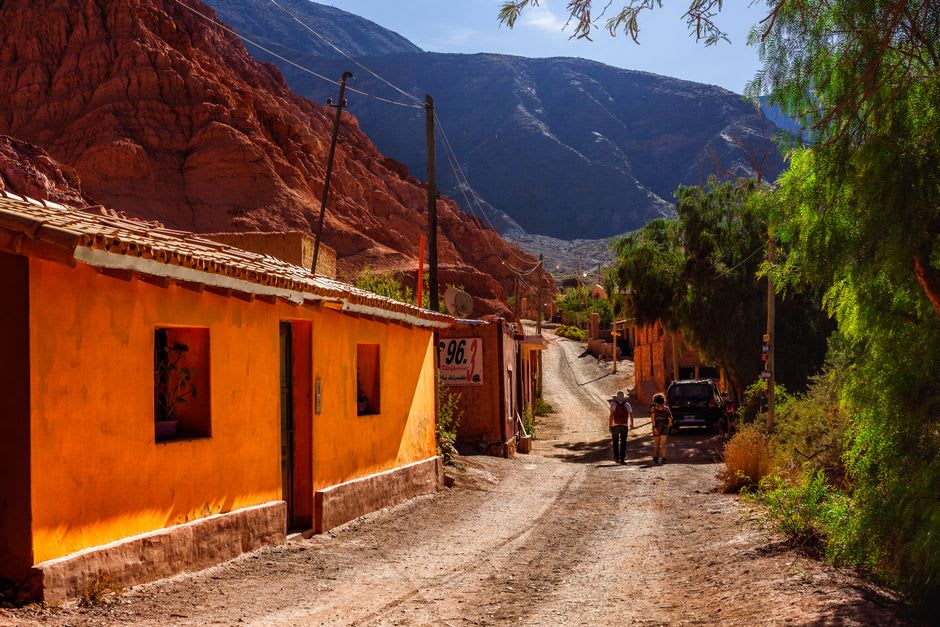
Alfarcito was our stopping point, a cluster of adobe houses that felt like it belonged more to the puna than to Salta, and an older man selling empanadas from a cart waved us over before we’d even parked. Lia asked him about the winters up here and he just laughed and pointed at the wind. We ate sitting on a low wall with the canyon opening slightly wider behind us, the road visibly continuing to climb toward the plateau we weren’t going to reach that day, and I remember thinking this was one of those places that exists purely as a passage — nobody’s destination, everyone’s threshold, which pre-Columbian traders and later Inca road-builders clearly understood before highway engineers ever showed up.
On the drive back down, the light had shifted entirely, flattening the reds into something closer to brown, and I finally understood why everyone we’d talked to in Salta insisted on a specific time of day for this canyon. It’s not a place you visit once and check off; it’s a corridor that changes its character with the sun and the season, and I already knew we’d be back before we’d even cleared the valley mouth.
When to go: aim for April through November, when the roads and rails run driest and the colors in the rock read clearest — the wet months blur both the views and the schedules.