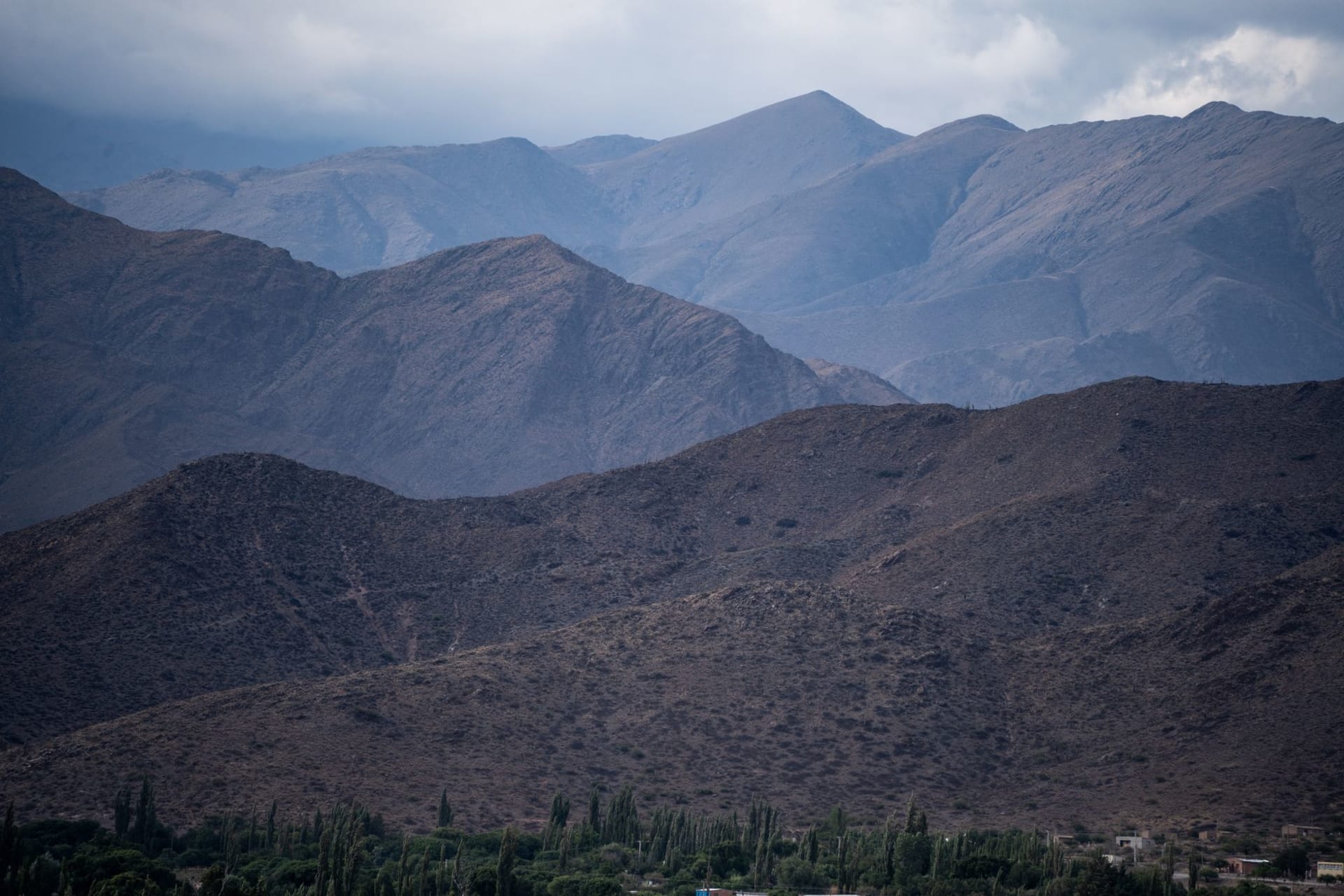
Los Cardones National Park
"The cacti stand so still in so many directions that the park feels less like a landscape and more like a crowd that has been waiting."
The cardón cactus does not hurry. To reach a metre in height takes roughly thirty years; to reach the five-metre columns that line the road through Los Cardones National Park takes a century or more. When you are driving the Cuesta del Obispo toward Cachi and the park opens around you — 65,000 hectares of puna plateau at 3,000 to 5,000 metres — and you are surrounded in every direction by thousands of these ancient, arm-raised columns, the sensation is not exactly that of a landscape. It is more like passing through a congregation.

The park covers the high plateau between the Cuesta del Obispo pass and the approaches to Cachi, straddling a section of the Andes where the altitude stays above 3,000 metres and the vegetation has simplified to its essential forms: ichu grass, yareta cushion plants, and the cardones, which are technically Echinopsis atacamensis and which dominate the visual field so completely that the park is named for them. I first drove through at seven in the morning, the sun just clearing the eastern ranges, the cacti casting long shadows westward across the grey-gold grass. The park is unfenced — the road simply runs through it — and I stopped every few kilometres to walk among the cacti, each one slightly different: some branching at two metres, some at four, some not branching at all, some of the oldest ones developing a woody base as the photosynthetic tissue retreats inward.
The cardón is the structural species of the northwest Andean ecosystem — its hollow trunk, once the plant has died and dried, is used by Andean people for building (the church ceilings in Cachi and the Quebrada), for fuel, for furniture. The Andean flicker — a large woodpecker — excavates nest holes in live cardones, and the abandoned holes are subsequently colonized by the burrowing parrot and the barn owl. Standing quietly among the cacti in the early morning, I counted four species of bird in one section of columns, each using the structure differently.
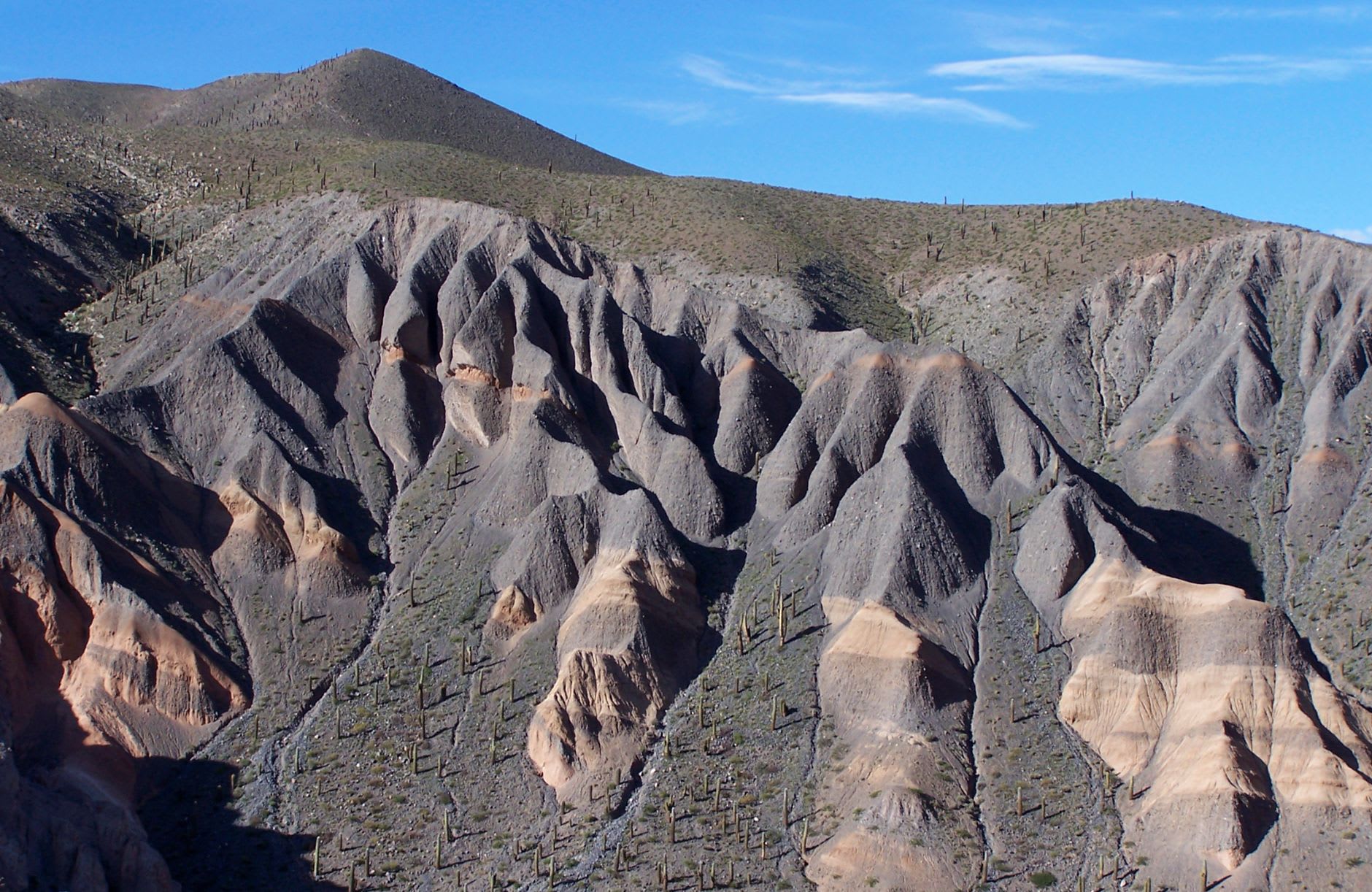
There are no facilities in the park — no visitor centre, no marked trails, no services — which is part of its character. The Valle Encantado section where the plateau opens most dramatically is the centrepiece, and in good light (early morning or late afternoon, when the shadows give the cacti dimension they lack at noon) it produces photographs that look like staged compositions. The light at dusk is the most extreme: the cacti go from grey-green to copper to silhouette in twenty minutes, and the snow on the surrounding peaks catches the last of the sun long after the plateau has gone dark.
When to go: Year-round, but the access road — part of the Cuesta del Obispo — can be slow or temporarily impassable during heavy rains in January and February. The clearest skies and the best light quality are April through June and September through November. In winter months the plateau is bitterly cold before sunrise; bring serious layers if you want the dawn.