Cafayate
"The wine changed colour in the glass as the last light hit it, and I thought: this is what altitude tastes like."
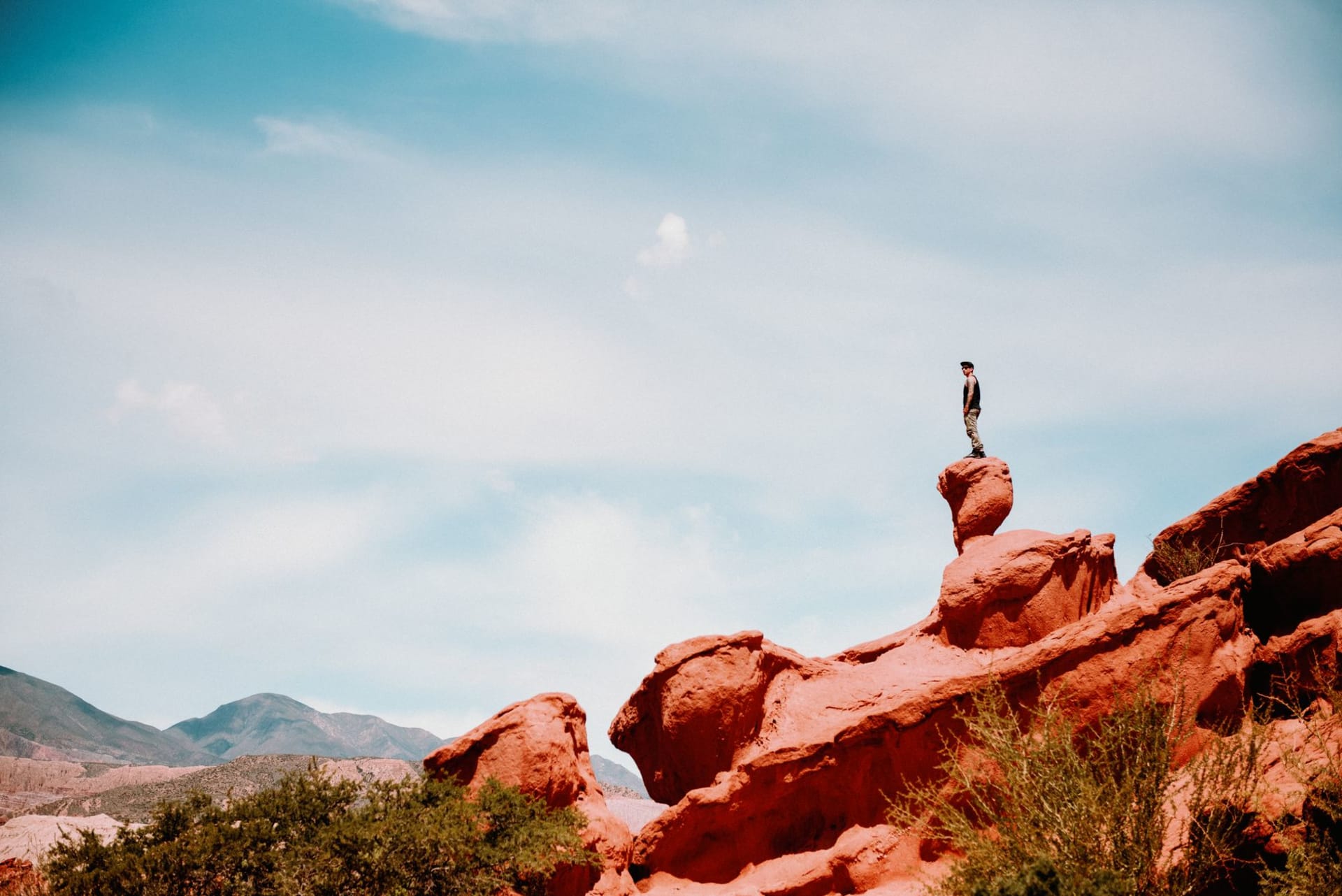
The road into Cafayate from Salta is itself the argument. Three hours south through the Quebrada de las Conchas — a gorge of sandstone formations so implausible they look sculpted rather than eroded — and then the canyon opens suddenly into a broad valley and the vine rows begin, low and orderly between walls of rust-coloured rock. I arrived in late afternoon when the light was doing its particular Andean thing, turning everything between amber and copper, and I pulled over twice on a straight road just to look.

Cafayate is a small town built around a central plaza with a cathedral that seems too large for it, the kind of scale mismatch that only makes sense once you understand that this was once a more important regional hub than it is now. The streets are low and dusty and the bodegas are right inside the town fabric — you walk past someone’s house, then a vine wall, then a wooden gate that opens onto a winery courtyard. Bodega El Esteco and Nanni are the famous names, but some of the most interesting wine I drank came from smaller producers in the side streets who offered a tasting from a plastic table under an arbour and expected nothing more formal than conversation. The Torrontés grape is specific to northwest Argentina and particularly to Cafayate: aromatic, almost overbearing on the nose, but lean and mineral on the palate in a way that confounds expectations. It drinks well cold on a hot afternoon, which is precisely when you will be drinking it.
The food in the plaza restaurants is honest and unfussy — locro, tamales, grilled goat that tastes of the scrubby vegetation it ate in the surrounding hills. I ate at a table outside one evening while a thunderstorm built over the sierra to the west and never quite arrived, just flickered at the edge of the sky, and the owner brought out a complimentary glass of something from a new barrel she was trying and asked what I thought. I said I thought it tasted like the light before a storm. She laughed and poured me another.

The surrounding landscape rewards a rented bicycle or a slow drive. The Quebrada de las Conchas runs northward, and the formations — Los Castillos, El Anfiteatro, La Garganta del Diablo — each have their own quality of improbability. El Anfiteatro is a natural amphitheatre of smooth red rock where the acoustics are extraordinary; someone was singing in it when I arrived, just testing the echo, and the sound filled the stone bowl like something from another century.
When to go: March through May captures the harvest season — the bodegas are active, the vines gold before they’re stripped, and the valley has a particular industry about it that makes the wine taste better. September and October are also ideal: dry and clear with manageable temperatures. Avoid February if possible — the rains can turn the approach roads through the gorge into genuine adventures.