Marigot
"The market on Saturday mornings smells like turmeric and salt fish and coffee, and I could stay in it forever."
The market in Marigot operates on Saturday mornings in a way that feels entirely uninflected by tourism, which is unusual on this island. The stalls are in a covered arcade near the waterfront, and they sell what the sellers have — dasheen and breadfruit and chayote, dried herbs in plastic bags, fresh-caught fish laid on ice that is not quite enough ice, hot sauces in unmarked bottles with handwritten labels, and at two stalls facing each other, the best colombo chicken I found anywhere in the Caribbean. Colombo is the French West Indies answer to curry — yellow from turmeric and cumin, slow-cooked until the chicken is falling off the bone, intensely fragrant, served with white rice that absorbs the sauce the way good bread absorbs butter. I had it standing up, which seemed right.
I arrived at the market at eight in the morning when it was already in full operation. The smell reached me half a block away: turmeric, salt fish, something frying in oil nearby, a undertow of ripe mango. The vendors spoke Creole among themselves and French with the visitors who came in confused and charmed, and the whole thing moved at the pace of a place that has been operating in the same form for generations and has no plans to change. A woman with three children sorted through a pile of callaloo with the focused efficiency of someone who does this every Saturday and has strong opinions about quality.

Marigot itself — the town beyond the market — has the feel of a French colonial capital that has decided not to compete with its Dutch neighbour at that neighbour’s own game. There are no casinos. The duty-free shopping is modest. The main square, overlooked by the ruins of Fort Louis on the hill, has a café where you can get a proper café au lait and a croissant, and the croissant is flakier than you have any right to expect in the Caribbean. I sat there for an hour and read and did not feel guilty about it.
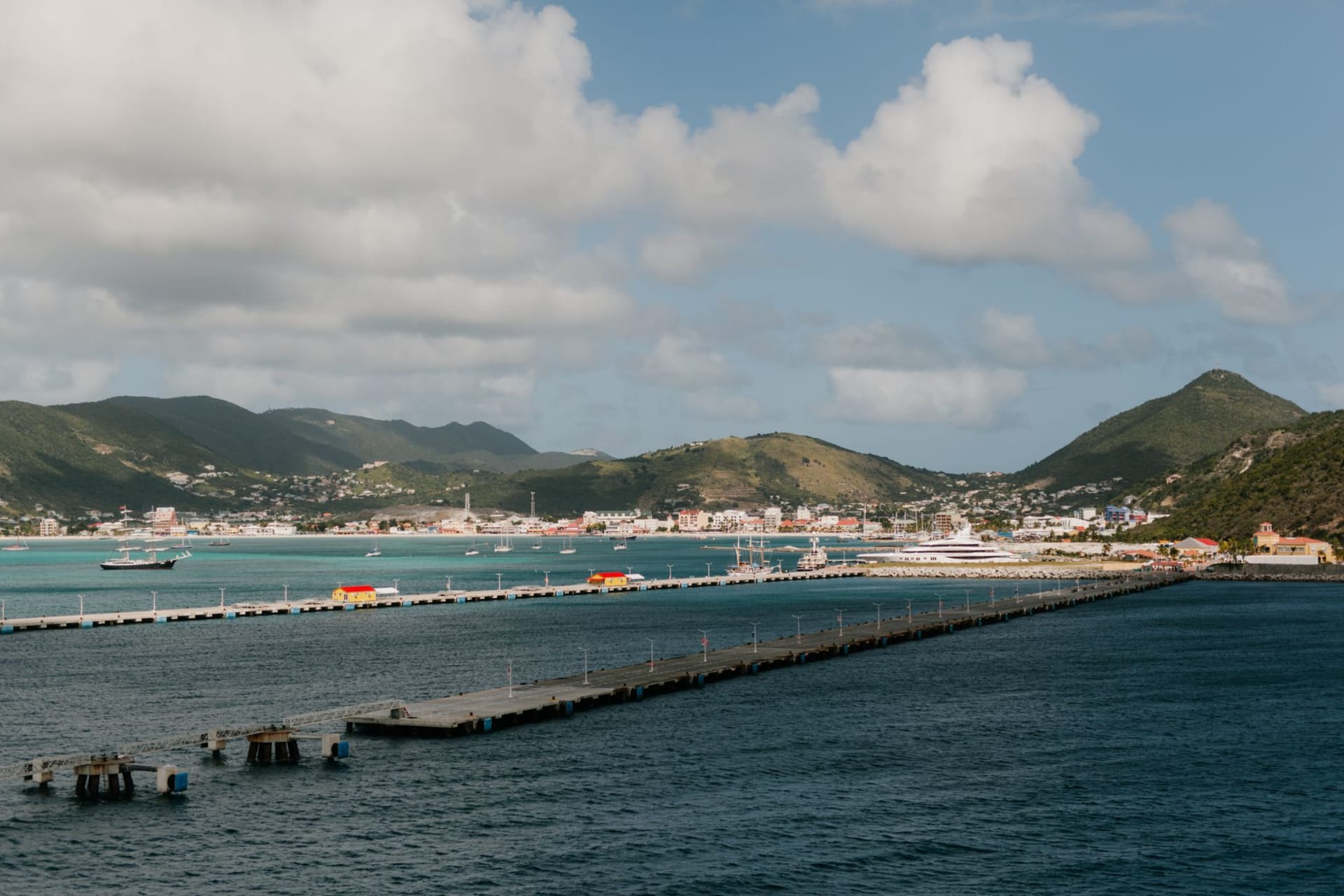
Fort Louis is worth the fifteen-minute climb for the harbour view alone. Built by the French in 1767 and knocked around by centuries of weather and British naval raids, it is a ruin in the graceful sense — walls still standing to shoulder height, a cannon still pointing at the approach channel, and below it the marina’s sailboats sitting in the morning stillness. Anguilla is visible on the northern horizon, flat and low, looking close enough to reach by dinghy. The view down into Marigot harbour from the fort’s ramparts shows the French side’s character plainly: the sailboats, the fish market, the bistro tables on the waterfront, and behind it all the hill road climbing toward Colombier.

The waterfront below the fort has French bistros with checked tablecloths and menus on blackboards that change based on what came off the morning boats. I ate grilled snapper with haricots verts and a glass of Chablis and paid prices that would have been fair in Lyon, which means they were extraordinary in the Caribbean. The evenings in Marigot are quieter than Philipsburg but not empty — there is a bar culture built on local Carib beer and conversations about boats and where to sail next, and the expat French community that has settled here brings the social habit of staying at a table for three hours after the meal and calling the whole evening dinner.
When to go: Saturday morning for the market — arrive by 8 AM before the heat builds and the best fish sells out. Weekday evenings for the waterfront restaurants, quieter than weekends and better for lingering. The dry season is optimal, but Marigot functions year-round with a steadiness that the beach towns do not have. The market also runs on Wednesday mornings at reduced scale.