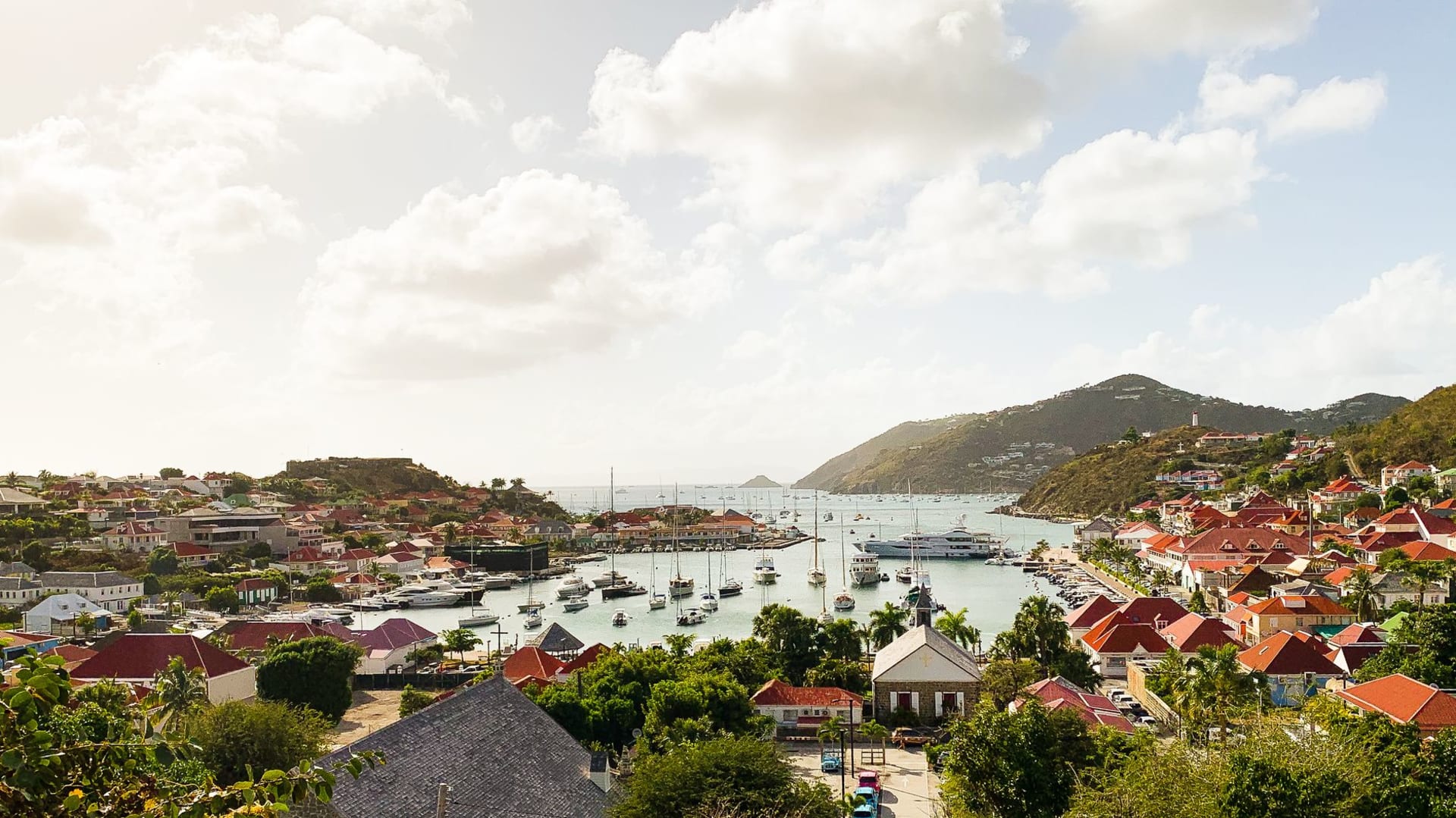
Castries
"The market in Castries was where I finally understood what Saint Lucians actually eat."
Castries does not try to charm you. Compared to Soufrière’s colonial intimacy or Marigot Bay’s cinematic beauty, the capital is unglamorous in a way that feels honest rather than off-putting. The waterfront is a cruise ship dock, which means that on certain mornings the streets nearest the harbor are thick with people from ships who have four hours ashore and are looking for the rum shop their shipboard guide mentioned. By afternoon they are gone, and the city recalibrates to something closer to its actual self.
What Castries has — and what I kept returning to over the days I used it as a base for the north — is the market. The Castries Market occupies a large Victorian building near the waterfront, its corrugated iron roof painted in red and green, and on Saturday mornings it achieves a density of commerce and noise that is genuinely exhilarating if you arrive with the right expectations. Turmeric root and bay leaves and dried fish and christophene and soursop and dasheen and stacks of plantains in every state of ripeness from green to blackening — the smell is layered in ways that would take me years to fully parse. Women who have run these stalls for decades call to you without pressure, and the prices are what they are.

Derek Walcott Square, named for the Saint Lucian Nobel laureate, sits at the center of the old commercial district. A large saman tree dominates it — the tree is said to be over four hundred years old, and it spreads across the square with the calm authority of something that has outlived every argument about what to name the space beneath it. I sat on one of the benches in the square one afternoon with a tamarind ball from a market vendor, watching schoolchildren cut through on their way home, and felt something of the city’s actual rhythm rather than the touristic version of it.
The food downtown is cheap and specific. Bouyon — a broth-based stew of dasheen leaves, breadfruit, and whatever protein came in that day — is the dish I found at the back of the market, served in a styrofoam cup by a woman who had been making it since before I was born. It tastes exactly like a dish that has been refined over generations by people who needed it to be both nourishing and inexpensive. Accra, the salt cod fritters, were sold from a cart near the square and were hot and oily in the best possible way, their insides soft and creamy against the brittle crust.

The Cathedral of the Immaculate Conception on the square is worth stepping into — its painted interior is unusually vivid by Caribbean church standards, with Biblical scenes rendered in a style that integrates African and Caribbean figures into the iconography in a way that makes the saints feel locally rooted. It is cool and dim inside, and the contrast with the heat and noise of the square outside is immediate and welcome.
Castries works best as a morning experience followed by an escape. Come early, walk the market, eat bouyon, sit in the square, visit the cathedral, and then drive or bus south along the coast road before the afternoon heat peaks. The city does not ask you to linger, and that straightforwardness is, in its way, a kind of dignity.
When to go: Saturday mornings are when the market is at full intensity — arrive by eight to see it before the cruise-ship crowd arrives. Any day of the week works for the city itself; mid-week is quieter and the streets around the market are easier to navigate on foot.