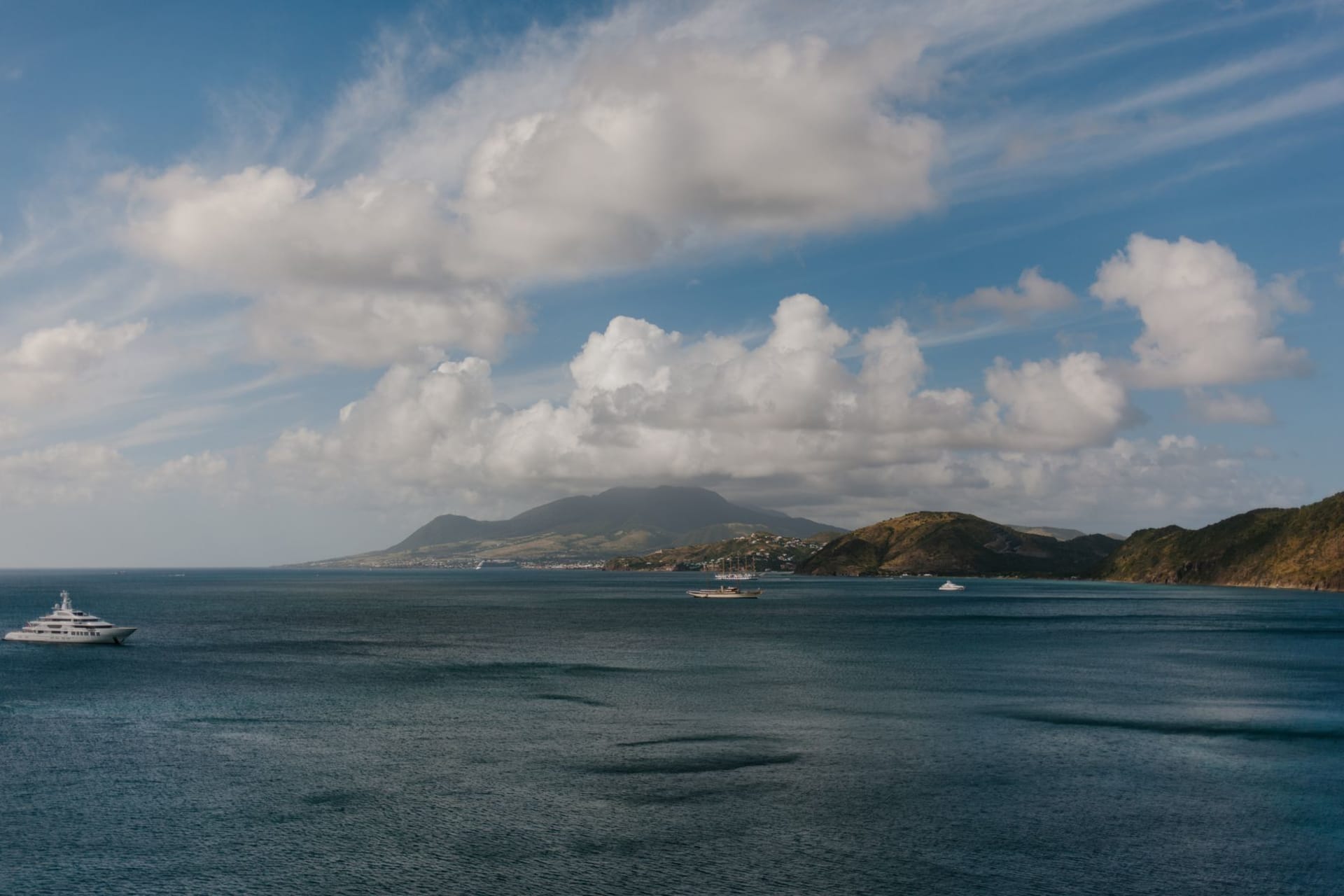
Charlestown
"Charlestown moves at the speed of a town that knows nothing here is urgent."
The ferry from Basseterre docks at the Charlestown pier and then you walk about twenty meters and you are in the middle of the capital. That is the scale of things on Nevis. The main street is called Main Street, predictably, and it curves along the waterfront past wooden buildings painted yellow and green and a faded coral, their second-floor balconies overhanging the sidewalk and casting long shadows in the morning light. I arrived on a Saturday, which was either good planning or accident — I am not entirely sure which — and the market behind the public library was fully in session.
The Nevis Saturday market is not large or spectacular in any conventional way. It occupies a covered space and a few stalls on the surrounding streets, and the vendors sell what the island grows and makes: soursop, julie mangoes, christophines, breadfruit, packets of local spices, homemade peanut butter, smoked herring, and the kind of hot sauce that comes in unlabeled bottles with masking tape and handwriting. I bought a bag of dried local cocoa beans from a woman who told me they were from trees her grandfather planted. I do not know if that was true, but it tasted like it might be.
The Alexander Hamilton Museum sits in the building where the American founding father was born in 1755 — before he became anything, when he was just a boy on a small Caribbean island with no particular future assured. The museum is honest about the complexity: Nevis celebrates Hamilton, but the island was also a sugar economy built entirely on enslaved labor, and Hamilton’s own relationship to that history is not simple. The exhibits do not oversimplify in either direction, which is more than you can say for most birthplace museums anywhere.
Elsewhere in Charlestown: the ruins of the Bath Hotel, built in 1778 and once the oldest hotel in the Western Hemisphere, now slowly being absorbed by vegetation; the courthouse with its clock tower; the Treasury building; and just up the road, an old Sephardic Jewish cemetery from the 17th century, evidence of the merchant community that once formed a significant part of the island’s commercial life.
By midday, Charlestown settles into an afternoon quiet that feels absolute. The vendors pack up, the market stalls close, and the main street empties of almost everyone except the occasional taxi and a few school-age children on bicycles. The heat has an opinion about activity in the early afternoon, and the town votes with it.
When to go: Saturday mornings for the market — arrive by eight before the best produce goes. The town is pleasant year-round but particularly lovely in the dry season (December to April) when the light is clear and the humidity is lower. Combine with a hike toward Nevis Peak or an afternoon at Pinney’s Beach for a full day on the island.