Caribbean
Saint Kitts and Nevis
"Small enough to feel like a secret, old enough to carry the weight of it."
The ferry crossing from St. Kitts to Nevis takes about forty-five minutes, and for most of that ride I stood on the bow watching the Nevis Peak emerge from a ring of cloud like something out of a 19th-century engraving. That cloud almost never leaves the summit. Locals call it the island’s hat. It is one of those details that doesn’t make it into the brochures but stays with you long after you’ve gone.
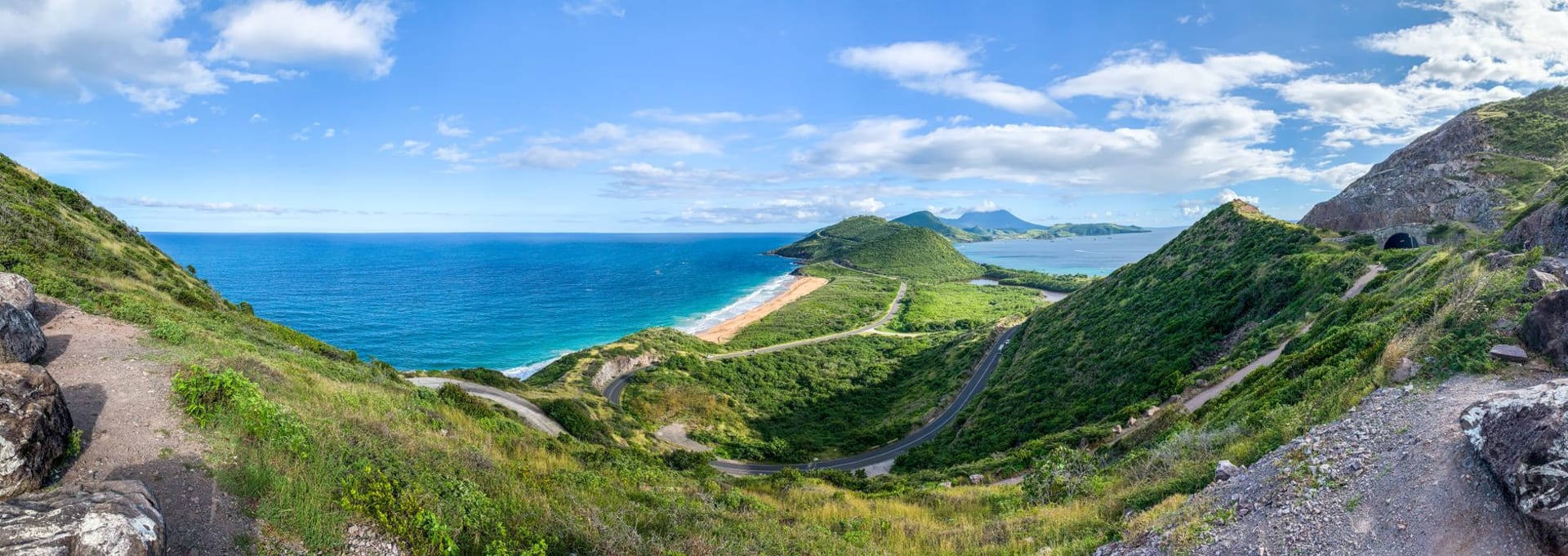
Saint Kitts and Nevis doesn’t try very hard to impress you, which is part of the appeal. The island’s economy ran on sugar for three centuries — you can still see the old windmill towers and stone boiling houses scattered across the interior, half-swallowed by bush. The plantation era left behind a particular kind of melancholy architecture that nobody has converted into boutique hotels yet. Brimstone Hill Fortress, a UNESCO site perched at 240 metres above sea level, is the showpiece — but what struck me more than the cannons and ramparts was the view from the top: the Atlantic on one side, the Caribbean on the other, and six other islands visible on a clear morning. I counted them twice.
The food is quieter than the scenery. I ate my best meal not at a restaurant but at a roadside stall near Basseterre — stewed saltfish with johnnycakes, served on a paper plate with a cold Carib. The cook had a pot of pepper sauce that looked like it had been on the stove since independence. On Nevis, Charlestown has a Saturday morning market where you can buy soursop, julie mangoes, and locally grown cocoa in a town that still feels like it belongs to the people who live there rather than to tourism.
When to go: Mid-December through April is the dry season and the most reliable weather. I went in late November, which was cheaper, emptier, and only occasionally interrupted by afternoon showers that blew through in twenty minutes. Avoid hurricane season proper — July through October — though September in particular is statistically the worst month.
What most guides get wrong: Saint Kitts and Nevis is consistently packaged as a luxury destination — the kind of place for villas and private beach clubs. That framing exists, but it misses what makes the islands actually interesting: they are genuinely off the mass-tourism circuit. Outside of the cruise ship port hours in Basseterre, you can wander the interior rainforest trails, visit the botanical gardens on Nevis, and eat at local spots without ever feeling like you’re on a set. The poverty and the history and the extraordinary landscape all coexist without being curated for you. That roughness is the point. Don’t let the luxury marketing make you think this is a polished destination — it’s something rarer than that.