Tassili n'Ajjer
"Somewhere between two dunes, I stopped believing the Sahara had always been sand."
A sandstone plateau near Djanet where 15,000 prehistoric engravings recall a Sahara once green with elephants and giraffes.
I’d read about Tassili n’Ajjer for years before I ever set foot near Djanet, but nothing prepared me for the scale of it. This is not a canyon or a rock formation you visit in an afternoon — it’s a plateau of more than 72,000 square kilometers, and our guide, a wiry man named Farouk who’d been leading treks here since he was a teenager, laughed when I asked how long it would take to “see it all.” You don’t see Tassili, he told me. You walk into a piece of it and let it explain itself. Lia and I had budgeted four days. We could have used ten.
Access here is not casual, and that’s part of what makes it feel earned. You need a licensed guide and permits, and the remoteness is real — Djanet is the last outpost before the plateau swallows the horizon. But the moment we climbed onto the sandstone and Farouk pointed at a wall of engravings, I understood why the restrictions exist. There are more than 15,000 pieces of rock art scattered across this plateau, some dating back to roughly 10,000 BCE, and the oldest ones stopped me cold: elephants, giraffes, hippopotamuses, painted by people who lived here when this was savanna, not desert. Lia traced the outline of a giraffe with her eyes, not her hands — Farouk was strict about that — and said quietly, “this was someone’s home, not just rock.”
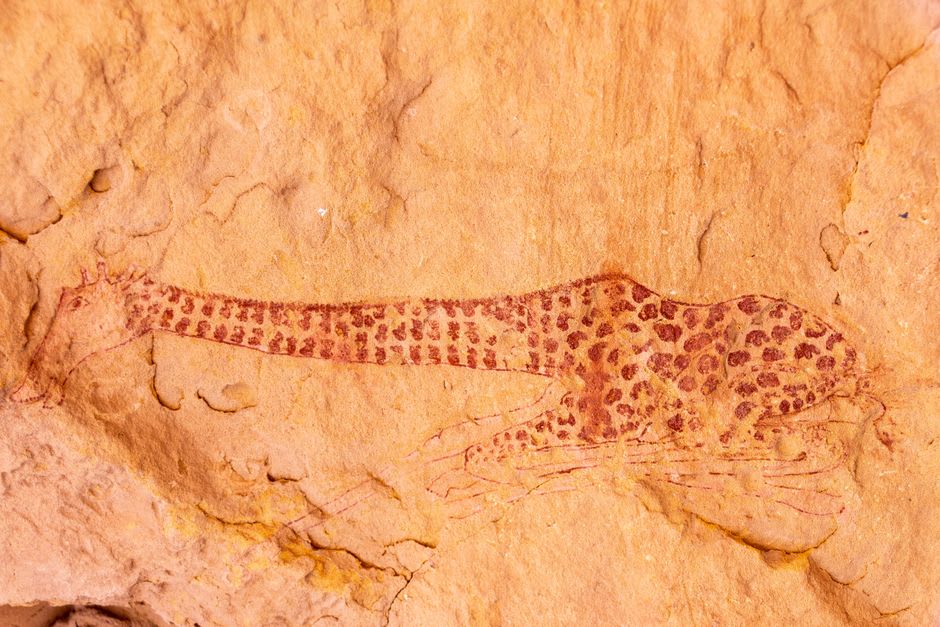
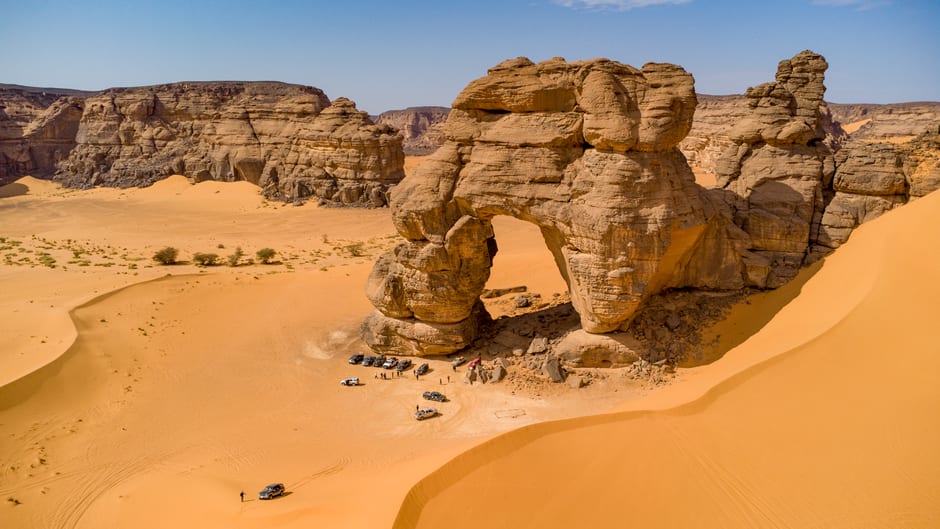
We camped two nights among what Farouk called the “forests of stone” — towers and arches carved by millennia of wind, standing in clusters that genuinely do resemble a petrified forest at dusk. I remember eating a simple dinner of semolina and dried dates with our small group, watching the sandstone go from ochre to deep red to almost purple as the sun dropped, and thinking that this Green Sahara period — hippos wallowing where I was now sitting in the driest air I’d ever breathed — was one of the hardest things to truly picture, even with the proof carved right in front of me. The scale of that transformation, savanna into sand over thousands of years, made every conversation Lia and I had that night feel small and unhurried.
On our last morning, we hiked up to a natural arch just as the light was flattening the whole plateau gold, and Farouk mentioned, almost offhand, that Tassili had been named a UNESCO World Heritage Site in 1982 for both its geology and its archaeology — a rare double honor, he said, because most places only earn one. Standing there, I didn’t need the plaque to believe it.
When to go: October through March, when daytime temperatures drop enough to make the long treks between rock art sites bearable — Farouk was firm that summer here isn’t worth the risk.
Keep exploring
More from Sahara Desert
 sahara-desert
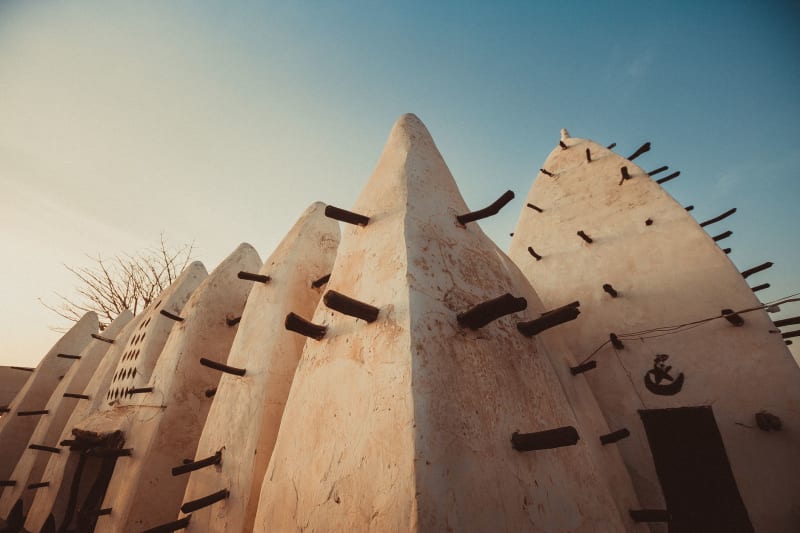
 Timbuktu
The city that became a word for the ends of the earth — stranger and sadder and more real than its legend, and worth every kilometer.
Explore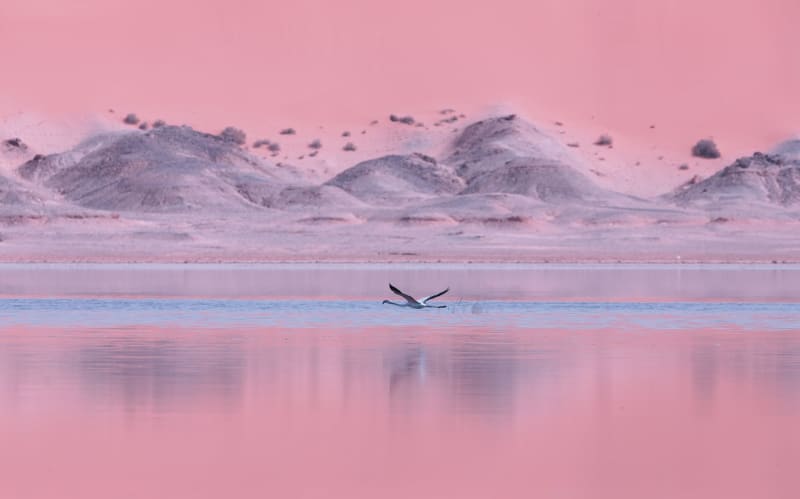 sahara-desert
 Chott el Jerid
A salt lake bigger than Luxembourg that turns the Tunisian desert into a mirror, a hallucination, and a color field painting all at once.
Explore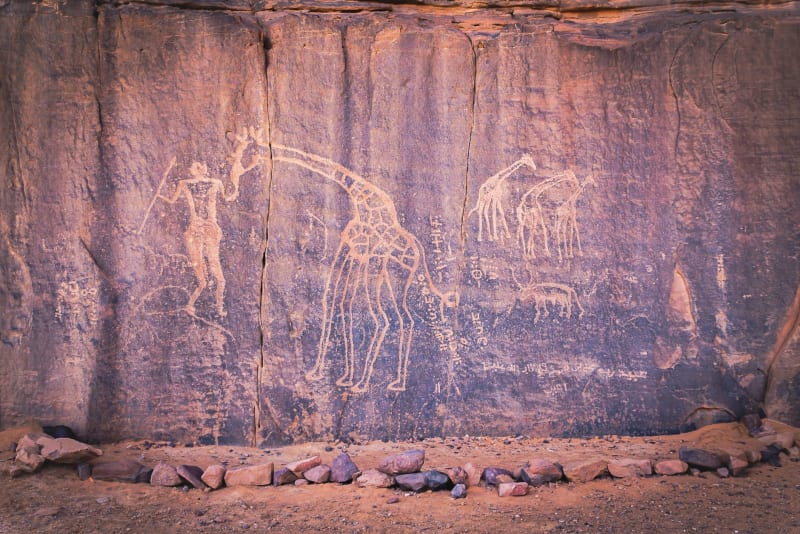 sahara-desert
 Djanet
A Tuareg oasis in Algeria's far southeast — the only human anchor in a landscape of black rock and cliffs painted 10,000 years ago.
Explore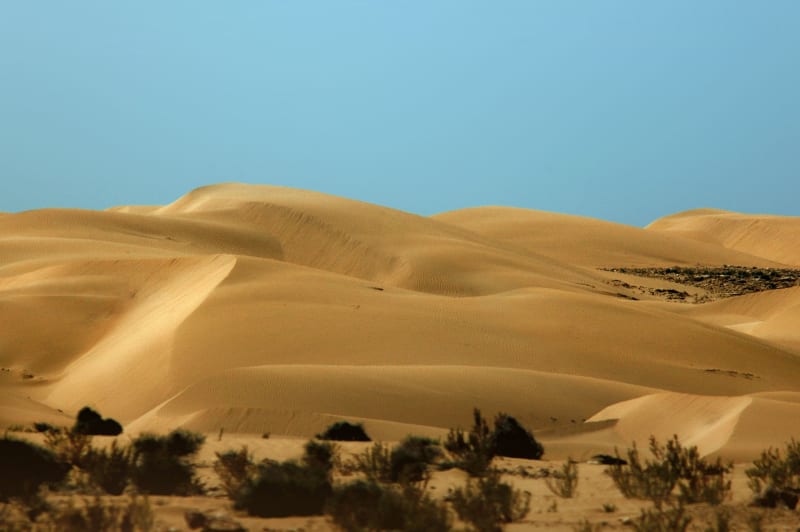 sahara-desert
 Douz
Tunisia's palm-fringed desert gateway, where the Thursday camel market still trades and the dunes start at the end of the last street.
Explore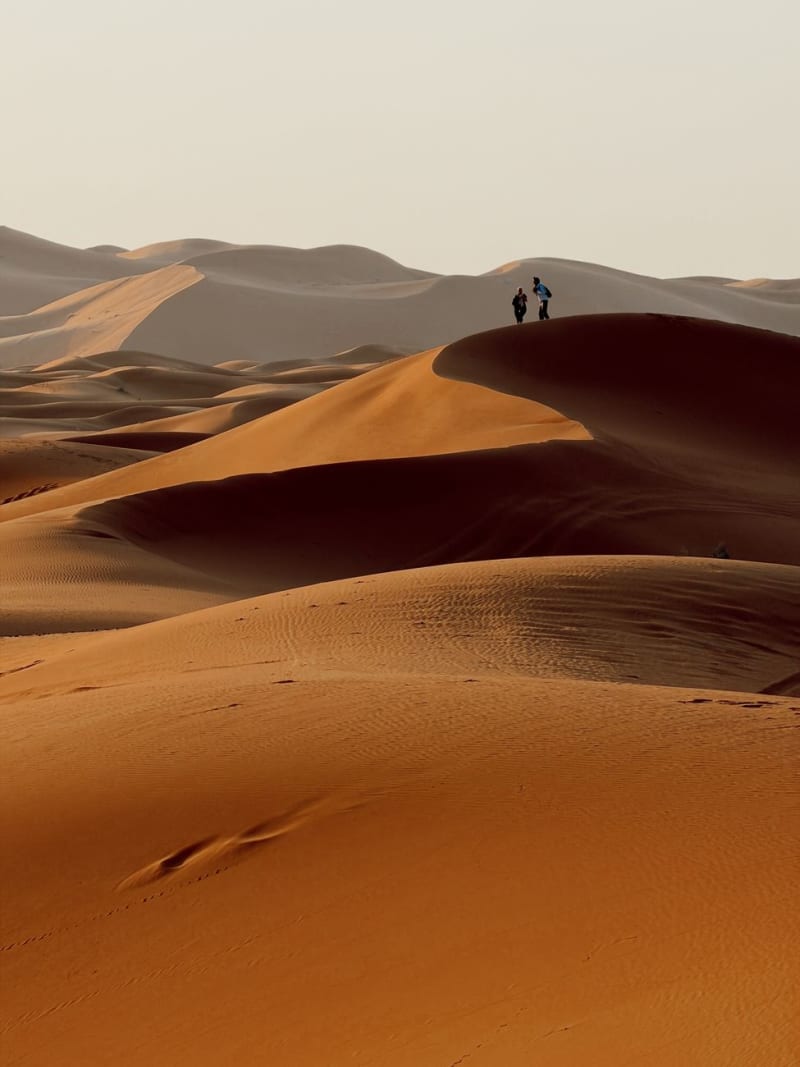 sahara-desert
 Erg Chigaga
Morocco's wildest dune sea — forty kilometres of sand at the literal end of the road, where the tour buses can't follow.
Explore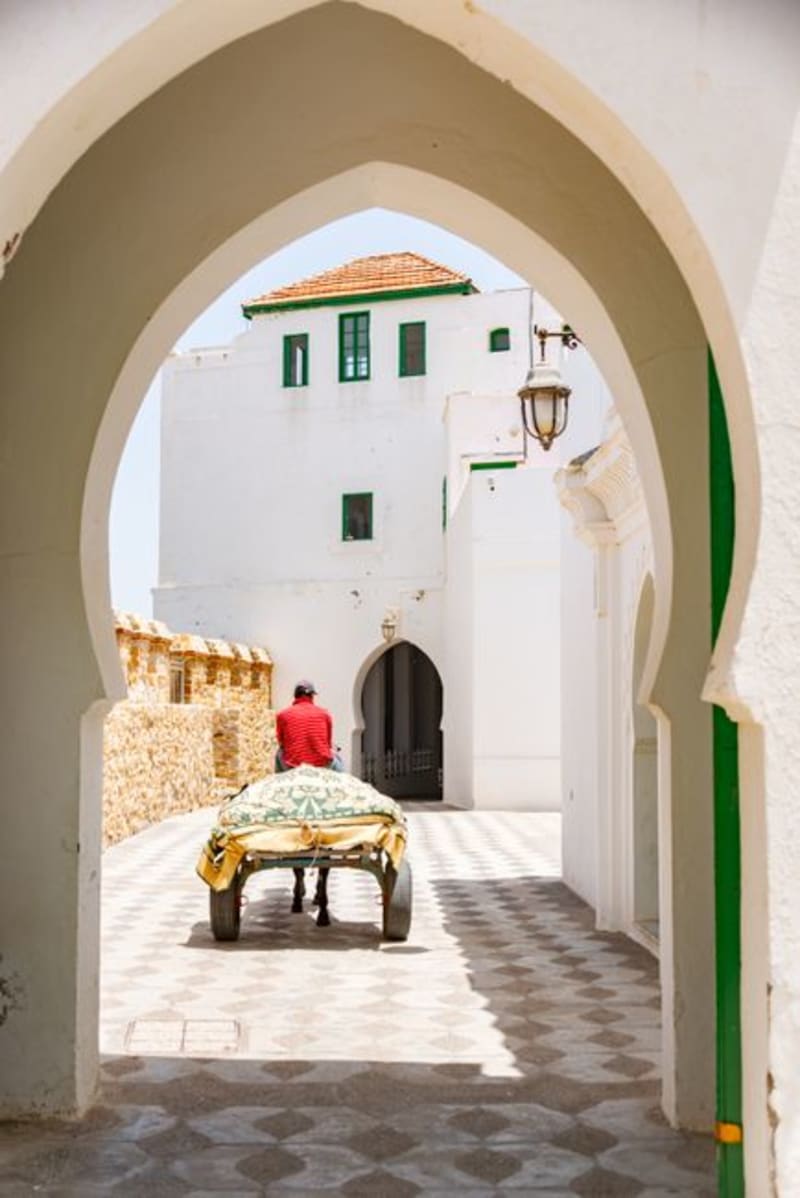 sahara-desert
 Ghadames
A honeycomb of covered mudbrick alleys where women once crossed the whole town without touching the ground.
Explore