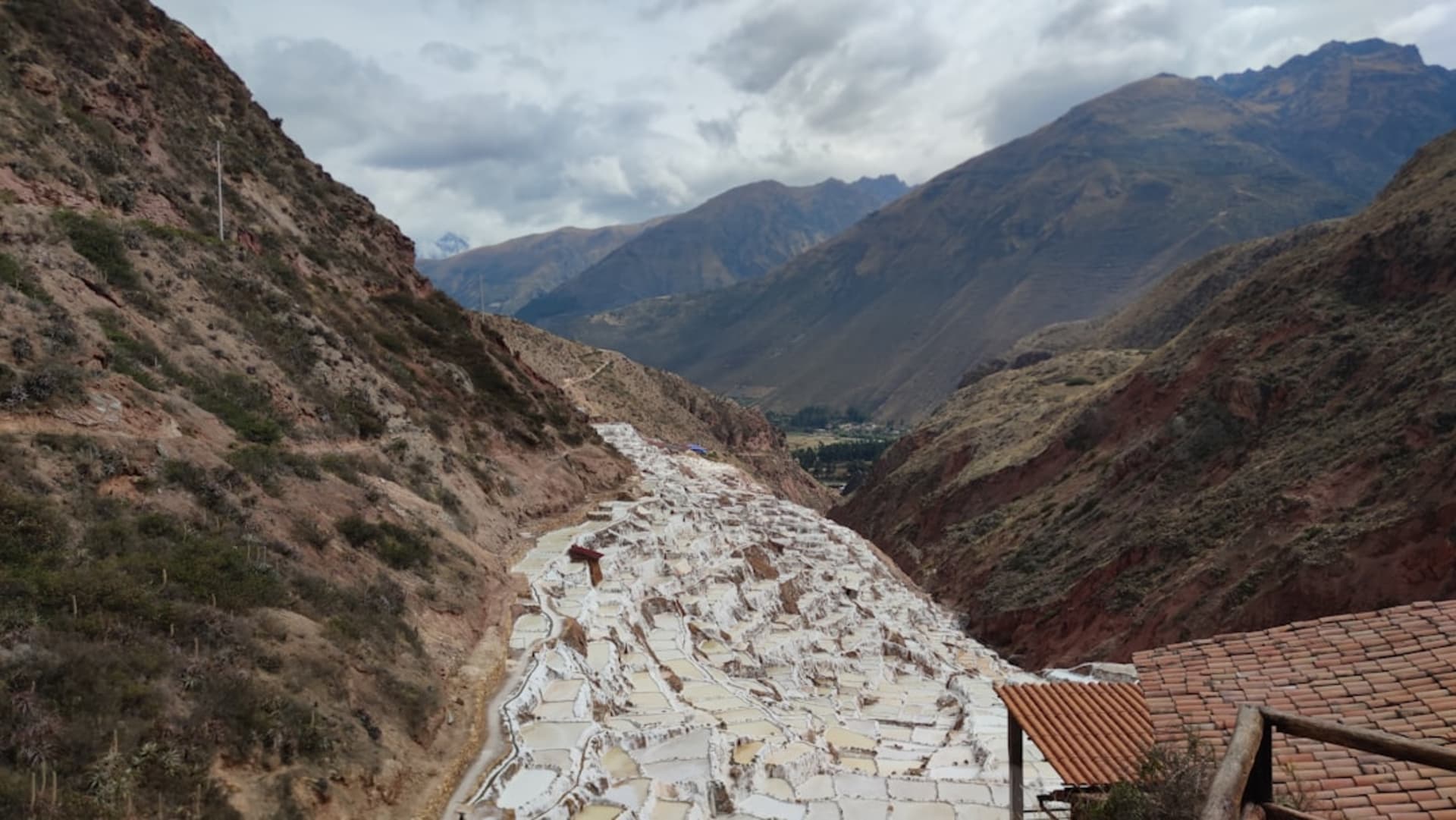
Yucay is four kilometres east of Urubamba and might as well be in a different century — not the Inca century, the colonial one. Wide leafy streets, whitewashed walls crumbling gently at the tops, hacienda gates that have been open for so long they appear to have forgotten how to close. I walked there from Urubamba on a quiet afternoon when nothing about the valley demanded urgency, following the road along the north bank of the river while the mountains on the south side went amber in the late light and the fields alongside me moved faintly in a wind I couldn’t feel on the road.
The village’s main plaza is one of the most peaceful in the valley — two enormous cypress trees frame the colonial church, which sits behind them in a posture of unassuming authority. There are benches, a small fountain of uncertain age, and in the afternoon a complete absence of tourist activity. I shared the plaza with an old man who appeared to be napping standing against one of the cypress trees, a dog that had established claim to the warmest patch of stone, and a woman selling empanadas from a basket who charged me less than I expected and gave me an extra one without comment.

The haciendas in Yucay have largely been converted into small hotels, and the buildings themselves are the attraction rather than any particular amenity. One of them — an eighteenth-century property with a flower garden and an interior courtyard of impractical beauty — lets you walk through the courtyard even if you’re not a guest, which seems continuous with the general atmosphere of the place, which does not appear to be trying to monetise itself beyond the minimum necessary.
The fields between Yucay and the river grow maize in the old Inca agricultural pattern, and in July when the stalks are at their highest the walk between the haciendas along the field path becomes enclosed and green and smells of soil and altitude together. This is the valley at its most domestically beautiful — not the drama of the ruins, not the engineered scale of the terracing, but the simple evidence of a place that has been cultivated with care for a very long time and intends to continue.

When to go: Yucay makes most sense as an afternoon walk from Urubamba or as an overnight stay to escape the valley’s tourist traffic. The fields are most beautiful in June and July when the maize is at full height. There is no specific market day; the village is quiet any day of the week, which is precisely the point of coming here.